
Buyer Comparison
Tractor PTO Horsepower vs Engine Horsepower: The Real Number Implement Buyers Need
Engine HP vs PTO HP vs drawbar HP, 540 vs 1000 RPM PTO, mid vs rear PTO, live and independent types, and the implement HP requirements that actually match a rotary cutter, baler, or generator.
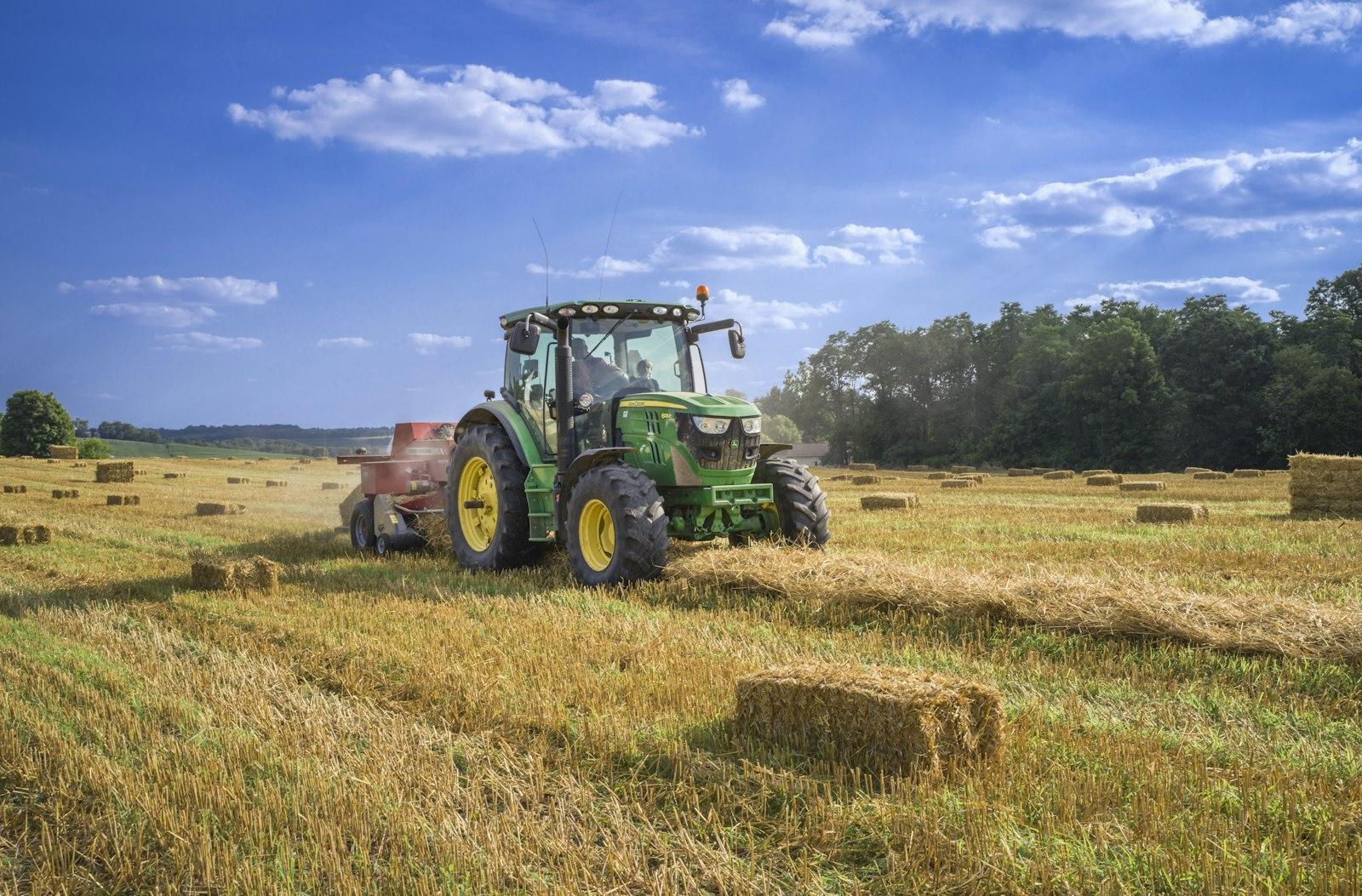
Last updated: May 2026
In the tractor PTO horsepower vs engine horsepower comparison, PTO HP is the number that actually drives your implements and it runs roughly 80-87% of engine HP on modern Tier 4 Final compact and utility tractors. Engine HP is the gross power measured at the crankshaft with no accessory load. PTO HP is what's left after the engine drives through the gearbox, hydraulic pump, alternator, cooling fan, and emissions accessories on its way to the rear power take-off shaft.
When you're matching a tractor to a rotary cutter, brush hog, baler, tiller, post-hole digger, or generator, the implement's required horsepower is always a PTO HP figure, not engine HP. A 75 HP engine sounds like plenty for a 7-foot heavy-duty rotary cutter that needs 55-65 HP, but if that 75 HP engine only delivers 60 PTO HP, you're at the bottom of the cutter's range and the slip clutch will earn its keep. Get the PTO HP number right at purchase and the rest of the tractor sizing falls into place.
Data in this guide comes from Nebraska Tractor Test Lab reports, OEM published spec sheets, and 2026 implement manufacturer minimum-HP guidance from Land Pride, Bush Hog, Woods, Vermeer, and John Deere. For broader sizing math, see our what size tractor do I need guide.
TL;DR
- PTO HP is the usable power at the rear shaft after parasitic losses; it runs 80-87% of engine HP on modern tractors.
- Match implement HP requirements to PTO HP, never engine HP. Bush hogs, balers, tillers, generators, and post-hole diggers all spec PTO HP.
- 540 RPM is the standard for sub-100 HP implements; 1000 RPM is for high-HP balers, mower conditioners, and large rotary cutters above ~80 PTO HP.
- Mid-PTO (2000 RPM) drives belly mowers and front snowblowers; rear PTO drives 3-point implements.
- Independent PTO (separate clutch) is the modern standard; live PTO and transmission PTO are older two- and one-stage designs.
Engine HP, PTO HP, and Drawbar HP: The Three Numbers Defined
A tractor's power gets reported in three different ways and each one measures something distinct. Mixing them up is the single biggest reason buyers undersize a tractor for a given implement.
Engine HP is the power produced at the crankshaft under SAE J1995 (gross) test conditions, with all accessories (water pump, fan, alternator, AC, hydraulic pump) removed or unloaded. It's the number printed on the loader-arm decal and used in marketing. PTO HP is the usable power measured at the rear PTO shaft after the engine drives through every accessory, the clutch, and the gearbox, per SAE J1349 or the Nebraska OECD Code 2 test. Drawbar HP is the power available at the drawbar for pulling implements like plows and discs, measured after tire slip and final drive losses (always the lowest of the three).
| Power Spec | Where Measured | Standard | What It Sizes |
|---|---|---|---|
| Engine HP | At crankshaft, no accessory load | SAE J1995 (gross) | Engine comparison, drawbar/road work |
| PTO HP | At rear PTO shaft, all accessories driven | SAE J1349 / Nebraska OECD test | Implement HP requirements (rotary cutter, baler, tiller, generator) |
| Drawbar HP | At drawbar, after tires, drivetrain, and slip losses | Nebraska Tractor Test (OECD Code 2) | Pulling implements (plow, disc, chisel, planter) |
| Hydraulic HP | At hydraulic output (gpm x psi / 1714) | OEM spec | Loader, third-function attachments, hydraulic motors |
Sources: SAE J1995 (engine gross power), SAE J1349 (engine net power), Nebraska Tractor Test Lab OECD Code 2.
The relationship is consistent: Engine HP > PTO HP > Drawbar HP. A modern Tier 4 utility tractor with 75 engine HP typically delivers about 60 PTO HP (80%) and roughly 55 drawbar HP at peak (73%). The PTO HP loss tractor manufacturers report is what you actually feel when you drop the brush hog into thick material.
Why PTO HP Is Lower: The Parasitic Loss Path
Engine HP measured at the crankshaft has to pass through six or seven energy-consuming systems before it reaches the back of the tractor. Each one takes a small bite. Add them up and you've lost 13-20% of the gross output to parasitic losses before the implement even feels the shaft turn.
Engine to PTO Power Loss Path
Here's where the lost horsepower goes on a typical modern utility tractor:
- Engine accessories (~5%): Alternator, cooling fan, water pump, and fuel injection pump pull mechanical power directly off the crankshaft. The fan alone can consume 3-4 HP on a 75 HP utility tractor at full load.
- Tier 4 aftertreatment (~3%): The DEF dosing pump, EGR cooler, and DPF regen cycle all draw power. During active regen, parasitic loss can spike 5-7% above baseline.
- Hydraulic pump standby (~4%): Even when the loader and 3-point are at rest, the hydraulic pump is turning. Open-center systems waste more here than closed-center load-sensing systems.
- Clutch and gearbox (~4%): The transmission gear mesh, bearings, and oil churning consume power. Hydrostatic transmissions (HST) lose slightly more here than mechanical shuttle-shift transmissions, especially at part-throttle.
- PTO drivetrain (~2%): The dedicated PTO gear set and the PTO shaft bearings take a final cut before the shaft exits the tractor housing.
That's why a tractor rated 75 engine HP shows 60 PTO HP on the Nebraska test. The good news: that 80-83% ratio is consistent across brands. Once you know your tractor's PTO HP rating, you can match implements precisely without worrying about the engine HP number on the hood decal.
Engine HP vs PTO HP by Model: Real Numbers from the Spec Sheets
The chart below pulls engine HP and PTO HP from current OEM spec sheets and Nebraska Tractor Test reports for eight popular compact and utility tractors. Notice how consistent the ratio is. A John Deere 5075E and a Mahindra 6075 both rate 73-75 engine HP and both deliver 60 PTO HP. The Kubota L4060 delivers 33 PTO HP from a 40.4 HP engine. The pattern holds across brands and emissions tiers.
Engine HP vs PTO HP by Model
| Model | Engine HP | PTO HP | Ratio | PTO Speed | PTO Type |
|---|---|---|---|---|---|
| John Deere 5075E (utility) | 75 HP | 60 HP | 80% | 540 (1000 optional) | Independent |
| Kubota L4060 HSTC (premium compact) | 40.4 HP | 33.0 HP | 82% | 540 | Independent (mid + rear) |
| Mahindra 6075 (utility) | 73 HP | 60 HP | 82% | 540 | Independent |
| Kubota L2501 (compact utility) | 24.8 HP | 20.5 HP | 83% | 540 | Live |
| John Deere 1025R (sub-compact) | 23.9 HP | 18.0 HP (mid 16.6) | 75% | 540 rear / 2000 mid | Independent |
| Kubota MX5400 (utility) | 54.7 HP | 44.7 HP | 82% | 540 | Independent |
| Mahindra 1635 HST (compact) | 33.5 HP | 26.5 HP | 79% | 540 | Independent |
| John Deere 6120M (utility) | 120 HP | 100 HP | 83% | 540 / 540E / 1000 | Independent |
Engine HP per OEM spec (gross); PTO HP per OEM published rating or Nebraska Tractor Test where available. Sources: John Deere, Kubota, Mahindra spec sheets Q1 2026; tractortestlab.unl.edu.
A few patterns worth noting: sub-compact tractors (like the JD 1025R) show a lower PTO ratio (~75%) because the accessory load is a larger fraction of a smaller engine. Larger utility tractors creep toward 83-85% because the percentage cost of accessories drops as engine size grows. Premium brands and budget brands land in the same band — the ratio is mostly a function of physics, not brand quality. If you're cross-shopping brands, see our Kubota vs John Deere vs Mahindra compact tractor comparison or our Kioti vs Yanmar vs LS value compact comparison.
Pro Tip
When dealers quote an engine HP figure but won't quote the PTO HP, look up the model on the Nebraska Tractor Test Lab archive. Almost every utility tractor sold in North America has a published OECD Code 2 test report with measured PTO HP, fuel consumption, and noise data. The Nebraska number is the most objective spec available, because the test lab puts the actual machine on a dynamometer rather than relying on the manufacturer's brochure.
540 vs 1000 RPM PTO: Which Standard for Which Implement
North American tractor PTO shafts spin at one of four speed standards: 540 RPM, 540E (economy), 1000 RPM, and 2000 RPM (mid). The two big rear standards are 540 and 1000. They exist because at the same engine RPM, a 1000 RPM shaft turns nearly twice as fast as a 540 shaft, which means the same horsepower can be transmitted through a thinner shaft with less torque — important on high-power implements where shaft diameter and weight matter.
PTO RPM Standards by Implement Share
| PTO Speed | Shaft / Spline | Typical Implements | HP Range |
|---|---|---|---|
| 540 RPM | 1-3/8" 6-spline (most common); 1-3/8" 21-spline (high-power) | Rotary cutters, brush hogs, tillers, post-hole diggers, finish mowers, small round balers, small generators, wood chippers | Up to ~100 PTO HP |
| 540E (Economy) RPM | 1-3/8" 21-spline (typical) | Light PTO loads on utility tractors; runs engine at lower RPM for fuel savings during light work | Up to ~100 PTO HP |
| 1000 RPM | 1-3/8" 21-spline (most common); 1-3/4" 20-spline (high-HP) | Large round balers, square balers, mower-conditioners, forage harvesters, large flail/rotary cutters, big generators | Above ~80 PTO HP, especially 100+ |
| 2000 RPM (mid) | 1" 15-spline | Mid-mount belly mowers, front snowblowers, front-mount sweepers (sub-compact / compact tractors) | Compact tractors, 15-40 HP mid-PTO range |
540 RPM: The Default for Most Buyers
If you're shopping a sub-100 HP compact or utility tractor and looking at rotary cutters, brush hogs, tillers, post-hole diggers, finish mowers, small generators, and small round balers, the answer is 540 RPM. The 1-3/8 inch 6-spline shaft is the most common version, used on virtually every sub-65 HP tractor. The 1-3/8 inch 21-spline appears on higher-power 540 systems (typically 65-100 HP) to handle the torque.
540E (Economy) RPM: Fuel-Saving for Light Loads
540E is a 540 RPM shaft speed reached at a lower engine RPM (typically 1700-1800 RPM instead of 2200-2400 RPM). It exists for light PTO work — finish mowing, light tilling, running a small generator — where you don't need full engine power. Operating in 540E saves 15-25% on fuel during light tasks because the engine isn't spinning at full speed. Available on most John Deere utility tractors and many Kubota M and MX series models.
1000 RPM: Higher Power, Big Implements
1000 RPM is the standard for large round balers (Vermeer 605, John Deere 560M, Case IH RB565), mower conditioners, forage harvesters, large rotary cutters (10-foot wing types), and high-capacity PTO generators. The shaft is typically 1-3/8 inch 21-spline, with 1-3/4 inch 20-spline used on the largest implements above ~150 PTO HP. Most utility tractors above 80-90 PTO HP come with a 540/1000 dual-speed PTO so the operator can switch standards with a shifter.
Critical Rule: Never Mismatch
Running a 540 implement at 1000 RPM will destroy the implement gearbox within minutes (the blades or rotors will spin nearly 2x design speed). Running a 1000 implement at 540 RPM will starve the implement of speed and cause poor performance, plugging, and incomplete cutting. Always read the implement decal and confirm the PTO speed setting on the tractor before engaging.
Mid PTO vs Rear PTO: Two Shafts, Two Jobs
Mid PTO vs rear PTO is a distinction that mostly applies to sub-compact and compact tractors. The rear PTO is the 540 or 1000 RPM shaft everyone knows. The mid PTO is a second shaft underneath the tractor (between the front axle and the rear axle) that runs at 2000 RPM and powers mid-mount and front-mount implements.
What runs off the mid PTO:
- Mid-mount belly mowers: 54-72 inch decks that hang underneath the tractor between the axles. Used for finish mowing lawns and pastures.
- Front-mount snowblowers: Driven by a shaft that routes from the mid PTO up to the front mount. Common on Kubota BX, B, and L series and John Deere 1, 2, 3 series.
- Front-mount sweepers and rotary brooms: Used for sidewalk snow clearing and arena maintenance.
- Belly-mounted blowers and edgers: Less common but available for specialty turf work.
The mid PTO runs at 2000 RPM specifically because small-diameter mower blades and snow auger rotors need high tip speed for a clean cut or strong throw. A 60-inch belly mower at 540 RPM would have hopeless blade tip speed for a quality cut.
Important sizing note: a mid-mount belly mower draws its horsepower from the mid PTO, not the rear PTO. On the John Deere 1025R, the rear PTO is rated 18 HP but the mid PTO is rated 16.6 HP. Spec the belly mower to the mid PTO number specifically.
Most sub-compact and compact tractors offer both shafts as standard or as a factory option. Once you climb into utility class (40+ HP), the mid PTO usually disappears because belly mowers in that size class are uncommon and the rear PTO handles everything else.
Live Independent PTO Explained: Transmission, Live, and Independent Types
Live independent PTO explained in one sentence: the PTO is fully separate from the transmission, with its own clutch, so the operator can stop, shift, or change direction without disrupting the PTO shaft. That's the modern standard. The legacy designs — transmission PTO and live PTO — are still found on older or budget-tier tractors and matter when shopping used.
| PTO Type | How It Works | Pros | Cons | Found On |
|---|---|---|---|---|
| Transmission PTO | Tied to transmission; clutch stops both | Simplest, cheapest, most durable | PTO stops when clutch is pressed; unsafe for inertia-loaded implements | Older utility tractors, entry gear-drive sub-compacts |
| Live PTO | Two-stage clutch: stage 1 stops drive, stage 2 stops PTO | Operator can stop forward motion without stopping PTO | Requires careful pedal management; not fully independent | Older Kubota L-series, mid-tier compact tractors |
| Independent PTO | Separate wet clutch or hydraulic engagement, dedicated lever | Completely decoupled from transmission; safest, smoothest | More complex, slightly more parts to service | Modern compact and utility tractors above entry tier |
Transmission PTO
Transmission PTO ties the PTO shaft directly to the transmission. Press the clutch pedal and the PTO stops along with forward motion. This is fine for light tilling or running a generator but dangerous for any implement with high rotational inertia — like a rotary cutter with heavy blades. If the cutter is still spinning and you press the clutch to stop, the cutter coasts down and can drive the tractor forward, a phenomenon known as "PTO overrun." Modern overrun clutches on the implement driveline solve this, but the design is still a compromise.
Live PTO
Live PTO uses a two-stage clutch pedal. The first half of pedal travel disengages the transmission only; the PTO keeps running. The second half of pedal travel disengages the PTO too. Operators back up to balers, pickers, or wood chippers without stopping the implement. Common on older Ford, Massey Ferguson, and Kubota utility tractors. Workable but requires careful pedal technique and the clutch pack does double duty, which shortens service life.
Independent PTO
Independent PTO uses a dedicated wet clutch or hydraulically engaged clutch for the PTO alone, controlled by a separate lever, button, or knob. The transmission and the PTO are fully decoupled. You can stop, shift gears, reverse, or even shut off the transmission's forward motion without the PTO noticing. This is the standard on every modern compact and utility tractor above the entry tier. Safer, smoother, and longer-lived than the older designs. The downside is added complexity and slightly higher repair cost when the PTO clutch eventually wears out at 4,000-6,000 hours.
For most buyers shopping new, every modern compact and utility tractor offers independent PTO either as standard or in a $200-$600 upgrade package. The exception is some entry-tier gear-drive sub-compacts where live PTO is still spec'd to keep the price under $18K. If you'll run a rotary cutter, baler, or PTO generator often, independent PTO is worth the upgrade. For long-term durability factors, the hour meter guide covers what hours actually mean for component wear.
Tractor Implement HP Requirements: The Buyer's Sizing Table
Every PTO-driven implement publishes a minimum tractor PTO HP rating, and the smart buyer sizes the tractor to land in the middle of the recommended range — not at the minimum. Sizing at the minimum means you'll bog in heavy material, glaze the slip clutch, and run the engine at peak load constantly. Sizing 15-25% above the minimum extends implement life, saves fuel through lower engine RPM, and gives margin for the surprise oak sapling.
Recommended PTO HP by Implement
| Implement | PTO RPM | Minimum PTO HP | Recommended PTO HP | Category |
|---|---|---|---|---|
| Rotary cutter, light-duty 5 ft | 540 | 20 HP | 25-30 HP | Mowing |
| Rotary cutter, medium-duty 6 ft | 540 | 30 HP | 35-45 HP | Mowing |
| Rotary cutter, heavy-duty 7 ft (1.5" cap) | 540 | 45 HP | 55-65 HP | Mowing |
| Rotary cutter, 8 ft heavy or 10 ft wing | 540 or 1000 | 65 HP | 75-100 HP | Mowing |
| Bush Hog, brush hog (general) | 540 | Same as rotary cutter by width | — | Mowing |
| Finish mower, 60-72 in | 540 | 18 HP | 22-30 HP | Mowing |
| Flail mower, 60-72 in | 540 | 25 HP | 30-45 HP | Mowing |
| Mid-mount belly mower (60-72 in) | 2000 mid | 16 HP mid | 20+ HP mid | Mowing |
| Tiller (rotary), 60 in | 540 | 25 HP | 30-40 HP | Ground Engaging |
| Tiller (rotary), 72 in | 540 | 35 HP | 40-50 HP | Ground Engaging |
| Tiller (rotary), 84 in | 540 or 1000 | 50 HP | 55-70 HP | Ground Engaging |
| Post-hole digger (6-9 in auger) | 540 | 15 HP | 20-35 HP | Ground Engaging |
| Post-hole digger (12-18 in auger) | 540 | 30 HP | 35-50 HP | Ground Engaging |
| Round baler, 4x5 small | 540 | 40 HP | 50-65 HP | Hay |
| Round baler, 5x6 (Vermeer 605, JD 560M) | 540 or 1000 | 65 HP | 80-100 HP | Hay |
| Large square baler, 3x3 / 3x4 | 1000 | 120 HP | 150-200 HP | Hay |
| Disc mower, 7-9 ft | 540 | 35 HP | 45-60 HP | Hay |
| Mower conditioner, 9-13 ft | 540 or 1000 | 60 HP | 80-120 HP | Hay |
| Snow blower (front), 60-72 in | 540 or 2000 mid | 25 HP | 30-45 HP | Snow |
| PTO generator, 15 kW | 540 | 30 HP | 35-40 HP | Power |
| PTO generator, 25 kW | 540 | 50 HP | 55-65 HP | Power |
| PTO generator, 45 kW | 540 or 1000 | 90 HP | 95-110 HP | Power |
| PTO wood chipper, 6 in capacity | 540 | 20 HP | 25-40 HP | Power |
| PTO wood chipper, 8-9 in capacity | 540 | 35 HP | 45-65 HP | Power |
Implement HP requirements per manufacturer published guidance. Sources: Land Pride, Bush Hog, Woods, King Kutter, Titan Implement, Vermeer, John Deere, Frontier, Q1 2026.
Rotary Cutters and Bush Hogs
"Bush Hog" is a brand name that became a generic term — the answer to "how much PTO HP do I need for a rotary cutter" is the same whether the cutter says Bush Hog, Woods, Land Pride, or Frontier. The fast rule: 5 PTO HP per foot for light-duty, 6-8 PTO HP per foot for medium-duty, and 8-12 PTO HP per foot for heavy-duty cutters that handle 1.5-2 inch saplings. A 6-foot medium-duty brush hog on a Kubota L4060 (33 PTO HP) is at the minimum end and will bog in dense brush; the same cutter on an MX5400 (44.7 PTO HP) is comfortable.
Hay Equipment
Hay equipment is where PTO HP matters most. A small 4x5 round baler is fine on a 50 PTO HP utility tractor. A 5x6 baler (Vermeer 605, John Deere 560M) needs 80-100 PTO HP and switches to 1000 RPM. Mower conditioners and big squares jump again. For complete sizing on hay tools and equipment matching, see our hay equipment buyer's guide and used round baler prices guide.
Post-Hole Diggers and Augers
A 6-9 inch post-hole digger for fence posts runs comfortably on 20-35 PTO HP. A 12-18 inch auger for sign posts or planting larger trees needs 35-50 PTO HP. Diameter and soil type drive the requirement: hard clay or rocky soils can double the apparent HP draw because the auger fights its way down. Always run a slip clutch or shear bolt on the driveline.
PTO Generators
A PTO generator pulls steady power, not peak power. The rule of thumb: 2 PTO HP per kW of generator output. A 15 kW generator needs 30 PTO HP comfortable; a 25 kW needs 50; a 45 kW needs 90 PTO HP and typically a 1000 RPM input. The right generator size is whatever covers your house or barn's largest load (well pump start, AC compressor start) plus 20-30% margin.
How to Verify Your Tractor's Actual PTO HP Rating
Three places to find the real PTO HP number:
- OEM spec sheet: Every current production tractor publishes both engine HP and PTO HP. Pull it from the manufacturer's product page or the dealer's brochure.
- Nebraska Tractor Test Lab: tractortestlab.unl.edu hosts the OECD Code 2 test reports for nearly every utility tractor sold in North America since the 1920s. Search by model number and pull the actual measured PTO HP and fuel curves.
- Operator's manual: The PTO HP rating is listed in the specifications section of every operator's manual. The owner's number on a used tractor matches the OEM spec.
If a dealer quotes only engine HP and pushes back when you ask for PTO HP, that's a signal to slow down. PTO HP is a published spec on every modern tractor. If they "don't have it handy," look it up yourself before signing. For broader pre-purchase due diligence, our used heavy equipment inspection guide covers the rest of the checklist.
Three Real-World Sizing Scenarios
Scenario 1: 25-Acre Hobby Farm, Brush + Mowing
A North Carolina hobby farmer wanted a 6-foot medium-duty brush hog for fence rows and a 60-inch finish mower for the lawn around the house. The brush hog needs 35-45 PTO HP recommended. The finish mower needs 22-30 PTO HP. Both implements together set the tractor floor at ~40 PTO HP. He bought a Kubota L4060 HSTC (33 PTO HP) and quickly realized the brush hog was bogging in spring growth. He upgraded to a Kubota MX5400 (44.7 PTO HP) and the same brush hog now handles 2-inch saplings without complaint. Lesson: spec to the upper end of the implement's recommended PTO HP range, especially for tools you'll use weekly.
Scenario 2: 80-Acre Cattle Operation, Round Baler
A Tennessee cattle rancher needed to bale 4x5 round bales for his herd. A small baler needs 50-65 PTO HP and runs at 540 RPM. He bought a John Deere 5075E (60 PTO HP) with a JD 459 baler — the 60 PTO HP is right at the comfortable middle of the baler's range. Two years in, he hasn't bogged the tractor once and the baler's slip clutch has never tripped in normal use. If he steps up to a 5x6 baler later, he'll need to upgrade the tractor to ~80+ PTO HP and likely a 1000 RPM-capable utility tractor like a JD 6120M.
Scenario 3: Backup PTO Generator for the Farmhouse
A Mahindra 6075 owner (60 PTO HP) sized a 25 kW PTO generator at 50 PTO HP recommended. The tractor sits at 60 PTO HP, comfortably above the requirement, and the generator runs cool at 80% load even when the well pump and AC compressor cycle together. For the 1000-2000 hour service intervals on the genset PTO, see the relevant section of our tractor maintenance schedule by hours guide.
Pro Tip
Tier 4 Final tractors lose about 5-7% of their PTO HP during active DPF regen cycles. If you're running near the upper limit of a heavy implement, schedule regen between cuts (most tractors let you trigger a stationary regen manually). Running an implement at 95% load while the DPF regenerates can drop you below the implement's minimum and bog the tractor unexpectedly. For the broader emissions story, see our Tier 4 heavy equipment guide.
Five Buyer Mistakes That Cost Real Money
- Using engine HP to spec implements. A 50 engine HP tractor with 40 PTO HP is not the same as a 50 PTO HP tractor. Implements always size to PTO HP. Mixing them up undersizes the tractor by 10-15 HP.
- Sizing at the implement minimum. If a rotary cutter calls for 45 PTO HP minimum, that's the bog-and-glaze threshold. Buy 55-65 PTO HP for daily use to keep the clutch alive.
- Mismatching 540 and 1000 RPM. Always confirm the implement decal matches the tractor's selected speed before engaging. Running mismatched RPM destroys gearboxes in under five minutes.
- Ignoring the mid PTO spec. Mid-mount belly mowers and front snowblowers use mid PTO HP, which is usually 5-10% lower than rear PTO HP. Spec to the mid number specifically.
- Buying a transmission-PTO tractor for rotary cutters. A heavy rotary cutter with a spinning mass has serious inertia. Transmission PTO can let the cutter overrun the tractor when you press the clutch. Pay for live or independent PTO if you'll run rotary cutters or balers.
Frequently Asked Questions
What's the difference between PTO HP and engine HP?
Engine HP is the gross power produced at the crankshaft, measured per SAE J1995 with all accessories removed and at peak engine speed. PTO HP is the usable power measured at the rear power take-off shaft after the engine drives through the gearbox, hydraulic pump, alternator, water pump, fan, and emissions accessories. Because that path adds parasitic losses, PTO HP is always lower than engine HP, typically 80-87% on modern compact and utility tractors. PTO HP is the number that actually drives the rotary cutter, baler, post-hole digger, or generator hooked to the back of the tractor, which makes it the right spec for matching implement requirements. Engine HP is useful for comparing engines and drawbar/road work, but it overstates what the implement actually receives.
Why is my tractor's PTO HP lower than engine HP?
PTO HP is lower because power has to travel from the crankshaft, through the clutch and gearbox, past the hydraulic pump and live-power accessories, and out through the PTO shaft and its bearings. Every gear mesh, bearing, and parasitic load (alternator, fuel pump, cooling fan, hydraulic standby flow, DPF regen, AC compressor) consumes some of the gross engine output before it ever reaches the rear shaft. On modern Tier 4 Final compact and utility tractors, that PTO HP loss runs 13-20% of engine HP, which is why a 75 HP engine commonly delivers 60-63 PTO HP. The newer Tier 4 emissions accessories (DEF pump, DPF, EGR cooler) consume slightly more parasitic power than pre-Tier 4 engines, so the ratio has dropped a couple points industry-wide compared to 2010-era tractors.
How much PTO HP do I need for a rotary cutter?
Match PTO HP to cutter width. As a working rule, light-duty rotary cutters need about 5 PTO HP per foot of cutting width, medium-duty cutters need 6-8 PTO HP per foot, and heavy-duty cutters (1.5-inch capacity or more) need 8-12 PTO HP per foot. A 5-foot rotary cutter for hobby brush work runs cleanly on 25-30 PTO HP. A 6-foot medium-duty brush hog needs 35-45 PTO HP. A 7-foot heavy-duty rotary cutter for thick brush wants 55-65 PTO HP, and an 8-foot heavy or 10-foot wing cutter needs 75+ PTO HP. Always compare the cutter manufacturer's minimum tractor PTO HP spec to your tractor's PTO HP rating, not engine HP. Undersized tractors will bog in heavy material, glaze the clutch, and over-stress the slip clutch on the driveline.
What is the difference between 540 and 1000 RPM PTO?
540 RPM is the legacy standard, used on virtually every sub-100 PTO HP tractor and on most rotary cutters, brush hogs, post-hole diggers, finish mowers, tillers, and small generators. 1000 RPM is the higher-speed standard used on tractors above roughly 100 PTO HP and on power-hungry implements like large balers, forage harvesters, large flail mowers, big rotary cutters, and high-capacity pumps. At the same engine RPM, 1000 RPM PTO turns nearly twice as fast as 540 RPM PTO, which means thinner shafts can transmit the same horsepower with less torque. Most utility tractors above 90 HP offer both 540 and 1000 RPM PTO with a shifter, so the operator can match the speed to whichever implement is connected. Always verify the implement's required PTO speed before connecting; running a 540 implement at 1000 RPM will destroy the gearbox in minutes.
What is mid-PTO vs rear-PTO?
Rear PTO is the standard 540 or 1000 RPM shaft at the back of the tractor, used for rotary cutters, balers, tillers, post-hole diggers, and rear-mount implements. Mid-PTO is a second shaft underneath the tractor (usually 2000 RPM on compact tractors) that powers mid-mount mower decks, front snowblowers, and front-mount sweepers. Most sub-compact and compact tractors offer both. The mid-PTO runs at 2000 RPM specifically to match small high-speed implements like mid-mount belly mowers, where a higher blade tip speed produces a cleaner cut. Rear PTO and mid-PTO have separate engagement on most tractors, so you can run a mid-mount mower deck without spinning the rear shaft. If you plan to use a belly mower or front snowblower, confirm the tractor came with the mid-PTO option; it's a factory-only add on many models.
What is live PTO vs independent PTO vs transmission PTO?
Transmission PTO ties the shaft directly to the transmission, so when you push in the clutch the PTO stops. This is the simplest and oldest design and is found on older utility tractors and budget gear-drive models. Live PTO uses a two-stage clutch: the first stage stops the transmission and the second stage stops the PTO. You can stop forward motion (for example, to back up to a baler) while the PTO keeps spinning. Independent PTO uses a separate hydraulic or wet clutch dedicated to the PTO, engaged with its own lever or button. The tractor and PTO are completely decoupled, so you can stop, shift, change direction, and even shut off the transmission without affecting the PTO. Independent PTO is the standard on modern compact and utility tractors above the entry tier because it's safer, easier on the driveline, and lets implements like balers and rotary cutters keep running through stops. Live and independent PTO are explained more in our compact tractor lineup comparisons.
Shopping a Tractor for a Specific Implement?
PTO HP is the spec that actually matters. We track engine HP, PTO HP, hydraulic flow, and 3-point lift across every major brand so you can match a tractor to the rotary cutter, baler, or generator you already own — or the one you're about to buy.
Selling a tractor instead? HeavyDutyYard provides cash offers within 24 hours, free pickup anywhere in the US, and no fees deducted from your offer.