
Buyer's Guide
Tier 4 Heavy Equipment Guide: DEF, DPF, and the True Cost of Emissions Compliance
What every buyer, fleet manager, and operator needs to know about Tier 4 Final aftertreatment systems — DEF, DPF, SCR, and the repair costs behind them.
Last updated: April 2026
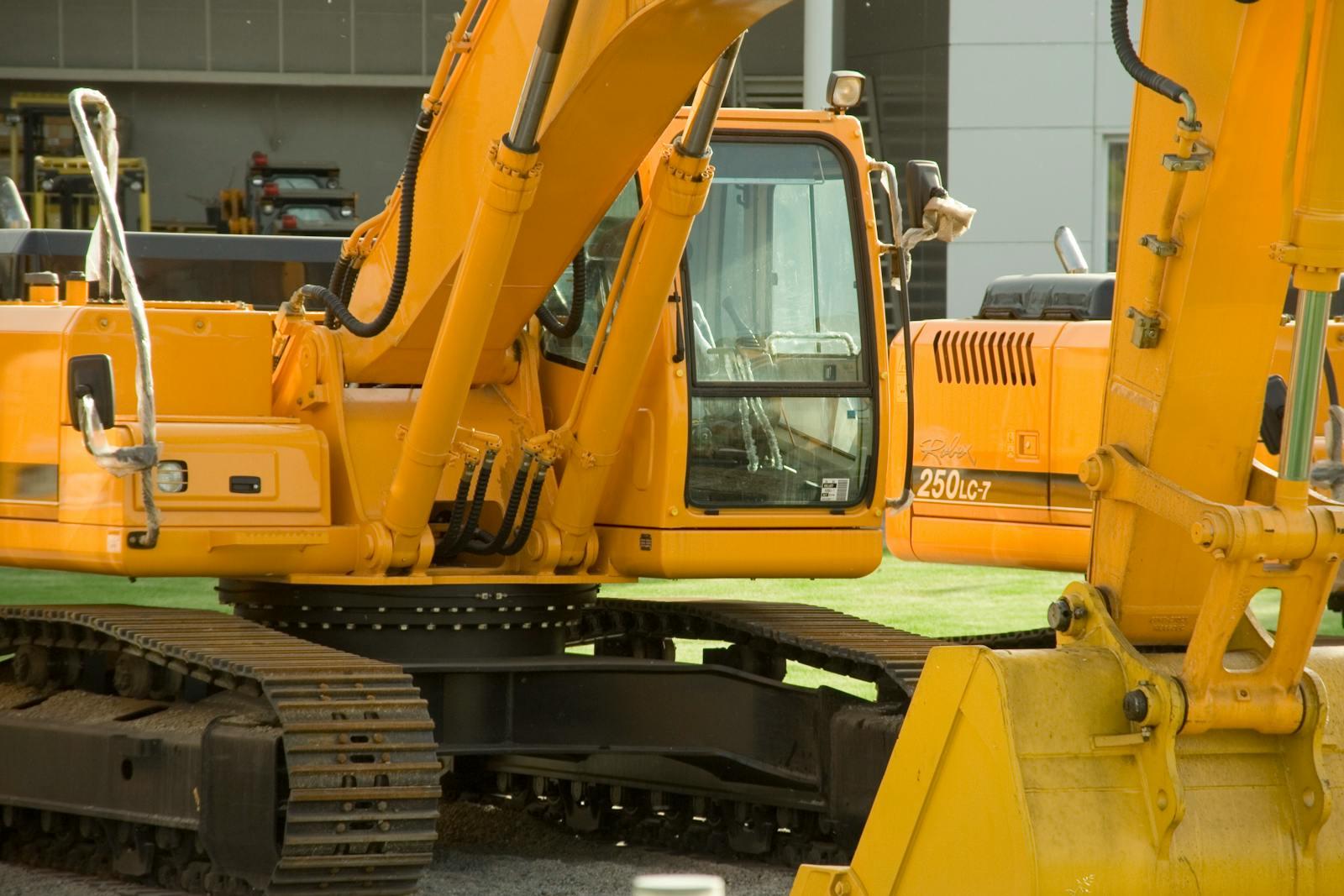
Tier 4 heavy equipment covers nearly every construction and agricultural machine built after 2015, and the aftertreatment systems on these machines drive real costs — both at purchase and during the first 5,000 hours of ownership. Diesel exhaust fluid (DEF), diesel particulate filters (DPF), selective catalytic reduction (SCR), and cooled exhaust gas recirculation (EGR) combine to cut NOx by roughly 96% and particulate matter by more than 95% compared to pre-2000 engines, according to EPA rulemaking. They also add service complexity that catches first-time Tier 4 owners off guard.
This guide walks through everything you need to know before buying a used Tier 4 machine, managing a Tier 4 fleet, or deciding whether an older Tier 3 unit makes more sense for your operation. We cover how each aftertreatment component works, realistic DEF consumption numbers by equipment class, the most common failure modes and their repair costs, what fault codes actually mean, and why deleting these systems is both illegal and bad for resale value.
The data here draws on EPA nonroad emissions standards, OEM service literature from Caterpillar, Cummins, John Deere, and Komatsu, dealer labor rates collected in Q1 2026, and real-world repair invoices from the excavators, skid steers, and wheel loaders moving through the used market today.
TL;DR
Tier 4 Final heavy equipment (2015+) uses DPF, SCR with DEF, and cooled EGR to meet EPA emissions standards. DEF consumption runs 2-5% of fuel burn — about 0.04-0.33 gallons per engine hour depending on machine size. Active DPF regenerations happen every 8-40 hours and take 20-40 minutes. Common aftertreatment repairs range from $400 for NOx sensors to $12,000+ for full DPF replacement. Deleting DPF/DEF is illegal under the Clean Air Act (penalties up to $5,580 per engine) and cuts resale value by 15-30%. The best-value used Tier 4 buy is a low-idle-hours machine with documented regen history and at least one recent DEF system service.
What Tier 4 Means and Why It Exists
The EPA introduced nonroad diesel emission standards in 1994 and phased them in through five tiers. Each tier tightened allowable NOx, particulate matter, hydrocarbons, and carbon monoxide limits. Tier 4 rolled out in two parts: Tier 4 Interim (2008-2014) required a roughly 90% particulate reduction from Tier 3, and Tier 4 Final (2014-2015+) added another 80% NOx reduction on top of that.
The chart below shows how dramatically emissions have dropped over the 20-year rollout. A Tier 4 Final engine emits roughly 4% of the NOx and 2% of the particulate matter that a comparable Tier 1 engine did in 1996.
Emissions Reduction by Tier (% of Tier 1 Baseline)
Tier Timeline at a Glance
| Tier | Model Years | Technology | NOx Cut | PM Cut |
|---|---|---|---|---|
| Tier 1 | 1996-2000 | Mechanical injection, no aftertreatment | Baseline | Baseline |
| Tier 2 | 2001-2006 | Electronic fuel injection, improved combustion | 25-30% | 30-40% |
| Tier 3 | 2006-2014 | Cooled EGR, higher-pressure common rail | 60% vs Tier 1 | 50% vs Tier 1 |
| Tier 4 Interim | 2011-2014 | DPF added, some SCR on large engines | 50% vs Tier 3 | 90% vs Tier 3 |
| Tier 4 Final | 2014-2015+ | DPF + DEF/SCR + cooled EGR + NOx sensors | 80% vs T4 Interim | Matches T4i |
Tier 4 Final is still the current standard as of 2026. The EPA has signaled future tightening, but no Tier 5 rule is finalized. New equipment sold in 2026 should be assumed Tier 4 Final unless specifically labeled otherwise (some very small engines under 25 hp follow different paths, and a handful of specialty machines qualify for transitional provisions).
The Five Aftertreatment Components You Need to Know
Tier 4 Final exhaust aftertreatment isn't one system — it's a stack of five working in sequence. Exhaust leaves the turbo, passes through a diesel oxidation catalyst, then the diesel particulate filter, then DEF is injected into a mixing chamber, and finally the mix runs through the selective catalytic reduction catalyst before exiting the stack. Meanwhile, cooled EGR recirculates some exhaust back to the intake to lower combustion temperature. Each component can fail independently.
| Component | Function | Common Failures | Repair Range |
|---|---|---|---|
| DPF (Diesel Particulate Filter) | Traps soot particles from exhaust, burns them off during regeneration | Clogging from idle-heavy duty cycle, cracked substrate from ash buildup, failed differential pressure sensor | $1,500-$3,500 clean • $4,000-$12,000 replace |
| DOC (Diesel Oxidation Catalyst) | Pre-DPF catalyst that oxidizes hydrocarbons and CO, raises exhaust temp for DPF regen | Plugging from coolant or oil contamination, failed face from overheating | $1,200-$3,000 replace |
| SCR (Selective Catalytic Reduction) | Uses DEF to convert NOx into nitrogen and water vapor downstream of DPF | DEF crystallization on catalyst face, thermal degradation, urea deposits | $2,500-$8,000 replace |
| DEF Injector / Dosing Module | Sprays metered DEF into hot exhaust upstream of SCR catalyst | Clogged nozzle from degraded DEF, stuck valve, wiring faults | $400-$1,500 replace |
| DEF Pump / Supply Module | Pressurizes DEF from tank to injector, includes filter and heaters | Pump motor failure, frozen lines, heater failure, filter sock clogging | $800-$2,800 replace |
| NOx Sensors (upstream + downstream) | Measure NOx before and after SCR to confirm DEF dosing is effective | Sensor element contamination, heater failure, wiring corrosion | $400-$1,200 each • Machines use 2-3 sensors |
| Cooled EGR Valve | Recirculates cooled exhaust back to intake to lower combustion temp (reduces NOx) | Soot buildup on valve, actuator failure, coolant leak from cooler core | $800-$2,500 replace valve • $2,500-$6,000 for cooler |
| DEF Tank / Heater | Holds DEF; heater keeps it above 12°F freeze point in cold weather | Heater element failure, cracked tank, failed level sensor | $300-$1,800 depending on tank type |
Understanding the DEF/SCR System
Selective catalytic reduction is chemistry, not filtration. A dosing injector sprays DEF (a 32.5% aqueous urea solution per ISO 22241) into hot exhaust. Heat breaks urea down into ammonia, which then reacts over the SCR catalyst with NOx to form harmless nitrogen gas and water vapor. The reaction needs exhaust temperatures between roughly 400°F and 900°F to work efficiently.
This is why cold starts, extended idle, and light-duty cycling create problems. Below ~400°F the SCR catalyst is essentially inert. Below freezing, DEF itself turns to slush and requires tank and line heaters to thaw. Above 900°F, prolonged operation can thermally degrade the catalyst face.
Understanding the DPF
The diesel particulate filter is a ceramic honeycomb that physically traps soot. Soot accumulates until the backpressure sensor or the ECM's soot model predicts the filter is getting full — typically around 80% load. The ECM then initiates an active regeneration, injecting post-combustion fuel into the exhaust to raise temperature above 1,000°F and burn the soot into ash.
Ash doesn't burn off. It accumulates in the DPF over thousands of hours and eventually requires thermal cleaning or filter replacement. Most DPFs need a service cleaning between 4,500 and 8,000 hours, though high-idle duty cycles shorten that interval. The cycle below shows a typical DPF soot load pattern during operation.
Typical DPF Soot Load Cycle Over 48 Operating Hours
Pro Tip
Never shut the machine down during an active regen. An interrupted regen leaves partially burned soot in the filter and triggers additional regens on restart. If you need to park the machine during a regen cycle, let it complete at high idle or use the parked-regen procedure in the operator manual. Shops routinely see DPF damage caused entirely by operators who didn't know to let regens finish.
DEF Consumption by Equipment Class
The fastest way to budget DEF is to use a percent-of-fuel rule of thumb: figure 2-5% of diesel burn as DEF consumption, skewing higher for machines in heavy duty cycles or at high altitude. A more accurate approach is to track gallons per engine hour on each machine class.
DEF Consumption Per Engine Hour by Machine Type
| Machine Class | Fuel (gph) | DEF (gph) | Per 10-hr Day | Note |
|---|---|---|---|---|
| Mini excavator (3-6 ton) | 1.0-2.0 | 0.02-0.06 | ~0.2-0.5 gal | Many sub-25 hp units avoid SCR (alt tech path) |
| Midi excavator (7-12 ton) | 2.0-3.5 | 0.04-0.12 | ~0.4-1.0 gal | Full Tier 4 Final aftertreatment |
| Full-size excavator (20-30 ton) | 4.0-7.0 | 0.08-0.25 | ~0.8-2.0 gal | One 2.5-gal jug every 1-3 days |
| Large excavator (40+ ton) | 8.0-14.0 | 0.16-0.50 | ~1.6-4.0 gal | Bulk DEF tank or tote recommended |
| Compact track loader | 1.5-3.0 | 0.03-0.10 | ~0.3-0.8 gal | CTL consumption typically lighter than dozer |
| Skid steer (75-100 hp) | 1.5-3.0 | 0.03-0.10 | ~0.3-0.8 gal | Many <75 hp units use DOC-only path |
| Wheel loader (2-3 yard) | 3.5-6.0 | 0.07-0.20 | ~0.7-1.6 gal | Idle time significantly affects burn |
| Dozer (D6 class) | 4.0-7.0 | 0.08-0.25 | ~0.8-2.0 gal | Heavy load = more DEF |
| Dump truck (Class 8 on-road) | 5.0-8.0 | 0.15-0.35 | ~3-7 gal | On-road engines often run higher DEF % |
| Motor grader | 3.0-5.0 | 0.06-0.18 | ~0.6-1.4 gal | Moderate burn during finish grading |
DEF Purchasing and Storage
- Buy only API-certified DEF. Look for the blue API diamond logo on the container. Off-spec urea damages SCR catalysts within hours.
- Check purchase dates. DEF has a shelf life of roughly 12-18 months depending on storage temperature. Heat and UV exposure accelerate degradation.
- Store cool and shaded. Ideal storage is 40-75°F. DEF freezes at 12°F and expands, so never fill a container to the top if it will be left outdoors in winter.
- Never transfer DEF through fuel containers. Diesel contamination as low as 0.01% ruins DEF for SCR use.
- Use a closed delivery system. DEF is hygroscopic and picks up dirt and water easily. Closed-system pumps and dedicated transfer nozzles prevent contamination.
For fleets running more than four or five Tier 4 machines, a bulk DEF tote (275 or 330 gallons) pays for itself in under six months versus buying 2.5-gallon jugs. Jug pricing in Q1 2026 runs $15-$20 per jug ($6-$8 per gallon), while tote pricing runs $2.50-$3.50 per gallon delivered.
How Regeneration Really Works (and Where It Goes Wrong)
DPF regeneration happens in three forms: passive, active, and parked. Understanding which is which saves buyers from misdiagnosed problems and saves operators from expensive habits.
Passive Regeneration
Happens continuously during normal high-load operation. Exhaust temperatures above ~550°F naturally burn soot as it hits the filter. Machines that run hard all day rarely need active regens because they're passively regenerating constantly. Trenching, grading, loading — anything that keeps the engine under load for extended periods — supports passive regen.
Active Regeneration
Triggered by the ECM when soot load hits ~80%. The ECM injects extra fuel post-combustion to raise exhaust temperature above 1,000°F for 20-40 minutes. The machine runs normally but exhaust temperature warnings may appear on the dashboard. Operators can keep working during an active regen.
Parked Regeneration
Required when active regens have failed to clear the filter — usually because the operator shut the machine down during active regens, or the duty cycle never got hot enough for passive or active regen to finish. Parked regen requires the machine to sit at elevated idle for 30-60 minutes with a warning placard up. If parked regen fails too, a dealer-level forced regen with a scan tool is the next step, followed by DPF removal and thermal cleaning.
Pro Tip
If you buy a used Tier 4 machine with excessive idle hours (check ECM for idle-hour percentage), expect DPF problems within the first 500 hours of your ownership. Machines used for light-duty applications like standby pumps, light utility work, or short-cycle loading often have partially loaded DPFs that never got a proper regeneration. Budget for a parked regen and potentially a thermal clean within your first year of ownership.
Fault Codes Every Tier 4 Owner Should Recognize
The SAE J1939 standard uses Suspect Parameter Numbers (SPN) and Failure Mode Indicators (FMI) to describe fault codes across all heavy equipment brands. Here are the eight most common Tier 4 aftertreatment codes:
| Code | Meaning | Severity | Action |
|---|---|---|---|
| SPN 3226 / FMI 15-16 | NOx sensor downstream — signal out of range | Derate risk | Replace downstream NOx sensor. Clear code. Verify DEF quality. |
| SPN 3364 / FMI 17-18 | DEF concentration low or off-spec | Derate within 50 hours | Drain tank, refill with fresh API-certified DEF, prime system. |
| SPN 3251 / FMI 0 | DPF differential pressure high | Regen required | Perform parked regen. If it fails, inspect DPF for ash or coolant contamination. |
| SPN 3216 / FMI 14 | Upstream NOx sensor heater fault | Derate risk | Check sensor wiring for chafing. Replace sensor if heater circuit open. |
| SPN 4374 / FMI 3-5 | DEF dosing injector circuit | SCR inactive | Test injector resistance. Replace if open/shorted. Check for wiring damage. |
| SPN 4375 / FMI 5 | DEF pump motor circuit | No DEF delivery | Test pump resistance. Check filter sock for contamination. |
| SPN 3719 / FMI 0 | DPF soot load high | Active regen required | Run machine at high load 30-45 min, or request dealer parked regen. |
| SPN 4094 / FMI 18 | DEF quality below threshold | Derate within 4 hours | Verify with DEF refractometer (32.5% urea target). Replace if off-spec. |
Most Tier 4 machines will derate engine power (typically to 50% or 25%) after a DEF or SCR fault code has been active for a set number of engine hours. Derate protects the aftertreatment system and forces operator attention — you can't ignore the problem indefinitely. A well-maintained machine should never sit with an active aftertreatment code.
Tier 4 Aftertreatment Repair Costs (2026 Dealer Rates)
Aftertreatment repairs are the single biggest reason Tier 4 equipment buyers regret their purchase. Sensor failures are manageable — most run under $1,200 installed. But DPF, SCR, and EGR cooler work can quickly turn into five-figure bills on mid-size and larger machines. Here are typical 2026 dealer rates for the most common repairs.
Average Tier 4 Aftertreatment Repair Costs (2026)
| Repair | Labor Hrs | Parts | Typical Total |
|---|---|---|---|
| Forced parked regen at dealer | 1-2 | $0-$50 | $300-$900 |
| DEF pump/supply module replace | 2-4 | $600-$1,800 | $1,200-$3,200 |
| DEF injector replace | 1-2 | $150-$600 | $400-$1,500 |
| NOx sensor replace (each) | 0.5-1 | $250-$800 | $400-$1,200 |
| DPF thermal cleaning | 4-6 + shipping | Service only | $1,500-$3,500 |
| DPF filter replacement | 3-5 | $3,000-$9,500 | $4,000-$12,000 |
| SCR catalyst replacement | 4-6 | $1,800-$6,000 | $2,500-$8,000 |
| Cooled EGR valve replace | 3-5 | $450-$1,600 | $800-$2,500 |
| Full aftertreatment overhaul (large machine) | 12-20 | $8,000-$25,000 | $12,000-$35,000+ |
Dealer labor rates in Q1 2026 run $145-$195 per hour at authorized service centers for major brands, with independent heavy equipment shops typically $110-$155. Factor these numbers into your total maintenance budget when evaluating a used Tier 4 machine. An extra $4,000-$8,000 in aftertreatment reserve for the first two years of ownership is realistic planning.
DPF and DEF Delete: Why It's a Bad Idea in 2026
Search results are full of aftermarket "delete kits" promising to remove DPF, SCR, and EGR systems for $1,500-$4,500 plus installation. The pitch sounds appealing: eliminate aftertreatment repairs forever, restore original power, burn less DEF. The reality in 2026 is that these deletes have become increasingly expensive and risky.
Federal Law
Section 203(a)(3) of the Clean Air Act prohibits removing or rendering inoperative any emission control device on an EPA-certified engine. This applies to owners, operators, and aftermarket part suppliers. EPA civil penalties in 2026 reach $5,580 per tampered engine (inflation-adjusted) and up to $58,000+ per part sold for aftermarket suppliers. The EPA's Office of Enforcement has prosecuted suppliers totaling more than $100 million in penalties over the past decade, per EPA enforcement case summaries.
State Enforcement
California (CARB), Washington, Oregon, Colorado, New York, and several Northeast states pursue independent enforcement. CARB in particular inspects construction jobsites, performs visible emissions tests, and issues state-level citations. California jobsite requirements under the Off-Road Diesel rule also tier equipment access by fleet average emissions — a deleted machine can get a contractor disqualified from the entire project.
Resale Impact
Our own cash offer process discounts deleted machines by 15-30% versus comparable compliant equipment. Institutional buyers — rental companies, municipal fleets, major contractors — won't touch deleted machines at any price. That cuts your buyer pool in half and forces private-party sales with all their friction. If you eventually need to restore the aftertreatment, budget $8,000-$25,000 for parts and programming on a mid-size machine.
Insurance and Warranty
Most commercial equipment insurance policies exclude coverage on machines with unauthorized modifications, which can include deleted emission controls. Manufacturer and third-party warranties are voided. An engine claim on a deleted machine will almost always be denied.
The far better path for owners frustrated with aftertreatment reliability: diagnose and fix the root cause. Operator training on regen cycles, proper DEF handling, and regular fluid analysis prevents 80% of common failures. Our guide to oil analysis pairs naturally with aftertreatment health — the same fluid sampling that catches engine wear catches soot loading and combustion problems upstream of the DPF.
Buying Used Tier 4 Equipment: 8 Inspection Priorities
Used Tier 4 machines aren't riskier than older units if you inspect them carefully. They do require a different inspection checklist. Skip this list and you could buy a $60,000 excavator with $15,000 of pending aftertreatment work. Pair this with the general used equipment inspection guide for a complete pre-purchase workflow.
- Pull ECM data for idle-hour percentage. A machine that idled 60%+ of its hours has likely experienced incomplete regens and partial DPF loading. Healthy machines idle 15-35% depending on application. Ask the dealer or private seller to show you the ECM idle report.
- Read active and inactive fault codes. Any active or recent aftertreatment code is a walk-away signal unless the seller will provide repair documentation. Cleared codes that keep returning are a more expensive negotiation than a single resolved failure.
- Verify DEF quality and level. A cheap DEF refractometer ($40) confirms 32.5% urea concentration. Low DEF or obviously old DEF in the tank signals poor maintenance. A dry DEF tank on arrival is a yellow flag — ask when it was last filled.
- Check DPF service history. Ask when the last thermal clean or DPF service was performed. No record after 5,000+ hours means the next service is imminent. Dealer-serviced machines have this documented; private-sale machines rarely do.
- Inspect for delete evidence. Missing DPF, capped SCR inlet, bypassed DEF pump, plugged NOx sensor ports, or aftermarket tune files on the ECM all indicate a delete. A deleted machine might run fine today and cost you $15,000+ to restore for legal resale or jobsite access.
- Do a regen during inspection. If the machine has been sitting, an initial regen during inspection reveals system health. A machine that completes an active regen without faults passes the hardest aftertreatment test.
- Inspect for soot leaks. Black soot streaks around clamps, gaskets, or flex pipes at the aftertreatment assembly signal leaks. These trip codes, hurt backpressure, and eventually damage the DPF substrate.
- Price in a $3,000-$5,000 service reserve. Even a clean machine with documented history will need some aftertreatment work in the first 2,000 hours of your ownership. Budget for it upfront and you won't be surprised. See our equipment financing guide for how to structure this into a purchase loan.
Tier 3 vs Tier 4: When Older Still Wins
Tier 3 equipment (model years 2006-2014 for most sizes) avoids DPF and DEF entirely. For the right buyer, that simplicity is worth a lot. For the wrong buyer, it's a false economy.
Tier 3 Wins When:
- Equipment stays on private property or rural agricultural land with no regulatory exposure
- Use pattern is light-duty or intermittent (hobby farm, occasional landscape work, personal projects)
- Operator doesn't have or want access to a dealer for regular service
- Resale in 5-10 years isn't a priority
- Budget is tight and the 15-25% Tier 3 discount is meaningful
Tier 4 Wins When:
- Equipment will be rented, leased, or shared with other users
- Work includes federal, state, or municipal jobsites with emissions requirements
- Fuel cost matters — Tier 4 Final is 3-8% more fuel efficient than Tier 3
- Warranty service access and dealer support are important
- Financing matters — most lenders offer better rates on newer, more compliant equipment
- Resale in 3-7 years is likely
For context, a well-maintained Tier 4 Final machine holds value better than a Tier 3 machine of similar age in commercial markets because the buyer pool is larger and jobsite access is broader. The Tier 3 premium lives almost entirely in the private and ag markets.
Cold Weather and Storage: What Tier 4 Owners Get Wrong
DEF freezes at 12°F. On Tier 4 machines, heaters in the DEF tank and lines thaw the fluid during cold starts. This works well on machines started and run daily but fails badly on equipment stored outdoors for weeks or months.
- Don't drain DEF for storage unless you have to. Tank and line heaters need DEF present to work correctly. Freeze damage to an empty tank is possible in extreme cold.
- Don't run a machine dry of DEF. The system will prevent restart after a few ignition cycles. Re-priming after run-dry can require dealer intervention.
- Don't let machines sit 6+ months without running. DEF can crystallize in the injector and dosing lines. The longer it sits, the higher the risk of an expensive SCR repair to restart operation.
- Run the machine long enough for complete regen. A cold start to move the machine 50 feet back and forth doesn't complete anything — it just accumulates soot.
- Block heaters and DEF tank heaters need power. For extended winter storage, keep machines plugged into shore power if possible.
Pro Tip
For seasonal equipment stored over winter, schedule a full operating-temperature run (minimum 45 minutes at normal working load) every 30 days if possible. This cycles the DEF, regenerates the DPF, and prevents the long-storage failures that dominate spring-season aftertreatment service calls at dealers.
Frequently Asked Questions About Tier 4 Heavy Equipment
What does Tier 4 mean on heavy equipment?
Tier 4 refers to the EPA's emissions standards for nonroad diesel engines, phased in between 2008 and 2015 and fully mandatory on new equipment from 2015 forward. Tier 4 Final requires roughly 90% reductions in nitrogen oxides (NOx) and more than 95% reductions in particulate matter compared to pre-2008 (Tier 1-3) engines, per EPA rulemaking data. Manufacturers meet the standard with diesel particulate filters (DPF), selective catalytic reduction (SCR) using diesel exhaust fluid (DEF), cooled exhaust gas recirculation (EGR), and electronic fuel injection. A used excavator or loader built after 2015 is almost certainly Tier 4 Final and carries all three aftertreatment systems.
How much DEF does heavy equipment use?
Diesel exhaust fluid consumption on Tier 4 heavy equipment runs roughly 2-5% of diesel fuel burn, depending on engine size, load, and duty cycle. A mid-size excavator burning 4 gallons of diesel per hour will consume about 0.08 to 0.20 gallons of DEF per hour — roughly one 2.5-gallon jug every 12-30 engine hours. Larger equipment in heavy duty cycles consumes more. Budget $3.50-$5.00 per gallon for DEF bought in 2.5-gallon jugs, or $2.50-$3.50 per gallon buying bulk 55-gallon drums or totes. Always buy API-certified DEF meeting ISO 22241 specifications to avoid crystallization and SCR damage.
Is a DPF or DEF delete legal on heavy equipment?
Deleting the DPF, DEF/SCR, or EGR system on EPA-certified Tier 4 heavy equipment is a violation of the Clean Air Act. EPA civil penalties for tampering with emission controls can reach $5,580 per engine (inflation-adjusted 2026) for the owner and $58,000+ for aftermarket part manufacturers, per EPA enforcement actions. States including California, Washington, Oregon, New York, and Colorado pursue their own enforcement through CARB and state DEP. Rental companies, fleet operators, and any equipment used on federal or state jobsites face additional exposure. A deleted machine also cannot be legally resold as compliant — it loses value, limits buyer pool, and can trigger denial of EPA-required warranty work.
How often does a DPF regenerate on heavy equipment?
A Tier 4 DPF on heavy equipment passively regenerates during normal high-load operation and actively (forced injection of fuel to burn off soot) every 8-40 operating hours depending on duty cycle, engine size, and how hot the exhaust runs. Extended idling, short work cycles, and light loads cause soot to build faster and force more frequent active regens. An active regen takes 20-40 minutes and temporarily raises exhaust gas temperature. If an operator skips or interrupts regens, the DPF becomes clogged and requires a parked regen, a service regen with a scan tool (often $500-$1,000 at a dealer), or eventually DPF removal and thermal cleaning ($1,500-$3,500) or replacement ($4,000-$12,000).
Should I buy a used Tier 4 or older Tier 3 machine?
For most buyers, a well-maintained Tier 4 Final machine is the better long-term buy in 2026. Tier 4 equipment is more fuel efficient, retains value better in commercial markets, and meets requirements on federal, state, and many private jobsites. Older Tier 3 equipment (typically 2006-2014) trades at a discount and avoids DPF/DEF repair risk, but it is increasingly restricted on jobsites, less fuel-efficient, and harder to finance at competitive rates. The exception is deep-rural agricultural use, private property work, or simple operators who want mechanical simplicity — Tier 3 tractors and compact equipment still make sense there. Always inspect Tier 4 aftertreatment history before purchase.
What are the most common Tier 4 aftertreatment failures?
The most common Tier 4 aftertreatment failures on heavy equipment are failed DEF pumps and injectors ($1,500-$4,000 repair), crystallized SCR catalysts from off-spec or old DEF ($2,500-$8,000), clogged DPFs from extended idle or missed regens ($1,500-$12,000), failed NOx sensors ($400-$1,200 each, machines have 2-3), and cooled EGR valve failures ($800-$2,500). DEF quality sensors and temperature sensors also fail periodically ($300-$900). Equipment stored more than six months without DEF drained can see crystallization throughout the SCR system, leading to full aftertreatment replacements exceeding $15,000 on larger machines.
Selling a Tier 4 Machine?
Machines with clean aftertreatment history and documented DEF and DPF service sell for noticeably more than comparable units with open fault codes or missing records. If you're selling a Tier 4 excavator, loader, or dozer, gather your service records, pull a clean ECM report, and fix any pending codes before listing. Our team provides firm cash offers within 24 hours on compliant, well-maintained Tier 4 equipment — no auction fees, no listing hassle, free pickup anywhere in the US.
If you're buying, start with our value guide and used pricing data to benchmark comparable machines before any dealer or auction visit.