
Buyer's Guide
Hay Equipment Buyer's Guide 2026: Mowers, Tedders, Rakes, and Balers Explained
The complete haymaking equipment lineup for 2026. Disc mowers vs sickle bars vs mower-conditioners, rotary tedder sizing, rake selection, baler choice, HP requirements, and a decision matrix from small farm to commercial scale.
Last updated: May 2026
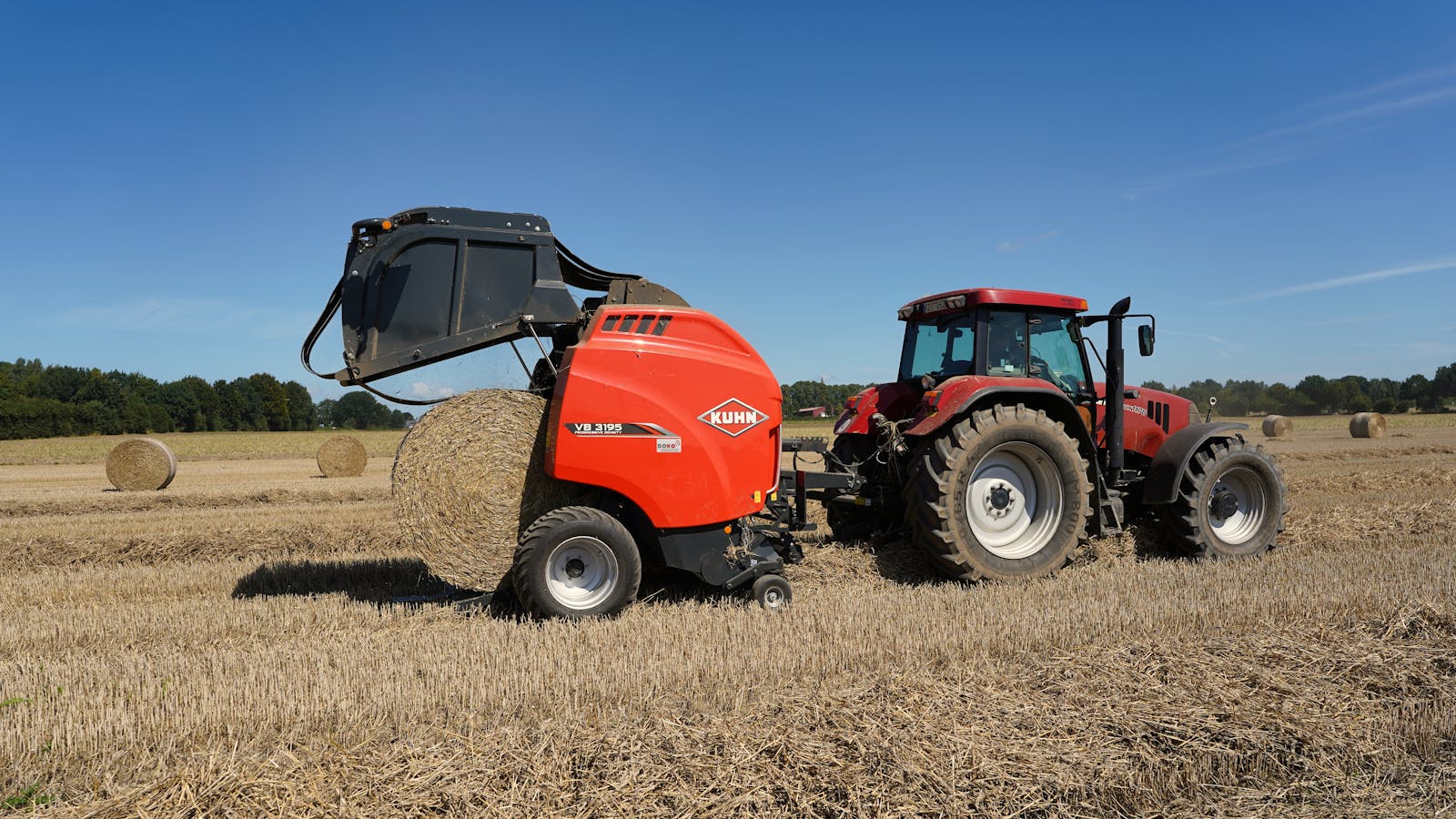
This hay equipment buyer guide for 2026 walks through the complete haymaking equipment lineup — mower, tedder, rake, baler — with HP requirements, used pricing across TractorHouse, Equipment Trader, and Machinery Pete, brand picks, and a decision matrix by acreage. If you are setting up your first hay operation or upgrading an existing one, this is the full picture in one place.
Haymaking is a four-stage sequence: cut the standing crop, fluff it for dry-down, rake it into windrows, and bale the result. Each stage has its own dedicated implement, its own tractor HP requirement, and its own brand and model hierarchy. A complete used setup for a small farm runs $18,000 to $28,000. A premium 100-acre commercial setup pushes north of $100,000. The decisions you make on each tool determine the next two seasons of throughput, hay quality, and downtime.
We pulled current pricing data from 2026 listings, dealer inventory, and auction sold-price reports to anchor every number below. Brand recommendations reflect resale strength, dealer footprint, and parts availability — the three factors that matter most after the initial purchase. Climate, crop type (alfalfa vs grass vs mixed), and acreage all shift the right answer, and we flag those crossover points throughout.
TL;DR
A complete used hay equipment package runs $18K to $200K+ depending on acreage. Under 20 acres: sickle bar mower, 4-rotor tedder, wheel rake, and small square or 4x5 round baler ($18K–$28K). 20–100 acres: disc mower or mower-conditioner, 6-rotor tedder, rotary rake, 5x6 round baler ($40K–$90K). 100+ acres: mower-conditioner, 8 to 10-rotor tedder, twin rotary rake, silage-spec 5x6 or large square baler ($95K+). John Deere, Vermeer, New Holland, and Case IH dominate every category. HP requirements scale from 25 HP on a sickle bar to 110+ HP on a 5x6 baler with crop cutter — match your largest implement to your tractor before buying any tool.
The Hay-Making Sequence: Four Tools, One Workflow
Every hay operation follows the same four-step sequence regardless of scale. Understanding the workflow first makes the equipment decisions that follow obvious — each tool has a specific job, and skipping or undersizing one stage compromises the next two.
Standard Hay Sequence
- Cut. Mow the standing crop with a sickle bar, drum mower, disc mower, or mower-conditioner. Cutting drops the crop in a swath behind the implement. A mower-conditioner crimps or rolls the stems in the same pass to accelerate drying.
- Fluff. A rotary tedder spreads and aerates the cut swath within hours of mowing. Tedding cuts dry-down time by 30 to 60 percent in heavy crops or humid climates. Most operations ted once or twice per cutting depending on weather.
- Rake. A wheel, rotary, or parallel bar rake gathers the dried hay into windrows sized to feed the baler pickup. Rake quality determines bale density consistency and leaf retention — the single biggest driver of hay protein content.
- Bale. A small square, large square, or round baler packages the windrowed hay for storage, transport, and feed. Bale type drives all downstream handling — small squares hand-stack, round bales handle by tractor loader, and large squares move with telehandlers.
The full cycle from cut to bale typically runs 2 to 4 days in dry weather and 4 to 7 days in humid conditions. Hay that sits in the field longer than 7 days loses leaf integrity and protein, dropping its market value 15 to 30 percent. That timeline pressure is why undersized equipment hurts more than buyers expect — every hour of breakdown or plug-up risks the entire crop.
Mowers: Sickle Bar vs Disc Mower vs Drum vs Mower-Conditioner
The mower is the first decision and the most consequential. Cutting speed sets the upper limit on how many acres you can hay per day, how tightly you can time around weather, and how much labor you need at peak season. Five mower categories cover every legitimate hay operation in 2026.
Sickle Bar Mower (5–9 ft, 18–30 HP)
The sickle bar is the original mower design and still the right answer for under 20 acres, fence-line work, and operators with sub-30 HP tractors. A 7-foot sickle cuts 2 to 4 acres per hour and produces a clean, low stubble in light grass. Used prices run $1,500 to $4,000 for serviceable units. The trade-offs are speed (slower than every other category), plug-up risk in lodged or wet crops, and the maintenance burden of finger guards and ledger plates.
The most common mistake on sickle bar mowers is running them in heavy alfalfa stands or wet grass. Either condition plugs the cutter bar repeatedly and turns a four-hour mowing into a full day of stops. If your hay is alfalfa or you are in a humid climate, skip the sickle and start with a drum or disc mower.
Drum Mower (5.5–8 ft, 35–55 HP)
Drum mowers cut with two large counter-rotating drums spinning in opposite directions, throwing the cut crop into a tight center swath. They handle rough terrain and rocks better than disc mowers and are popular among hobby farms and light commercial operations. Used prices run $3,500 to $9,000 for 6 to 8-foot units. The center-throw design produces a heavy, narrow swath that often requires tedding to dry uniformly.
Drum mowers are most common in Eastern Europe and have a smaller used-market footprint in North America than disc mowers. Brands like Galfre, Enorossi, and Fella dominate the import market. They are a good middle option for operators who want to upgrade from a sickle but cannot justify the price of a disc mower.
Disc Mower (7–13 ft, 35–80 HP)
The disc mower is the standard mower for 20-to-100-acre operations in 2026. Multiple discs (typically 4 to 8 depending on width) spin at 3,000 RPM and slice cleanly through everything they encounter — lodged alfalfa, wet grass, mixed forage, and even light brush. A 9-foot disc mower cuts 6 to 10 acres per hour and runs comfortably on a 50 HP tractor. Used prices run $4,000 to $14,000 across the active market.
The dominant brands are John Deere (R-series, 600-series), New Holland Discbine (lower-tier disc-only models), Krone EasyCut, and Kuhn GMD. The R-series Deere mowers and Krone EasyCut hold the strongest used resale and are the safest first-purchase choices. Disc mowers leave a wider, more uniform swath than drum mowers, which usually allows skipping at least one tedder pass in dry weather.
Mower-Conditioner (9–16 ft, 75–130 HP)
The mower-conditioner combines cutting and conditioning (crimping or crushing the stems) in one pass, accelerating dry-down by 30 to 50 percent versus a disc mower alone. This is the standard rig on 75+ acre commercial operations and the right choice for any alfalfa-heavy operation in humid climates. Used prices run $14,000 to $42,000 for pull-type units across the active market.
The leading brands are New Holland Discbine (the dominant nameplate in commercial haymaking), Krone EasyCut conditioner, John Deere R-series with conditioner, and Case IH DC. New Holland Discbine 313 and 316 (13-ft and 16-ft) anchor the used market — a 2014–2018 Discbine 313 with under 1,500 hours typically trades at $24,000 to $38,000 right now. The conditioner roller setup (steel-on-steel for grass, rubber-on-rubber for alfalfa) is a key spec to verify before purchase.
The mower-conditioner vs disc mower decision is one of the most common buyer questions. For under 50 acres of grass hay, a disc mower plus a 4-rotor tedder costs about half as much, runs on a 50 HP tractor, and produces equivalent dry-down with one extra implement pass. For 75+ acres of alfalfa or in humid climates, the mower-conditioner wins on labor, fuel, and weather risk. The crossover sits around the 50–75 acre band.
Mower Comparison Table
| Mower Type | Width | HP | Speed | Used Price | Best For |
|---|---|---|---|---|---|
| Sickle Bar Mower | 5–9 ft | 18–30 HP | 4–6 mph | $1,500–$4,000 | Under 20 acres, fence lines, small tractors |
| Drum Mower | 5.5–8 ft | 35–55 HP | 6–9 mph | $3,500–$9,000 | Rough terrain, hobby farms, light commercial |
| Disc Mower | 7–13 ft | 35–80 HP | 8–12 mph | $4,000–$14,000 | 20–100 acres, lodged crops, fast cutting |
| Mower-Conditioner (Pull-Type) | 9–16 ft | 75–130 HP | 8–11 mph | $14,000–$42,000 | 75+ acres, alfalfa, humid climates |
| Self-Propelled Windrower | 12–18 ft | Built-in 130–250 HP | 10–18 mph | $45,000–$180,000 | 500+ acres, custom hay producers |
Used pricing reflects Q2 2026 listings. Sources: TractorHouse, Equipment Trader, Machinery Pete sold reports. Width and HP requirements are typical for each category — specific models vary.
For tractor sizing, see our tractor HP sizing guide to match an existing tractor to mower options or to size a new tractor purchase around your hay equipment.
Pro Tip
On any used disc mower or mower-conditioner, always pull the side panels and inspect the cutter bar for cracks at the disc bearing housings. A cracked bar is a $4,000 to $8,000 repair on a 9-foot disc mower and $8,000 to $14,000 on a 13-foot Discbine. Look for spider-web cracks radiating from bearing seats, weld repairs in the bar, and oil seepage. Verify the disc bearings spin smoothly with no roughness — bearing replacement is $300 to $500 per disc.
Tedders: Rotary Tedder Buying Guide and Sizing
A rotary tedder is the second tool in the hay sequence and the one most likely to be skipped or undersized by first-time buyers. The tedder spreads cut hay across the field within hours of mowing, exposing more crop surface to sun and wind. In heavy alfalfa, mixed grass, or humid climates, tedding cuts dry-down time by 30 to 60 percent and reduces mold and protein loss substantially.
The mechanics are simple: hydraulically driven rotors with curved tines lift, spread, and toss the swath. Rotor count drives both the working width and the HP requirement. A 4-rotor tedder spans 16 to 18 feet and runs on a 30 HP tractor. A 6-rotor jumps to 20 to 24 feet and wants 60 HP. An 8-rotor pushes 26 to 30 feet and needs a 90 HP cab tractor.
4-Rotor Tedder vs 6-Rotor Tedder
The 4-rotor vs 6-rotor decision tracks acreage almost perfectly. A 4-rotor handles 30 acres comfortably and up to 50 acres with longer days. A 6-rotor opens 30-to-80 acre operations with a single pass per cutting. Used 4-rotor tedders run $2,500 to $6,000. Used 6-rotor tedders run $5,500 to $11,000. The price gap is justified anywhere above 30 acres because the wider unit cuts tedding time roughly in half.
The dominant brands are Kuhn (GF series), Krone (KW series), Pottinger Hit, Fella, and Vicon. Kuhn GF tedders dominate the used North American market and hold strong resale. New Holland and John Deere also build tedders, typically rebadged from European OEMs. Verify the tine condition before buying — bent or missing tines are a $40 to $80 per tine replacement and a worn rotor head is $400 to $900.
When You Can Skip the Tedder
Operations in arid climates (Plains, Intermountain West) cutting thin grass stands often skip the tedder entirely, relying on the wide swath of a mower-conditioner to dry-down naturally. In humid climates (Southeast, Northeast, Pacific Northwest) and for any alfalfa-heavy operation, skipping the tedder typically adds 12 to 36 hours of dry-down time and increases mold risk meaningfully. The economics work out: a $4,000 used 4-rotor tedder pays back in two seasons through reduced spoilage and faster turnaround.
Tedder Sizing Table
| Configuration | Working Width | Tractor HP | Used Price | Best For |
|---|---|---|---|---|
| 4-Rotor Tedder | 16–18 ft | 25–35 HP | $2,500–$6,000 | Under 30 acres, small farm hay setup |
| 6-Rotor Tedder | 20–24 ft | 50–70 HP | $5,500–$11,000 | 30–80 acres, mid-size operations |
| 8-Rotor Tedder | 26–30 ft | 70–95 HP | $10,000–$22,000 | 80+ acres, commercial hay |
| 10-Rotor Tedder | 32–40 ft | 95–130 HP | $22,000–$45,000 | 150+ acres, custom operators |
Used prices reflect 2026 TractorHouse and dealer inventory. Sources: TractorHouse, Equipment Trader, Machinery Pete. Width and HP are typical — Kuhn GF and Krone KW series often define the upper end of pricing.
Rakes: Wheel Rake vs Rotary Rake vs Parallel Bar
The rake is the third stage and one of the most underestimated decisions in hay equipment. Rake type controls leaf retention (the single biggest driver of hay protein and market value), windrow shape (which determines baler pickup efficiency), and operator hours per acre. The wheel rake vs rotary rake decision is the one most operators agonize over.
Wheel Rake (V-Style)
Wheel rakes are ground-driven (no PTO needed) and use rotating wheels with curved tines to gather hay into windrows. They are the cheapest, simplest, and lowest-maintenance rake category. Used prices run $1,500 to $8,000 for 8 to 24-foot units. A wheel rake runs on as little as 25 HP because the wheels turn from contact with the ground rather than tractor power.
The trade-off is leaf retention. Wheel rakes are aggressive on leafy crops, especially dry alfalfa, and can lose 5 to 12 percent of leaf material in the rake pass. For grass hay, mixed forage, or cattle-grade alfalfa, that loss is acceptable. For dairy-grade alfalfa or premium horse hay, it is meaningful. Brands include H&S, New Holland, Sitrex, Tonutti, and Vermeer.
Rotary Rake (PTO-Driven)
Rotary rakes use PTO-driven rotors with controlled tine arms to lift and side-deliver the hay into a uniform windrow. They are gentler on leaves than wheel rakes (typically 2 to 4 percent leaf loss vs 5 to 12 percent), produce a more consistent windrow shape that feeds the baler more efficiently, and handle wet or partially dried hay better. Used prices run $5,000 to $14,000 for single rotor units and $15,000 to $38,000 for twin-rotor commercial models.
Kuhn (GA series), Krone (Swadro), Pottinger (Top series), and Vicon dominate the rotary rake market. Kuhn GA rotary rakes are the most common used unit in North America and trade between $7,000 and $14,000 for 10 to 13-foot single-rotor units. Twin rotary rakes (Kuhn GA 8030, Krone Swadro 1400) span 24 to 28 feet and dominate commercial alfalfa operations.
Parallel Bar Rake (Side-Delivery)
The parallel bar rake (often called a side-delivery rake) is the traditional design that dominated North American hay until the 1990s. Reels with parallel bars rotate to lift and side-deliver hay. Parallel bar rakes are the gentlest on leaves of any category — leaf loss typically runs 1 to 3 percent. Used prices run $3,500 to $9,000. Vermeer, New Holland, and H&S still build them, and they have a loyal following among operators who hand-stack small squares for premium horse hay markets.
The trade-off is speed (slower than rotary or wheel rakes) and field surface sensitivity (they do not handle rough or rocky ground well). For most modern operations, the rotary rake has displaced the parallel bar rake. For operations selling premium small-square horse hay, the parallel bar still wins.
Rake Comparison Table
| Rake Type | Width | HP | Drive | Used Price | Best For |
|---|---|---|---|---|---|
| Wheel Rake (V-Style) | 8–24 ft | 25–60 HP | Ground-driven | $1,500–$8,000 | Most versatile, low maintenance, handles light to medium crops |
| Rotary Rake (Single) | 10–13 ft | 40–55 HP | PTO | $5,000–$14,000 | Premium hay quality, gentler on leaves, dairy alfalfa |
| Rotary Rake (Twin) | 20–28 ft | 70–110 HP | PTO | $15,000–$38,000 | Commercial alfalfa, premium dairy markets |
| Parallel Bar Rake | 9–12 ft | 30–45 HP | Ground or PTO | $3,500–$9,000 | Gentlest on leaves, traditional preference |
| Belt/Merger Rake | 20–35 ft | 90–140 HP | Hydraulic | $28,000–$75,000 | Silage operations, large commercial dairy |
Used prices reflect 2026 active and sold listings. Sources: TractorHouse, Equipment Trader, Machinery Pete. Belt/merger rakes are commercial silage tools and rarely appear in standard small-farm hay setups.
Balers: Round vs Square, Small vs Mid vs Large
The baler is the most expensive single line item in any hay equipment package and the one with the most variation in used pricing. Bale type drives all downstream handling — small squares hand-stack at 40 to 60 lb each, round bales handle by tractor loader at 700 to 1,800 lb each, and large squares move with telehandlers at 1,500 to 2,200 lb each. Pick the bale type your market demands first, then optimize on brand and model.
Small Square Balers (14x18, 40–60 lb bales)
Small square balers produce the classic 14x18-inch bale weighing 40 to 60 pounds. They dominate the horse hay market, premium small-market sales, and any operation that sells direct-to-consumer or to small barns that need hand-stackable bales. Used prices run $3,500 to $18,000 across the John Deere 348, New Holland BC5070, Case IH SB541, and Massey Ferguson 1840 platforms. A 50 HP tractor handles them comfortably.
The John Deere 348 is the single most common used small square baler in North America. Mid-2000s 348 units with knotter rebuilds and clean condition trade at $7,000 to $12,000 in 2026. The New Holland BC5070 and Case IH SB541 (CNH siblings) trade at similar levels. The biggest service item on small squares is the knotter — $1,500 to $3,500 to rebuild — and the bale chamber needles.
Round Balers (4x5 and 5x6)
Round balers dominate the cattle and beef market and represent more than 60 percent of all balers sold in the US. The two main classes are 4x5 (700–1,000 lb bales, $8K–$30K used) and 5x6 (1,200–1,800 lb bales, $13K–$80K used). The 4x5 wins for small farms and cattle operations under 50 head. The 5x6 dominates commercial hay, custom hay producers, and large beef operations.
The dominant brands are John Deere (459, 460M, 560M, 569), Vermeer (504M, 605N, 604R), New Holland (BR7060, BR7090, Roll-Belt 460/560), and Case IH (RB454, RB565). The John Deere 569 (5x6 premium) is the single most-searched used round baler in North America. For deep model-by-model pricing detail, see our used round baler prices guide covering John Deere 459 through 569, Vermeer 504M through 605N, New Holland BR7090 and Roll-Belt 560, and Case IH RB565 with bale-count pricing brackets.
Mid-Size and Large Square Balers (3x3, 3x4, 4x4)
Mid-size square balers (3x3 and 3x4) produce 750 to 1,400 lb bales and dominate commercial hay export, dairy total mixed ration markets, and large beef operations. Large squares (4x4) push to 2,200 lb. Used prices for mid-size squares run $28,000 to $95,000, with large squares spanning $45,000 to $150,000+. The Massey Ferguson 2270XD, Krone BiG Pack 1290, New Holland BB9080, and Case IH LB434 anchor the commercial used market.
Mid and large squares need 100 to 230 HP and are typically paired with mid-size 4WD cab tractors or large MFWD utility tractors. They deliver the highest density per bale (10 to 12 lb per cubic foot vs 8 to 10 for round bales) which makes them dominant in any market that ships hay long distances. Export markets, premium dairy operations, and any custom hay producer working 200+ acres should evaluate mid-square against round.
Baler Comparison Table
| Baler Type | Bale Output | HP | Used Price | Top Brands/Models | Best For |
|---|---|---|---|---|---|
| Small Square (14x18) | 40–60 lb bales | 35–55 HP | $3,500–$18,000 | John Deere 348, NH BC5070, Case IH SB541 | Horse hay, small markets, hand-stacking |
| Mid-Square (3x3 / 3x4) | 750–1,400 lb bales | 100–180 HP | $28,000–$95,000 | Massey 2270XD, Krone BiG Pack, NH BB9080 | Commercial hay export, dairy total mixed ration |
| Large Square (4x4) | 1,500–2,200 lb bales | 160–230 HP | $45,000–$150,000 | Krone BiG Pack 1290, Case IH LB434 | Export hay, large dairy, commodity-grade alfalfa |
| Round Baler 4x5 | 700–1,000 lb bales | 50–70 HP | $8,000–$30,000 | JD 459/460M, Vermeer 504M, NH BR7060 | Cattle operations, small commercial, mixed forage |
| Round Baler 5x6 | 1,200–1,800 lb bales | 75–110 HP | $13,000–$80,000 | JD 569/560M, Vermeer 605N, NH Roll-Belt 560, Case IH RB565 | Commercial hay, custom operators, beef cattle |
Used pricing reflects current 2026 market. Sources: TractorHouse, Equipment Trader, Machinery Pete sold reports, Iron Solutions residual values. Round baler bracket detail in our model-by-model used round baler prices guide.
HP Requirements by Hay Equipment Tool
Minimum tractor PTO HP for typical sizes within each tool category. Crop conditions (heavy, lodged, or wet) increase HP demand by 15 to 25 percent above the floor numbers shown.
Used Hay Equipment 2026 Prices: Full Tool Comparison
Used hay equipment prices in 2026 span a wide range across the four tool categories. Mowers run $1,500 to $42,000 depending on type. Tedders span $2,500 to $45,000 by rotor count. Rakes cover $1,500 to $75,000 from basic wheel rakes to commercial mergers. Balers run $3,500 to $150,000+ depending on bale type and capacity. The chart below maps the full range across all major tool categories.
Used Hay Equipment 2026 Price Ranges
Auction values for hay tools run 15 to 25 percent below dealer retail per Ritchie Bros and Purple Wave sold-price data, with the trade-off of buyer-side risk. A complete used hay equipment package bought through dealers costs roughly 20 to 30 percent more than the same package assembled through auctions and private sales — but comes with inspections, often a 30 to 90 day powertrain warranty, and dealer-installed reconditioning. For experienced operators, auctions remain the most economical path. For first-time hay buyers, dealer purchase is the safer route.
For deeper context on hay tools auction values and bidding strategy, see our heavy equipment auction guide covering Ritchie Bros, Purple Wave, BigIron, and the regional ag auctions where most hay equipment changes hands.
Decision Matrix: What to Buy by Acreage
The right hay equipment package depends almost entirely on acreage. The four bands below cover every realistic operation from hobby-farm scale through commercial custom hay. Each band assumes a single operator working roughly two cuttings per season in a moderate climate. Add 20 to 30 percent capacity if you are in arid Plains conditions with three to four cuttings, or if you intend to do custom work for neighbors.
Total Used Hay Equipment Investment by Acreage
Under 20 Acres: Small Farm Hay Setup
Under 20 acres, the right setup is a 7-foot sickle bar mower, a 4-rotor tedder, a 10-foot wheel rake, and either a small square baler or a 4x5 round baler. Total used package cost: $18,000 to $28,000. Tractor: any 30 to 60 HP utility unit. The bottleneck on this scale is operator labor, not equipment capacity, so pushing to a disc mower or rotary rake adds cost without adding throughput.
For first-time hay producers at this scale, the small square baler wins for direct-to-consumer markets (horse hay, hobby farms, small barns) where premium pricing offsets the lower output. The 4x5 round baler wins for cattle operators who feed their own bales. A small farm hay setup combining a JD 348 small square baler and a sickle bar mower remains one of the most resilient and affordable hay-tool combinations in 2026.
20–50 Acres: Mid-Tier Setup
At 20 to 50 acres, an 8 to 9-foot disc mower, a 4 to 6-rotor tedder, a wider wheel rake or single-rotor rotary rake, and a 4x5 round baler form the right combination. Total used package cost: $32,000 to $50,000. Tractor: 60 to 90 HP utility, ideally a cab tractor for operator comfort during long days.
The disc mower upgrade alone is the biggest productivity gain at this scale. Cutting time drops from roughly 4 hours per 10 acres on a sickle to under 90 minutes on a 9-foot disc mower. That speed lets you mow during shorter weather windows — the single biggest risk reducer in 20 to 50-acre hay operations.
50–100 Acres: Commercial Setup
From 50 to 100 acres, the package shifts to commercial-grade tools. A 9 to 10-foot disc mower or a small mower-conditioner, a 6-rotor tedder, a single-rotor rotary rake, and a 5x6 round baler anchor this band. Total used package cost: $50,000 to $90,000. Tractor: a 90 to 110 HP cab tractor with creeper transmission or PowerShift.
The mower-conditioner-vs-disc-mower decision typically lands here. For grass hay in dry climates, the disc mower plus 6-rotor tedder package costs $20,000 to $30,000 less than the mower-conditioner alternative and produces equivalent results. For alfalfa or humid climates, the mower-conditioner is worth the upgrade for the dry-down speed advantage.
100+ Acres: Full Commercial / Custom Hay
Above 100 acres, the package needs commercial throughput on every tool. A 12 to 16-foot pull-type mower-conditioner (Discbine 313/316, Krone EasyCut, JD R450), an 8 to 10-rotor tedder, a twin-rotor rotary rake or parallel bar rake, and either a silage-spec 5x6 round baler or a 3x3 mid-square baler dominate this scale. Total used package: $95,000 to $200,000+. Tractor: 110 to 160 HP cab unit.
At this scale, machine throughput, operator hours per acre, and weather window capture all dominate purchase decisions. A second tractor or a second baler is often more valuable than upgrading to the largest single implement in each category. Custom hay producers working 200+ acres typically run two complete teams (mower-conditioner and rake on one tractor, baler on another) to compress the cut-to-bale window.
Selling Hay Equipment?
If you are upgrading and need to move existing hay tools, we provide cash offers within 24 hours on mowers, tedders, rakes, and balers. Single tools or full hay teams. Free pickup nationwide. Get a quote on your hay equipment.
Brand Recommendations: Who Wins at Each Stage
Brand selection in hay equipment matters more than in tractors because hay tools cycle through more wear parts and demand stronger dealer support. The leaders below are the brands that consistently hold strong used resale, run reliable parts pipelines, and dominate buyer search demand on TractorHouse and Equipment Trader.
- Mowers: John Deere R-series and 600-series disc mowers, New Holland Discbine for mower-conditioners, Krone EasyCut for premium European-spec rigs. Kuhn GMD is the value pick on disc mowers.
- Tedders: Kuhn GF series and Krone KW series dominate North American resale. Pottinger Hit and Vicon Fanex are strong European alternatives. New Holland and JD-branded tedders are typically rebadged European OEMs and trade similarly.
- Rakes: Kuhn GA rotary rakes lead the rotary segment. H&S, New Holland, and Sitrex dominate wheel rakes. Krone Swadro and Pottinger Top are premium twin-rotor options.
- Balers (round): John Deere 459/560M/569 and Vermeer 605N hold the strongest 5x6 resale. New Holland Roll-Belt 560 and Case IH RB565 follow. For 4x5, JD 460M and Vermeer 504M lead.
- Balers (small square): John Deere 348 dominates the used market. New Holland BC5070 and Case IH SB541 (CNH siblings) trade similarly.
- Balers (mid/large square): Massey Ferguson 2270XD, Krone BiG Pack 1290, New Holland BB9080, Case IH LB434 anchor the commercial used market.
For broader brand resale data across all heavy equipment classes, see our brand resale value comparison and the heavy equipment pricing guide for cross-class market context.
Full Decision Matrix Table
The table below maps every tool decision against acreage band so you can match your operation directly to a recommended setup.
| Acreage | Mower | Tedder | Rake | Baler | Tractor | Total Used |
|---|---|---|---|---|---|---|
| Under 20 acres | Sickle bar (7 ft) — $1,500–$3,500 | 4-rotor — $2,500–$5,000 | Wheel rake (10 ft) — $1,500–$3,500 | Small square (14x18) — $4,000–$10,000 OR 4x5 round — $8,000–$18,000 | 30–60 HP utility | $18,000–$28,000 |
| 20–50 acres | Disc mower (8–9 ft) — $5,000–$10,000 | 4 to 6-rotor — $4,000–$8,000 | Wheel rake (16–18 ft) or rotary rake — $4,000–$10,000 | 4x5 round — $14,000–$28,000 | 60–90 HP utility | $32,000–$50,000 |
| 50–100 acres | Disc mower (9–10 ft) or mower-conditioner — $14,000–$28,000 | 6-rotor — $5,500–$11,000 | Rotary rake (single) — $7,000–$14,000 | 5x6 round — $22,000–$48,000 | 90–110 HP cab tractor | $50,000–$90,000 |
| 100+ acres | Mower-conditioner (12–16 ft) — $24,000–$42,000 | 8 to 10-rotor — $10,000–$30,000 | Twin rotary or parallel bar — $15,000–$38,000 | 5x6 silage-spec or 3x3 large square — $40,000–$95,000 | 110–160 HP cab tractor | $95,000–$200,000+ |
Recommendations assume 2 cuttings per season in moderate climate, single-operator workload. Add 20-30% capacity for arid 3-4 cutting climates or custom hay work. Sources: 2026 TractorHouse, Equipment Trader, Machinery Pete composite.
Used Hay Equipment Inspection: What to Check on Each Tool
Hay equipment hides wear in places tractor inspections do not cover. Run this short list on each tool before any used purchase. The first item on each list eliminates 80 percent of bad equipment within ten minutes.
- Mowers: Pull side panels, inspect cutter bar for cracks at disc bearings, verify all discs spin smoothly with no roughness, check for oil leakage at the gearbox. On mower-conditioners, check conditioner roller condition and PTO shaft for play.
- Tedders: Count missing or bent tines, verify rotor heads spin without noise, check hydraulic cylinders on folding units, inspect rotor gearboxes for leaks. Bent tines run $40-$80 each, rotor head replacement is $400-$900.
- Rakes: On wheel rakes, check tine condition and hub bearings. On rotary rakes, verify the PTO drive operates smoothly, inspect tine arms for wear, and check the rotor gearbox for excessive play. A worn rotary rake gearbox is a $1,500-$3,500 repair.
- Balers: Verify bale-count monitor against service records, inspect every belt, check pickup teeth and reel, cycle wrap systems (net and twine). Belt sets cost $2,500-$5,000 to replace, net wrap motors $800-$1,400. See the full inspection workflow in our used round baler prices guide.
For a comprehensive cross-class inspection workflow, our used heavy equipment inspection guide covers the universal pre-purchase checks that apply across mowers, balers, tractors, and other implements.
Where to Buy Used Hay Equipment in 2026
The four main channels for used hay equipment each carry different risk and price profiles. Knowing which channel fits your experience level decides whether you save money or buy a problem.
- Dealer retail (JD, NH, Vermeer dealers): 10-20% above auction comps. Comes with inspection, often a 30-90 day powertrain warranty, and dealer-installed reconditioning. Best for first-time buyers without inspection skills.
- Auction (Ritchie Bros, Purple Wave, BigIron): 15-25% below dealer retail. Total buyer responsibility for inspection, transport, and any defects. Best for experienced operators who can pre-inspect independently.
- Private sale (TractorHouse, Equipment Trader, Facebook Marketplace): 8-15% below dealer retail. Most sellers willing to demonstrate the equipment in the field. No warranty, slower transactions.
- Cash offer / national buyer: Direct sale to a national equipment buyer. Faster than dealer trade-in, no listing time, no fees. Best for sellers wanting speed over peak retail.
For sellers comparing every option, see our where to sell heavy equipment guide covering platform fees, time-to-sale, and net pricing across every major channel.
Shipping is the second consideration after purchase channel. Hay equipment moves on flatbed or step-deck trucks at $2 to $5 per loaded mile depending on size. A round baler ships for $1,200 to $3,500 cross-country. A mower-conditioner runs $1,800 to $4,500. See our heavy equipment shipping costs guide for current freight rates and best practices.
Financing and Tax Considerations
Hay equipment qualifies for Section 179 deduction up to the annual cap (currently $1.16M for 2026 with bonus depreciation phasing out). For most small-to-mid hay operations, that means the full purchase price of a complete hay equipment package is deductible in the year of purchase. Year-end equipment buys remain a major tax-planning lever for hay producers.
Financing options span dealer programs (typically 5-7% on used hay equipment), specialty ag lenders (Farm Credit, Rabobank, AgDirect), and standard commercial bank loans. Down payment expectations run 10-25% for established operations, 25-40% for first-time buyers. For complete financing comparison, see our equipment financing guide and our Section 179 deduction guide for the full tax framework.
Frequently Asked Questions About Hay Equipment in 2026
What equipment do I need to make hay?
A complete hay setup needs four tools used in sequence: a mower to cut the standing crop, a tedder to fluff and aerate the swath for faster dry-down, a rake to gather the dried hay into windrows, and a baler to package it. The minimum viable small-farm setup is a sickle bar mower or compact disc mower, a 4-rotor rotary tedder, a wheel rake, and a small square or 4x5 round baler — typically $18,000 to $35,000 used in 2026 across all four implements. Larger commercial operations swap the sickle for a mower-conditioner that combines cutting and conditioning in one pass, often skipping or reducing tedder use entirely.
Do I need a tedder if I have a rake?
A tedder and rake do different jobs and most operations benefit from owning both. The tedder spreads and fluffs the cut hay across the field within hours of mowing to accelerate dry-down. The rake gathers fully dried hay into windrows for the baler. Skipping the tedder works in low-humidity climates with thin alfalfa stands, but in heavy or wet crops it adds 12 to 24 hours of drying time, increases mold risk, and lowers protein retention. For a small farm hay setup under 30 acres, a tedder and a wheel rake together typically cost $4,000 to $8,000 used and pay back in two seasons through better-quality hay.
How much does a used hay setup cost?
A complete used hay equipment package runs $18,000 to $90,000+ in 2026 depending on scale. A small-farm setup (sickle bar mower, 4-rotor tedder, wheel rake, small square baler) sits at $18,000 to $28,000. A mid-size commercial setup (disc mower, 6-rotor tedder, rotary rake, 4x5 round baler) runs $40,000 to $65,000. A premium 100+ acre setup (mower-conditioner, 8-rotor tedder, parallel bar rake, 5x6 silage-spec baler) pushes $75,000 to $120,000. Used round balers are the single biggest line item — see our dedicated used round baler pricing guide for model-by-model detail.
What is the difference between a disc mower and a sickle mower?
A sickle mower cuts with a reciprocating knife bar that slides side-to-side through finger guards, the same mechanism used since the 1850s. A disc mower cuts with rotating discs spinning at 3,000 RPM that slice cleanly through the crop. Disc mowers are 2 to 3 times faster, handle lodged or tangled crops without plugging, and need 35 to 50 HP for a 7-foot to 9-foot cut. Sickle mowers run on as little as 18 to 25 HP, cost $1,500 to $4,000 used, and produce a cleaner stubble in light crops. Disc mowers cost $4,000 to $14,000 used and dominate commercial haymaking. The sickle still wins in small acreages, fence-line work, and for operators with sub-30 HP tractors.
What HP tractor do I need for hay equipment?
Tractor HP requirements scale by tool. A 7-foot sickle bar mower runs on 18 to 30 HP. A 7-foot to 9-foot disc mower wants 35 to 50 HP, and a 10-foot to 13-foot mower-conditioner needs 75 to 110 HP. A 4-rotor tedder runs on 25 to 35 HP, a 6-rotor on 50 to 70 HP. Wheel rakes need only 25 to 40 HP regardless of width, while rotary rakes need 40 to 65 HP for the PTO drive. A 4x5 round baler runs comfortably on 50 to 70 HP, a 5x6 wants 75 to 90 HP, and a 5x6 with crop cutter needs 90 to 110 HP. Match your largest implement to your tractor before buying — undersizing the tractor causes plugged mowers, missed bales, and PTO failures that cost $1,200 to $3,500 to repair.
Should I buy a mower-conditioner or a disc mower plus tedder?
A mower-conditioner combines cutting and conditioning (crimping or crushing the stems) in one pass, accelerating dry-down by 30 to 50 percent versus a plain disc mower. It eliminates or reduces tedder passes and is the standard rig on 75+ acre commercial operations. The trade-off is cost ($14,000 to $42,000 used vs $4,000 to $14,000 for a disc mower) and HP requirement (75+ HP minimum). For operations under 50 acres of grass hay, a disc mower plus a 4-rotor tedder costs about half as much, runs on a 50 HP tractor, and produces equivalent dry-down with one extra implement pass. For 75+ acres of alfalfa or in humid climates, the mower-conditioner wins on labor, fuel, and weather risk.
Build Your Hay Equipment Lineup the Right Way
A complete hay setup is a four-tool decision: mower, tedder, rake, and baler. Match each tool to your acreage, climate, and crop type, and pair the largest implement to your tractor HP before buying any single piece. The decision matrix above maps that against $18K small-farm packages through $200K+ commercial setups so you can see exactly where your operation should land.
If you are upgrading or selling existing hay equipment, we provide cash offers within 24 hours on individual implements or full hay teams. Free pickup nationwide. For deeper pricing detail on any single tool, see our used round baler prices guide and the heavy equipment pricing guide.