
Brand Comparison
John Deere Compact Tractor Series Comparison: 1, 2, 3, 4 Series Compared (2026)
Side-by-side 1, 2, 3, and 4 Series compact tractor specs, 2026 pricing, PTO HP, loader lift, transmissions, and resale data — with verdicts by use case and acreage.
Last updated: May 2026
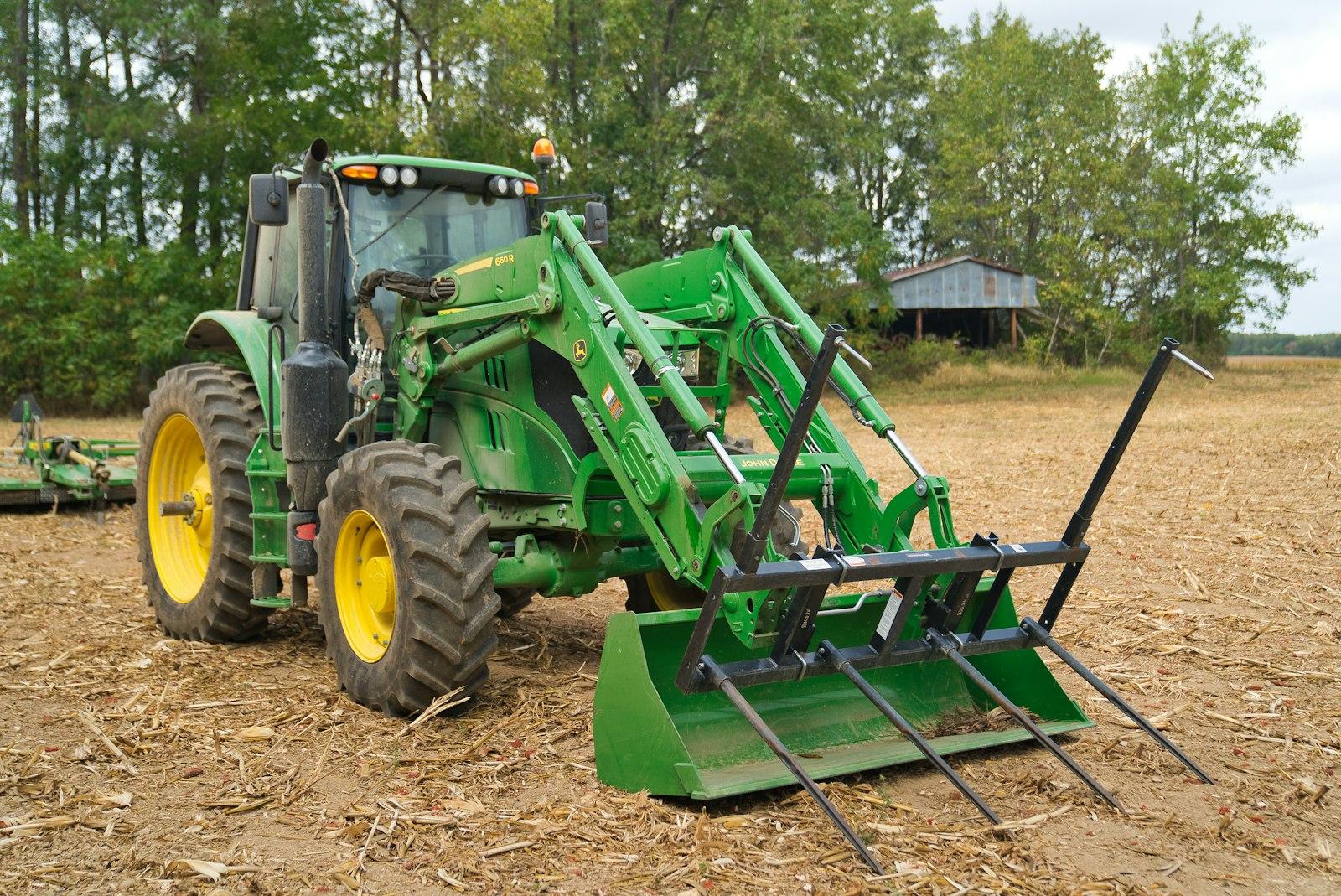
The John Deere compact tractor series comparison comes down to a clean four-step ladder: the 1 Series (22-25 HP, $18,500-$22,000 with loader) handles sub-2-acre lawns and snow, the 2 Series (24-32 HP, $22,000-$32,000) adds real loader lift and mid-PTO for 2-5 acre properties, the 3 Series (25-46 HP, $22,000-$45,000) covers 3-25 acre hobby farms and light ag, and the 4 Series (43-66 HP, $38,000-$70,000+) crosses into utility-tractor territory for hay, cattle, and commercial work. Pick by your largest attachment and loader lift requirement, not engine HP alone — that single rule saves most buyers $5,000-$15,000 in over-spec or under-spec mistakes.
This guide breaks down all 12 mainstream models across the four series, with rated PTO horsepower, factory loader lift specs, transmission options, factory cab availability, and realistic 2026 out-the-door pricing from Deere dealer surveys. We also include a head-to-head versus Kubota matrix, used pricing benchmarks from TractorHouse and Ritchie Bros, and a real cost-breakdown worksheet on a 3038E build. John Deere leads the global compact tractor market at roughly 17% share according to Fact.MR's compact tractor market report, with Kubota the dominant alternative in North America — the rest of this guide tells you which Deere model wins for your specific use case.
TL;DR — Which John Deere Compact Tractor Series Should I Buy?
- 1 Series (1025R): Under 2 acres, lawn-focused, single-operator household. Cheapest path to the green paint.
- 2 Series (2025R, 2032R): 2-5 acres, autoconnect mower deck plus loader chores. Best refinement-to-price ratio.
- 3 Series E (3025E, 3032E, 3038E): 3-15 acres, value-priced workhorse. Skip if you want a cab.
- 3 Series R (3033R, 3039R, 3046R): 5-25 acres, premium operator station, factory cab option, electronic hitch.
- 4 Series M (4044M, 4052M, 4066M): Cattle, hay, daily loader work on 10-50 acres. The serious-work pick.
- 4 Series R: Commercial-grade work, premium telematics, AutoTrac-ready. Most expensive in the compact lineup.
- Resale champ: 3046R cab and 4052M cab hold value best at 5 years (70% of MSRP).
The Four-Series Ladder: 1, 2, 3, and 4 Compared
John Deere splits the compact tractor lineup into four numeric series that each represent a step up in frame size, HP, loader capacity, and price. The series number is the first digit of the model number — a 3038E is in the 3 Series, a 4066M is in the 4 Series. The two- or three-digit suffix is engine HP (3038E = 38 HP), and the letter denotes trim level (E = entry, M = mid, R = premium).
The price-to-capability curve isn't linear. Moving from a 2 Series to a 3 Series only costs $2,000-$5,000 more for nearly double the loader lift on the E trim. But jumping from a 3 Series R to a 4 Series adds $7,000-$15,000 for the heavier transmission and frame. Most buyers oversize by one series and regret the spend, or undersize and replace within 18 months — this comparison shows where each series actually earns its price.
| Series | Subclass | Engine HP | PTO HP | Loader Lift | Price w/Loader | Best For |
|---|---|---|---|---|---|---|
| 1 Series | Sub-Compact | 22-25 HP | 15-18 HP | 525-700 lb | $18,500-$22,000 | Sub-2-acre lawns, light loader work, mowing, snow blower |
| 2 Series | Sub-Compact / Compact | 24-32 HP | 18-25 HP | 800-1,025 lb | $22,000-$32,000 | 2-5 acres, mid-PTO for autoconnect decks, light tillage |
| 3 Series | Compact | 25-46 HP | 20-37 HP | 1,000-2,000 lb | $22,000-$45,000 | 3-25 acre hobby farms, rotary cutters, light ag, livestock |
| 4 Series | Heavy Compact / Utility | 43-66 HP | 33-55 HP | 2,000-3,000 lb | $38,000-$70,000 | 10-50 acre farms, hay, cattle, heavy loader, commercial mowing |
2026 Price Range by Series (with Loader)
Model-by-Model: Every Compact Tractor Compared
The series number tells you frame class, but the suffix tells you what you can actually do with the tractor. A 3038E and a 3046R are both in the 3 Series, but the 3046R has 50% more loader lift, an electronic hitch, and a factory cab option — for $15,000 more. This model-detail table is the single most useful page in the guide for matching tractor to job.
| Model | Eng HP | PTO HP | Weight | Loader Lift | Transmission | Price w/Loader | Cab | Best Use |
|---|---|---|---|---|---|---|---|---|
| 1025R | 23.9 | 15.3 | 1,580 lb | 525 lb (120R) | 2-range Hydro | $19,000-$22,000 | No (canopy only) | 1-2 acre lawns, light loader, snow blower |
| 2025R | 24.2 | 18.0 | 1,581 lb | 800 lb (220R) | 2-range Hydro | $22,000-$26,000 | No | 2-5 acres, autoconnect 60D mower, loader chores |
| 2032R | 31.2 | 24.4 | 2,094 lb | 1,025 lb (220R) | 2-range eHydro | $26,000-$32,000 | No | 5-10 acres, larger loader work, premium operator station |
| 3025E | 24.7 | 19.3 | 2,150 lb | 1,000 lb (300E) | 2-range Hydro | $22,000-$25,000 | No | 3-10 acres, value pick, bigger frame than 2 Series |
| 3032E | 31.1 | 25.3 | 2,557 lb | 1,186 lb (300E) | 2-range Hydro | $26,000-$30,000 | No | 5-15 acres, 60-72 inch rotary cutter, light hay |
| 3038E | 37.0 | 30.0 | 2,756 lb | 1,186 lb (300E) | 2-range Hydro | $28,000-$32,000 | No | 10-20 acres, max HP in 3E lineup, value rotary cutter pick |
| 3033R | 31.8 | 24.7 | 3,090 lb | 1,720 lb (320R) | 3-range eHydro / PowrReverser | $33,000-$38,000 | Yes (factory cab) | Premium 3 Series, electronic hitch, cab option |
| 3039R | 38.2 | 30.9 | 3,090 lb | 1,720 lb (320R) | 3-range eHydro / PowrReverser | $36,500-$42,000 | Yes | Hay and small ag, autoconnect 72D mower, cab |
| 3046R | 44.7 | 37.3 | 3,600 lb | 2,000 lb (320R) | 3-range eHydro / PowrReverser | $40,000-$45,000 | Yes | Top 3 Series, light hay, small round baler, livestock |
| 4044M | 43.1 | 33.4 | 3,235 lb | 2,000 lb (440R) | 12/12 PowrReverser / eHydro | $38,000-$44,000 | Yes | Entry 4 Series, value hay/cattle pick, heavy loader |
| 4052M | 52.6 | 42.8 | 3,373 lb | 2,500 lb (440R) | 12/12 PowrReverser / eHydro | $43,000-$50,000 | Yes | 10-30 acre farms, round baler, rear blade in clay |
| 4066M | 65.9 | 55.0 | 5,400 lb (HD) | 3,000 lb (460R) | 12/12 PowrReverser / eHydro | $50,000-$58,000 | Yes | Heavy commercial, 6-ft tiller, 200-bale season hay |
Rated PTO Horsepower by Model
Watch the PTO HP column more than engine HP. A 3038E lists 37 engine HP but only 30 PTO HP — that 7 HP loss to driveline and accessory drag is normal for compact tractors. PTO HP is what actually turns your rotary cutter, baler, or post-hole digger. Implement makers always spec required PTO HP in their manuals. Our tractor sizing guide walks through the PTO HP math by attachment in detail.
1 Series: The Sub-Compact (1023E, 1025R)
The 1 Series is John Deere's smallest, lightest tractor — 22-25 HP, 1,300-1,580 pounds, and a base frame width of 48-50 inches. It's engineered for properties under 2 acres where the tractor needs to fit through a 5-foot garden gate, navigate around mature landscaping, and load into a 6,000-pound trailer behind a half-ton truck.
- 1023E: Gear transmission, 22.4 engine HP, 14.5 PTO HP. The value pick at about $14,500 bare. Limited loader options.
- 1025R: 2-range hydrostatic, 23.9 engine HP, 15.3 PTO HP. The volume model. Pairs with the 120R loader (525 lb lift) and the 54D / 60D autoconnect mower deck. $19,000-$22,000 with loader.
Where the 1 Series shines: dedicated lawn finish mowing with the autoconnect deck (no tools to swap from mower to loader), light landscaping work, and snow blowing with the front-mount 47-inch snow blower. Where it falls down: rotary cutters over 48 inches, heavy clay tillage, and any work where you need a third-function valve for grapples or angle blades.
Deere announced a redesigned 1 Series for the 2027 model year according to TractorHouse, with improved comfort and serviceability across new 1E23, 1M25, and 1R25 sub-models. Current 2026 1025R units should see modest dealer incentives in late summer 2026 as the redesign rolls out.
2 Series: The Refined Sub-Compact (2025R, 2032R, 2038R)
The 2 Series is the 1 Series with a heavier frame, mid-PTO, and a premium operator station. Same general footprint, more capability. The 2025R adds 300 pounds of weight and a 220R loader rated at 800 pounds — over 50% more lift than the 1025R's 120R for about $3,000 more.
- 2025R: Volume model. 24.2 engine HP, 18 PTO HP, 800-lb loader lift. eHydro available. Premium step-up from 1025R for $22,000-$26,000.
- 2032R: 31.2 engine HP, 24.4 PTO HP, 1,025-lb loader lift, premium amenities. The 2 Series flagship at $26,000-$32,000.
- 2038R: Newest entry, 37 HP. Bridges to the 3 Series E in capability. Cab not available.
The 2 Series sweet spot is the 2025R for buyers who want autoconnect mower convenience plus actual loader capability. The 2032R earns its $5,000 premium over the 2025R only if you'll use the 1,025-lb loader lift weekly — pallet handling, round bale moving (under 600 lb bales), or heavy material moving. Otherwise, the money is better spent on attachments.
Pro Tip — The 2032R vs 3025E Trap
Many buyers cross-shop the 2032R ($28K) against the 3025E ($22K) and pick the 3025E to save $6K. That's usually wrong. The 2032R has more PTO HP (24 vs 19), a stronger loader (1,025 vs 1,000 lb), eHydro vs 2-range hydro, and a far better operator station. The 3025E only wins on bigger ground clearance and frame durability for rougher properties. If your ground is flat-to-rolling and you value operator comfort, the 2032R is the better tractor for the dollar.
3 Series: The Hobby Farm Workhorse (3025E through 3046R)
The 3 Series is John Deere's widest compact tractor lineup — six models split into two trim families (E and R) covering 25-46 PTO HP. This is the volume series for 3-25 acre properties, livestock operations, and serious hobby farms. It's also where buyers make the most pricing mistakes by mixing up E and R trims.
3 Series E (Economy)— 3025E, 3032E, 3038E. Mechanical controls, 2-range hydrostatic transmission, basic operator station, no factory cab option. The 3038E at $28,000-$32,000 with loader is the value champion of the entire compact lineup — 30 PTO HP, 1,186-lb loader lift, and enough frame for a 6-foot rotary cutter.
3 Series R (Premium)— 3033R, 3039R, 3046R. eHydro Premium or PowrReverser transmission, electronic 3-point hitch control, premium operator station, factory cab option, telematics-ready. The 3046R at $40,000-$45,000 is the top of the 3 Series — 37 PTO HP, 2,000-lb loader lift, and serious cab comfort.
Loader Lift Capacity by Model
The R-trim premium is real but priced steeply. The 3033R adds about $11,000 over the 3032E for the same PTO HP class. You're paying for the cab option (worth $4,000-$6,000 alone), the eHydro Premium transmission, and the electronic hitch — not for engine power. Buyers who don't need a cab almost never recoup the R trim premium in resale.
4 Series: Where Compact Meets Utility (4044M, 4052M, 4066M)
The 4 Series is technically a compact utility tractor but functionally bridges into utility-tractor territory. Frame weights climb from 3,235 pounds (4044M) to 5,400 pounds for the 4066M HD configuration. Loader lifts run 2,000-3,000 pounds. PowrReverser transmissions are standard, which matters enormously for daily loader work.
- 4044M: Entry 4 Series. 43.1 engine HP, 33.4 PTO HP, 2,000-lb loader lift, 12/12 PowrReverser. $38,000-$44,000 with loader. The value cattle-and-hay pick.
- 4052M: Mid 4 Series. 52.6 engine HP, 42.8 PTO HP, 2,500-lb loader lift. $43,000-$50,000 with loader. The sweet spot for 10-30 acre farms.
- 4066M: Top 4 Series M trim. 65.9 engine HP, 55 PTO HP, 3,000-lb loader lift. Heavy-duty 5,400-lb frame. $50,000-$58,000 with loader. The pick for daily commercial-grade work.
- 4044R, 4066R: Premium R trims with eHydro Premium, premium cab, telematics standard, AutoTrac compatibility. $55,000-$70,000+.
The 4 Series PowrReverser transmission is the killer feature for any operation that moves loader buckets all day. Hydraulic forward-reverse shifting with no clutch pedal lets the operator cycle a loader 200-400 times per hour without leg fatigue. Buyers running daily round-bale unrolling, feed-truck loading, or skid-steer-class material handling should never buy an eHydro 4 Series — PowrReverser handles the duty cycle far better.
Real Cost Worksheet: Building a 3038E
Sticker prices on John Deere's website show base tractor MSRP, not what you drive home with. Here's a realistic out-the-door build for the most popular 3 Series configuration — a 3038E set up for a 10-acre hobby farm with rotary cutter, loader, and ag tires.
| Line Item | Price |
|---|---|
| Base tractor (3038E) | $22,400 |
| 300E Loader with bucket | $5,800 |
| 60-inch heavy-duty rotary cutter (rear) | $2,950 |
| Rear ballast box (filled) | $520 |
| Ag/turf R4 tire upgrade | $650 |
| iMatch quick-hitch | $680 |
| Dealer setup, freight, prep | $795 |
| Sales tax (8.25% avg) | $2,742 |
| Total out-the-door (cash) | $36,537 |
| Financed 0% for 60 months (with $5K down) | $526/mo |
Total all-in: about $36,500 cash, or $526/month financed at the typical 0% for 60 months promotion running on most 2026 3 Series units. The base tractor MSRP is $22,400, but real-world out-the-door is 63% higher once attachments, tires, and tax are added. Plan for that gap before stepping into a dealership. Our heavy equipment financing guide walks through the rate stack on a Deere multi-use credit application in detail.
Verdict by Use Case: Pick the Right Series
Buyers who shop by acreage alone usually buy wrong. The right way to pick is by largest planned attachment and loader workload. Here's the use-case matrix that closes 80% of compact tractor sales at our acquisition desk.
| Use Case | Winner | Runner-Up | Why | Avoid |
|---|---|---|---|---|
| Sub-1 acre lawn + driveway snow | 1025R | 1023E | Smallest footprint, lowest cost, autoconnect 54D/60D mower, front-mount snow blower available | Anything 3 Series or larger — over-spec, harder to navigate around the house |
| 1-3 acre property, loader chores | 2025R | 1025R | 800-lb loader lift handles pallets and bigger bucket loads. Mid-PTO supports autoconnect 60D mower. Sweet spot of size vs price | 3032E if you don't need the bigger frame — money better spent on better loader or backhoe |
| 3-10 acres + rotary cutter (brush hog) | 3032E or 3038E | 2032R | 25-30 PTO HP runs a 5-6 foot rotary cutter. Bigger frame holds the cutter better than 2 Series. 3038E max HP for the price | 3025E — slightly underpowered for a 6-foot cutter in heavy brush |
| Hobby farm 10-25 acres | 3038E or 3046R | 4044M | Enough HP for tillage, small round baler, and rear blade work. 3046R for premium feel and cab, 3038E for value, 4044M for heaviest loader work | 1 and 2 Series — undersized for the workload |
| Cattle, hay, daily loader work | 4052M or 4066M | 3046R | PowrReverser transmission for loader work, 2,500-3,000 lb loader lift for round bales, factory cab option for all-weather work | Anything 3 Series or smaller — wears out under daily round-bale loader cycles |
| Commercial property mowing | 3038E or 4044M | 3046R | Cab option, durability for daily use, 60-72 inch belly mower or 84-inch rear-mount finish mower | 1 and 2 Series — duty cycle too high for those frames |
| Maximum resale value (sell in 3-5 years) | 3046R or 4052M | 2032R | R trim and 4 Series M trim hold value best at auction. Cab-equipped 3R/4M units net the highest resale percentage | 3025E — lowest resale floor in the 3 Series lineup despite being the cheapest |
John Deere vs Kubota: Direct Model Match-Ups
Kubota is the dominant alternative to John Deere in the compact tractor segment, and most buyers cross-shop at least one Kubota model before signing. Kubota holds the #1 or #2 position in the North American compact tractor market per market share data, with under-100-HP utility tractors as the company's strongest segment.
The pattern across the lineup: Kubota wins on price-per-HP, Deere wins on resale value and operator station refinement on R trims. The price gap widens as you move up the lineup — a 4066M runs $15,700 more than a comparable Kubota MX5400, while a 1025R is only $1,700 over a BX2380.
| Deere Model | Kubota Equivalent | Deere Price | Kubota Price | Spread | Verdict |
|---|---|---|---|---|---|
| 1025R | BX2380 | $19,500 | $17,800 | +$1,700 (JD premium) | Kubota on price, Deere on resale |
| 2025R | LX2610 | $23,500 | $22,200 | +$1,300 (JD premium) | Toss-up; pick on dealer proximity |
| 2032R | LX3310 | $28,500 | $26,800 | +$1,700 (JD premium) | Kubota on HP per dollar |
| 3038E | L2502 | $29,500 | $24,200 | +$5,300 (JD premium) | Kubota on price; Deere on operator station |
| 3046R | L3902 | $42,500 | $31,500 | +$11,000 (JD premium) | Kubota on price; Deere on resale and cab quality |
| 4052M | L4060HSTC | $46,500 | $42,800 | +$3,700 (JD premium) | Deere on PowrReverser and dealer density |
| 4066M | MX5400 | $54,500 | $38,800 | +$15,700 (JD premium) | Kubota on price; Deere on warranty terms and resale |
If you're cross-shopping all three major brands, our full Kubota vs John Deere vs Mahindra compact tractor comparison covers the third brand and the 25-40 HP class in deeper detail. For buyers leaning toward value brands, the Kioti vs Yanmar vs LS comparison covers the alternatives at 15-25% lower price points.
Resale Value: Which Series Holds Up Best
John Deere compact tractors hold value well across the board — better than any other compact tractor brand on a 5-year horizon. The 1 Series retains the highest percentage of MSRP at 5 years (around 72%), largely because the supply of clean used units is thin and demand from sub-2-acre suburban buyers is constant.
Resale Retention as % of MSRP
The 3 Series E trim has the steepest depreciation curve in the lineup — entry trims lose more on a percentage basis than premium trims. A 3025E at 8 years retains only 50% of MSRP, while a 3046R retains 56% of a much higher original price. Buyers selling within 3-5 years should bias toward R trim and 4M trim for resale value, despite the higher upfront cost.
Our heavy equipment depreciation guide walks through tractor depreciation curves in detail, including Section 179 tax treatment that can compress effective ownership cost.
Used John Deere Compact Tractor Pricing (2026)
Used Deere compacts typically run 60-85% of new MSRP at typical 5-year, 1,000-hour units. The 1 and 2 Series hold value best in percentage terms; the 4 Series M trim depreciates fastest because higher-hour commercial units pull down the resale floor. Prices below are sourced from TractorHouse listings and recent Ritchie Bros auction results for 2018-2021 model years.
| Model | Typical Year | Hours | Typical Price | % of New |
|---|---|---|---|---|
| 1025R | 2018-2020 | 300-700 | $13,500-$18,000 | 70-85% |
| 2025R | 2018-2020 | 300-800 | $15,500-$21,000 | 70-85% |
| 2032R | 2018-2020 | 400-1,000 | $19,000-$26,000 | 70-82% |
| 3025E | 2018-2021 | 400-1,200 | $14,000-$19,500 | 65-78% |
| 3032E | 2018-2021 | 400-1,200 | $17,500-$23,500 | 65-80% |
| 3038E | 2018-2021 | 400-1,500 | $19,500-$26,500 | 65-80% |
| 3046R | 2017-2020 | 500-1,800 | $26,500-$36,000 | 65-80% |
| 4044M | 2017-2020 | 600-2,000 | $24,000-$32,000 | 60-75% |
| 4052M | 2017-2020 | 600-2,200 | $27,500-$37,000 | 60-75% |
| 4066M | 2017-2020 | 700-2,500 | $33,000-$44,000 | 60-75% |
Used 1025R units with 500-800 hours sit in the $14,000-$17,000 sweet spot — about 25% under new with most of the depreciation already taken. For 3 Series buyers, a 3038E with 600-1,200 hours at $22,000-$26,000 saves $6,000-$10,000 over a comparable new unit. Before buying any used compact, run through our used equipment inspection checklist and the hour meter guide— clean hour meter histories are easy to fake on tractors.
Selling a John Deere Compact Tractor?
HeavyDutyYard pays 75-85% of retail on clean used 1, 2, 3, and 4 Series tractors with 1-3 day close and free pickup nationwide. Get a firm cash offer in 24 hours — no listing fees, no buyer tire-kickers.
Get a Cash OfferAttachment Compatibility Across Series
John Deere's iMatch quick-hitch and Quick-Park loader system make attachment swaps fast, but compatibility doesn't cross all four series. The autoconnect 54D/60D mid-mount mower decks only fit 1 and 2 Series. The 300E loader is 3 Series only. The 440R and 460R loaders only mount on the 4 Series M and R trims.
- Loaders: 120R (1 Series), 220R (2 Series), 300E (3 Series E), 320R (3 Series R), 440R (4044M/4052M), 460R (4066M). Not cross-compatible.
- Mid-mount mowers: 54D autoconnect (1 Series), 60D autoconnect (1/2 Series), 62D rear-mount (3 Series E), 72D rear-mount (3 Series R and 4 Series).
- Backhoes: 260B (1 Series, 6' dig), 270B (2 Series, 7' dig), 375B (3 Series, 7'6" dig), 485A (4 Series, 8' dig).
- Snow blowers: 47-inch front-mount (1 Series), 54-inch front-mount (2 Series), 60/72-inch rear-PTO (3 and 4 Series).
- Rotary cutters: All series accept 3-point hitch cutters, but PTO HP determines max cutter size. 1 Series: 48 inches. 2 Series: 60 inches. 3 Series E: 72 inches. 3 Series R: 72-84 inches. 4 Series: 84-108 inches.
Our front-end loader sizing guide covers lift-capacity math by HP class, and the heavy equipment attachments guide breaks down attachment options across skid steers, tractors, and loaders.
Cab vs Open Station: When the Cab Pays Off
Factory cabs add $4,000-$8,000 to a compact tractor purchase and are only available on 3R, 4M, and 4R trims (not 1, 2, or 3E). The cab math comes down to four factors: hours of use per year, climate, sun exposure, and resale plans.
- Cab pays off: 200+ hours/year of operation, climate with hot summers (90°F+) or cold winters (below 30°F), heavy dust or pollen environments, planned 3-5 year resale (cab tractors hold value 8-12% better).
- Cab doesn't pay off: Under 100 hours/year, mild climate year-round, mostly seasonal mowing work, tight-space operation where the cab limits visibility, planned ownership of 10+ years.
The cab premium on a 3046R cab versus 3046R open is about $6,500. At 200 hours/year over 5 years, that's $6.50 per hour of cab comfort. For commercial mowing or daily livestock work, that math is easy. For weekend hobby-farm use, an aftermarket sunshade and a $1,200 ROPS-mounted heater handle 80% of the comfort gap at one-quarter the price.
Five Common Mistakes Buying a John Deere Compact
- Buying engine HP instead of PTO HP.Engine HP marketing numbers always look high. The PTO HP — what actually drives implements — is 15-25% lower. A 3038E sounds bigger than a 2032R but only delivers 6 more PTO HP. Always size by PTO HP and required implement spec.
- Overpaying for an R trim that won't see cab use.The R premium is real money — $11,000+ over the equivalent E trim. If you won't use the cab, electronic hitch, or telematics weekly, an E trim plus better attachments wins.
- Skipping the third-function valve. A $900 third-function valve at factory order is $1,500-$2,200 retrofit. Plan for grapples, snow pushers, and angle blades from day one.
- Forgetting ballast. Loaders without rear ballast (filled tires, ballast box, or rear implement) put dangerous front-axle loads on compacts and eat front tires. Budget $400-$800 for a filled ballast box.
- Buying R4 industrial tires for ag work.R4 tires are great on lawns and pavement but compact poorly in soft soil. Ag (R1) or turf (R3) tires beat R4 for actual field work despite Deere's marketing.
Best Time to Buy in 2026
Compact tractor pricing peaks in spring (March-May) and dips in late summer (August-September) and end-of-year (November-December). Deere's strongest dealer incentives historically run in Q4 and early Q1 as dealers clear inventory ahead of new model years. The 2026 0% for 60 months promotion on 4044M / 4052M / 4066M units is particularly strong by historical standards.
The 1 Series 2027 redesign creates a window: late-summer 2026 should see meaningful dealer cash on remaining 1023E and 1025R inventory as the new 1E23/1M25/1R25 arrives. If you want a 1 Series and can wait 60-90 days, August-October 2026 is the time to buy. For 3 Series and 4 Series, the typical end-of-year incentive cycle still applies — expect $1,500-$3,500 in additional dealer cash December through February.
Tariff impact is real but smaller on Deere than on Kubota, Mahindra, and LS. Deere builds most US-market compact tractors in Augusta, Georgia, which insulates pricing from Section 301 China duties and USMCA fallout. Our heavy equipment tariffs guide covers brand-by-brand tariff exposure in detail.
Frequently Asked Questions
What is the difference between John Deere 1, 2, 3, and 4 Series compact tractors?
The four John Deere compact tractor series step up in size, capability, and price. The 1 Series (22-25 HP) is a sub-compact for under 2 acres of mowing and light loader work, with a 2026 starting MSRP around $15,500 bare and $18,500-$22,000 with a 120R loader. The 2 Series (24-25 HP) adds mid-PTO, a heavier frame, and live PTO at $20,000-$26,000 with loader. The 3 Series (25-46 HP) covers 3-25 acre hobby farms and small operations at $22,000-$45,000 depending on E/M/R sub-trim. The 4 Series (43-66 HP) crosses into utility-tractor territory for cattle, hay, and heavy loader work at $35,000-$70,000+. Series choice should follow loader lift capacity and PTO HP requirements, not engine HP alone.
Is the John Deere 1025R or 2025R better?
The 2025R beats the 1025R when you need real loader lift, a mid-PTO with a heavier mower deck, or longer service intervals — it has an 800-pound versus 525-pound loader lift, a higher rated PTO HP (18.0 vs 15.3), and a heavier 1,581-pound base weight that handles uneven ground better. The 1025R wins on price (about $4,000 less with a loader), tighter turning radius for small properties, easier maintenance access, and the iMatch quick hitch that's standard on the platform. For 1-2 acres of lawn plus light loader chores, the 1025R is the right pick. For 2-5 acres with consistent loader and rotary cutter use, step to the 2025R.
What is the difference between John Deere 3025E and 2032R?
Both make about 25 PTO HP, but the 3025E and 2032R target different buyers. The 3025E is the entry 3 Series at roughly $19,000-$22,000 with loader — bigger frame and ground clearance than the 2 Series, but a 2-range hydrostatic transmission, no mid-PTO, and fewer creature comforts. The 2032R sits higher in the 2 Series lineup at $26,000-$32,000 with loader — premium amenities (electronic 3-point hitch, premium operator station), mid-PTO for autoconnect mower decks, and a higher build quality. Pick the 3025E if you want frame and ground clearance for rougher ground. Pick the 2032R if you want a refined operator experience and a 60D autoconnect mower deck.
What does the letter mean on John Deere compact tractors (E, M, R)?
The letter denotes trim level on the 3 and 4 Series. E (Economy) is the base trim — gear or 2-range hydro transmission, mechanical controls, no premium creature comforts, lowest price. M (Mid-spec, 4 Series only) is the working configuration — PowrReverser or eHydro available, often the heavy-duty 4M loader package, factory cab option, the most popular working farm trim. R (Premium) is the top trim — eHydro Premium transmission, premium operator station, electronic hitch control, telematics-ready, AutoTrac compatible. R trims add 25-40% to the price versus the E equivalent (3025E at ~$22K vs 3046R at ~$45K with loader).
How many HP do I need on a John Deere compact tractor?
Pick HP by your largest planned attachment, not your acreage. For finish mowing under 2 acres, 22-25 HP (1 Series) is enough. For a 60-inch rotary cutter and a loader on 3-10 acres, you want 31-38 PTO HP (2032R or 3032E/3038E). For a 6-foot rear blade in clay or rocky soil, a 5-foot tiller, or a small round baler, jump to 43-55 PTO HP (4044M or 4052M). For commercial mowing, snow pushing on driveways over 200 feet, or skidsteer-class loader work, the 4066M at 55 PTO HP is the floor. Always size loader lift first: a 1,000-pound loader limits what attachments will actually work regardless of engine HP.
How much does a John Deere compact tractor cost in 2026?
John Deere compact tractors range from about $15,500 bare to $70,000+ fully optioned in 2026. Realistic out-the-door pricing with a loader: 1025R $19,000-$22,000, 2025R $22,000-$26,000, 2032R $26,000-$32,000, 3025E $22,000-$25,000, 3032E $26,000-$30,000, 3038E $28,000-$32,000, 3033R/3039R $33,000-$40,000, 3046R $40,000-$45,000, 4044M $38,000-$44,000, 4052M $43,000-$50,000, 4066M $50,000-$58,000. Add $4,000-$8,000 for a factory cab, $1,500-$3,500 for a backhoe attachment, and $2,000-$4,000 for premium tires and ballast. Used pricing typically runs 55-75% of new at 5-8 years old with reasonable hours.
Is a John Deere compact tractor worth it over Kubota or Mahindra?
John Deere wins on dealer network density (over 1,800 US dealers), resale value (10-15% premium over comparable Kubota at 7 years), and operator-station refinement on R trims. Kubota beats Deere on warranty (6 years vs Deere's 6 on most compacts, but Kubota covers more components), price (8-15% cheaper for similar HP), and gross horsepower per dollar. Mahindra undercuts both by 15-25% on price with longer powertrain warranties (7 years) but trails on resale and dealer density. The premium pays off most clearly on the 3R and 4M lineup — high-spec Deeres hold value better at auction than any other compact brand. If you plan to sell within 5 years, Deere usually nets more after depreciation despite costing more upfront.
HeavyDutyYard buys clean used 1, 2, 3, and 4 Series John Deere compact tractors at 75-85% of retail with 1-3 day close, free nationwide pickup, and no fees. Selling a 3038E with the loader? A 4052M with cab? Get a firm cash offer in 24 hours and skip the listing hassle.
Get a Cash Offer