
Buying Guide
Best Used Tractors for Small Farms: Brand Comparison & Pricing Guide
Model-by-model pricing data and brand comparisons for John Deere, Kubota, Mahindra, Kioti, New Holland, and Massey Ferguson. Updated for Q2 2026 market conditions.
Last updated: April 2026
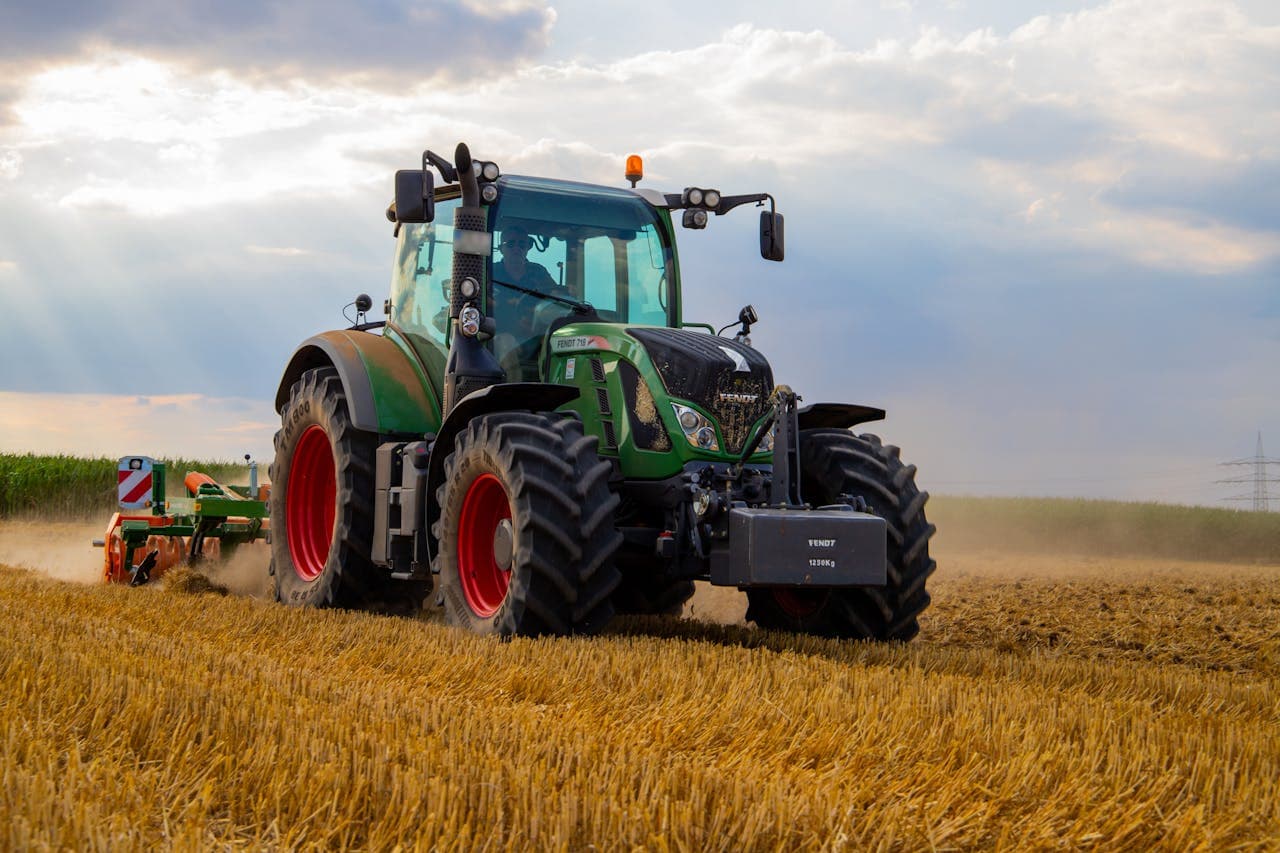
The best used tractors for small farms fall in the 18-65 HP range and trade between $6,500 and $50,000 on the secondary market, based on Q1 2026 data from Ritchie Bros, TractorHouse, and Equipment Watch residual values. That price range covers everything from a sub-compact Kubota BX that mows a 5-acre homestead to a 65 HP Deere 4066R running a disk harrow on 50 acres.
Compact tractor sales have grown steadily over the past decade. The Association of Equipment Manufacturers (AEM) reported that under-40 HP tractor unit sales exceeded 162,000 in 2025 in the US alone, up 8% from 2024. That volume feeds directly into a healthy used market with strong supply across every major brand.
This guide compares the top used tractor brands for small farms by price, resale value, and intended use. Every pricing table reflects actual transaction data from auctions and dealer listings, not MSRP estimates. Whether you are weighing a John Deere against a Kubota or trying to figure out whether Mahindra's lower price tag is a genuine bargain, the numbers are below.
TL;DR
The most popular used small farm tractors sit in the 25-40 HP compact utility class and sell between $13,000 and $32,000 with 1,000-3,000 hours. John Deere and Kubota hold the strongest resale values (60-62% of MSRP at 3,000 hours per Equipment Watch), but Mahindra offers 15-25% more horsepower per dollar. For most small farms under 25 acres, a used Kubota L2501, Deere 3025E, or Mahindra 2638 with a front-end loader will handle the work.
Used Small Farm Tractor Market in 2026
The used compact tractor market breaks into three tiers based on horsepower. Sub-compacts (18-25 HP) account for roughly 35% of small farm tractor transactions. Compact utility models (25-40 HP) make up the largest share at 40%. Mid-range tractors (40-65 HP) round out the market at 25%, serving farms that need more ground speed and implement capacity.
A rancher north of Waco recently shared his buying experience: he picked up a 2020 Kubota L2501 with 900 hours and a front-end loader at a Purple Wave auction for $19,200. Comparable units at his local dealership were listed at $23,500-$25,000. That 18-22% auction discount is consistent with what we see across the compact tractor market.
Small Farm Tractor Transactions by HP Class
Best Tractor Brands for Small Farms Compared
Six brands dominate the used small farm tractor market in North America: John Deere, Kubota, Mahindra, New Holland, Kioti, and Massey Ferguson. Each has distinct strengths and tradeoffs in pricing, dealer support, and resale value.
| Brand | Resale Retention | US Dealers | Used Price Range | Key Strength |
|---|---|---|---|---|
| John Deere | 62% | 1,800+ | $9K-$50K | Dealer network, resale value, 1-4 series depth |
| Kubota | 60% | 1,100+ | $8K-$42K | Sub-compact leader, BX/B/L series reliability |
| Mahindra | 52% | 750+ | $6.5K-$30K | Best HP-per-dollar, rugged build, lower entry price |
| New Holland | 54% | 900+ | $9K-$34K | Versatile Workmaster line, CNH parts ecosystem |
| Kioti | 50% | 500+ | $7K-$30K | Aggressive pricing, solid warranty, growing dealer base |
| Massey Ferguson | 53% | 800+ | $9K-$35K | AGCO parts network, strong in hay/livestock operations |
Used Compact Tractor Price Ranges by Brand
John Deere vs Kubota: Head-to-Head for Small Farms
The John Deere vs Kubota tractor debate dominates every farm forum and equipment dealer parking lot for good reason. These two brands account for roughly 55-60% of all used compact tractor transactions in North America per Equipment Watch market share data.
| Category | John Deere | Kubota |
|---|---|---|
| Sub-Compact Leader | 1025R (23.9 HP) | BX2380 (23 HP) |
| Compact Utility Leader | 3038E (37.1 HP) | L3301 (33 HP) |
| Resale Value (3K hrs) | 62% of MSRP | 60% of MSRP |
| US Dealer Locations | 1,800+ | 1,100+ |
| Hydrostatic Trans. Feel | Good — Twin Touch pedals | Excellent — HST Plus |
| Loader Lift Capacity | Slight edge in compact class | Slight edge in sub-compact |
| Used Price Premium | +3-5% vs Kubota | Baseline |
| Best For | Implement work, rural dealer access | Mowing, loader work, tight spaces |
Both brands build reliable machines that hold value. The practical difference comes down to your nearest dealer and your primary use. If you mow 5-15 acres and do light loader work on a homestead, Kubota's BX and B series are hard to beat. If you pull implements on 20+ acres and your Deere dealer is 15 minutes away while the Kubota dealer is an hour, that proximity matters when you need a hydraulic hose on a Tuesday afternoon.
Pro Tip
Before buying any used tractor, check the nearest dealer locations for that brand using the manufacturer's dealer locator. A tractor with a dealer 20 minutes away beats one with a dealer 90 minutes away — every time. Parts availability and service turnaround directly affect your downtime cost during critical seasons like planting and hay cutting.
Used Sub-Compact Tractor Prices (18-25 HP)
Sub-compact tractors are the entry point for small farm and homestead owners. These 18-25 HP machines handle mowing up to 10-15 acres, light grading with a box blade, snow removal, and basic loader tasks like moving mulch and compost. Used sub-compact tractor prices range from $6,500 for a high-hour Mahindra to $25,000 for a low-hour Kubota BX23S with backhoe.
New sub-compacts list between $18,000 and $35,000 depending on loader and mid-mount mower packages, so buying used saves 30-65%. That math is why the sub-compact segment generates the highest volume of private-party sales among any tractor class.
Sub-Compact Tractor Pricing Table (18-25 HP)
| Model | HP | Weight | Loader | 0-1.5K hrs | 1.5K-3K hrs | 3K+ hrs |
|---|---|---|---|---|---|---|
| Kubota BX2380 | 23 HP | 1,478 lbs | Yes (LA344) | $16,000-$21,000 | $12,000-$16,000 | $8,000-$12,000 |
| Deere 1025R | 23.9 HP | 1,516 lbs | Yes (120R) | $17,000-$22,000 | $13,000-$17,000 | $9,000-$13,000 |
| Kubota BX23S | 21.6 HP | 1,714 lbs | Yes + Backhoe | $19,000-$25,000 | $14,000-$19,000 | $10,000-$14,000 |
| Mahindra eMax 20S | 19.4 HP | 1,433 lbs | Yes | $12,000-$17,000 | $9,000-$12,000 | $6,500-$9,000 |
| Kioti CS2220 | 22 HP | 1,389 lbs | Optional | $13,000-$18,000 | $10,000-$13,000 | $7,000-$10,000 |
The Kubota BX2380 and Deere 1025R are the two most commonly traded sub-compacts. Both offer similar performance, but the Deere 1025R commands a 5-8% used price premium due to brand loyalty and dealer density. Mahindra's eMax 20S undercuts both by 20-30% and delivers comparable power — it is the strongest value play in the sub-compact class for buyers who prioritize machine over badge.
Used Compact Utility Tractor Prices (25-40 HP)
The 25-40 HP compact utility class is the sweet spot for working small farms. These tractors run 5-foot rotary cutters, operate post-hole diggers, handle serious loader work, and pull small tillage implements. Used compact utility tractor prices range from $9,000 for a high-hour Mahindra to $32,000 for a low-hour Deere 3038E.
This is where the John Deere vs Kubota competition is fiercest. The Deere 3025E and Kubota L2501 compete directly at the low end, while the Deere 3038E and Kubota L3301 fight for the mid-range buyer. New Holland's Workmaster 25 and Kioti's CK2610 offer strong alternatives at 10-15% lower used prices.
Compact Utility Tractor Pricing Table (25-40 HP)
| Model | HP | Weight | Loader | 0-1.5K hrs | 1.5K-3K hrs | 3K+ hrs |
|---|---|---|---|---|---|---|
| Kubota L2501 | 24.8 HP | 2,513 lbs | Yes (LA525) | $20,000-$27,000 | $15,000-$20,000 | $11,000-$15,000 |
| Deere 3025E | 24.7 HP | 2,757 lbs | Yes (300E) | $21,000-$28,000 | $16,000-$21,000 | $12,000-$16,000 |
| Kubota L3301 | 33 HP | 2,756 lbs | Yes (LA525) | $22,000-$30,000 | $17,000-$22,000 | $12,000-$17,000 |
| Deere 3038E | 37.1 HP | 3,120 lbs | Yes (300E) | $24,000-$32,000 | $18,000-$24,000 | $13,000-$18,000 |
| Mahindra 2638 | 37.4 HP | 3,638 lbs | Yes | $18,000-$25,000 | $13,000-$18,000 | $9,000-$13,000 |
| New Holland Workmaster 25 | 24.7 HP | 2,340 lbs | Yes (110TL) | $18,000-$24,000 | $13,000-$18,000 | $9,000-$13,000 |
| Kioti CK2610 | 24.5 HP | 2,579 lbs | Yes (KL4030) | $17,000-$23,000 | $13,000-$17,000 | $9,000-$13,000 |
The Mahindra 2638 stands out as the price-performance leader in this class. At 37.4 HP, it matches the Deere 3038E on paper specs but trades for $5,000-$8,000 less on the used market. The tradeoff is dealer network: Mahindra has roughly 750 US locations versus Deere's 1,800+. If a Mahindra dealer is within reasonable distance and you want the most tractor for your money, the 2638 is hard to argue against.
Looking to sell your current tractor?
We provide cash offers within 24 hours based on live market data.
Used Mid-Range Tractor Prices (40-65 HP)
Small farms that run serious implements need the 40-65 HP class. These tractors pull 6-foot rotary cutters at road speed, operate round bale spears, run post drivers, and handle disk harrows for food plot and pasture renovation work. Used mid-range tractor prices span $11,000 to $50,000 depending on brand, hours, and configuration.
At this HP range, Kubota's MX series and Deere's 4M and 4R series lead the market. The step up from compact utility to mid-range adds cab options, independent PTO, and significantly stronger hydraulic systems — all of which matter if you are running a tractor 600+ hours per year.
Mid-Range Tractor Pricing Table (40-65 HP)
| Model | HP | Weight | Loader | 0-1.5K hrs | 1.5K-3K hrs | 3K+ hrs |
|---|---|---|---|---|---|---|
| Kubota MX5400 | 55.5 HP | 4,078 lbs | Yes (LA1065) | $32,000-$42,000 | $24,000-$32,000 | $16,000-$24,000 |
| Deere 4044M | 43.1 HP | 3,858 lbs | Yes (400E) | $30,000-$40,000 | $22,000-$30,000 | $15,000-$22,000 |
| Deere 4066R | 65.9 HP | 5,070 lbs | Yes (440R) | $38,000-$50,000 | $28,000-$38,000 | $19,000-$28,000 |
| Mahindra 4540 | 40.7 HP | 3,946 lbs | Yes | $22,000-$30,000 | $16,000-$22,000 | $11,000-$16,000 |
| Kubota L4701 | 47.3 HP | 3,770 lbs | Yes (LA765) | $28,000-$37,000 | $20,000-$28,000 | $14,000-$20,000 |
| New Holland Workmaster 50 | 50 HP | 3,781 lbs | Yes | $25,000-$34,000 | $18,000-$25,000 | $12,000-$18,000 |
Which Tractor Brands Hold Value Best?
Resale value is one of the most important factors in small farm tractor economics. A tractor that retains 60% of its MSRP after 3,000 hours costs significantly less to own than one that retains 50% — the difference can be $3,000-$6,000 in lost equity on a $30,000 machine.
John Deere leads in resale value retention at 62% of MSRP at 3,000 hours, followed closely by Kubota at 60%. This 2-point gap translates to roughly $600-$1,000 in real dollars on a typical compact tractor. New Holland and Massey Ferguson sit in the 53-54% range. Mahindra and Kioti trade at 50-52%, which reflects their lower MSRP starting points and thinner dealer networks, not build quality issues.
Resale Value Retention at 3,000 Hours by Brand
The counterargument to chasing resale value: if you buy a Mahindra 2638 for $16,000 used and sell it 5 years later for $9,000, your total depreciation cost is $7,000. If you buy a comparable Deere 3038E for $22,000 and sell it for $13,500, your depreciation cost is $8,500. The Mahindra actually costs less to own despite the lower retention percentage. Resale percentage matters less than the actual dollar amount you lose. Read our depreciation guide for the full analysis.
Compact Tractor Depreciation Curves: Deere vs Kubota vs Mahindra
What Size Tractor Do You Need for a Small Farm?
Matching horsepower to acreage and intended use is the single most important decision in buying a used tractor. An undersized tractor working at max capacity burns more fuel, wears faster, and frustrates the operator. An oversized tractor wastes money on purchase price and higher maintenance costs.
| Acreage | Typical Tasks | Recommended HP | Used Budget |
|---|---|---|---|
| 1-5 acres | Mowing, snow, light grading | 18-25 HP | $8K-$22K |
| 5-15 acres | Mowing, loader, post holes, small tiller | 25-35 HP | $13K-$28K |
| 15-30 acres | Bush hog, box blade, hay rake, bale handling | 35-50 HP | $16K-$38K |
| 30-50+ acres | Disk harrow, round bale spear, 6ft rotary cutter | 50-65 HP | $22K-$50K |
A practical rule: buy one HP class above your current needs. A 10-acre property owner who thinks they need 25 HP should consider 30-35 HP. The price difference between a used Kubota L2501 (24.8 HP) and an L3301 (33 HP) is $2,000-$4,000 on the used market, and that extra power eliminates struggles with heavier implements down the road.
What to Inspect Before Buying a Used Tractor
Compact tractors are simpler machines than full-size construction equipment, but they still have failure points that can turn a $15,000 purchase into a $20,000 headache. Run this checklist before handing over money, and reference our full inspection guide for detailed procedures.
- Check the hour meter. Verify it has not been replaced or reset. Cross-reference the reading with service records, oil change stickers, and overall machine condition. A tractor with 800 hours on the meter and worn-out loader pins has been lied about.
- Test the hydrostatic transmission. Drive the tractor up a hill, then stop and hold it on the grade with just the HST (no brakes). If it creeps backward, the transmission has internal wear. This is a $3,000-$6,000 repair.
- Cycle the loader through its full range. Listen for groaning hydraulic pumps, watch for jerky movement, and check all cylinder rod surfaces for scoring or pitting. Scored rods destroy seals and cost $800-$2,000 per cylinder to repair.
- Engage the PTO under load. If possible, attach an implement and engage the PTO. Listen for chattering, grinding, or delayed engagement — all signs of clutch wear ($1,500-$3,500 repair on most compacts).
- Inspect the 3-point hitch. Raise and lower the hitch repeatedly. It should move smoothly and hold position under load. Sagging or inconsistent movement points to worn lift arm bushings or a failing hydraulic control valve.
- Check for frame cracks near the loader mount. Sub-compact and compact tractors take significant stress at the loader mount points. Look for weld repairs, paint cracks, or visible frame distortion around the front axle and ROPS mounting points.
Pro Tip
Budget $300-$500 for a pre-purchase inspection by a qualified mechanic. Even if you know machines, a fresh set of eyes catches things you miss when you're excited about the deal. That $400 inspection can save $4,000-$8,000 in surprise repairs. Many rural mobile mechanics will do on-site inspections within 48 hours.
Where to Buy a Used Small Farm Tractor
The used tractor market has more buying channels than the construction equipment market. Farm-specific platforms like TractorHouse and regional farm auctions supplement the usual dealer, auction, and private sale channels.
- Authorized dealers. Certified pre-owned programs from Deere, Kubota, and New Holland include 30-90 day warranties. Expect to pay 15-25% more than auction prices for that peace of mind.
- TractorHouse / Equipment Trader. The largest online listing aggregators for farm equipment. Good for price research and connecting with dealers across multiple states.
- Auctions (Ritchie Bros, Purple Wave, BigIron). Lowest prices but as-is condition. Purple Wave and BigIron focus on agricultural equipment and often have stronger compact tractor selection than Ritchie Bros.
- Facebook Marketplace and Craigslist. The best place for private-party deals on sub-compacts and compacts. Owners often sell with implements included — a tractor, loader, mid-mount mower, and box blade package can be 20-30% cheaper than buying each item separately.
- Estate and farm liquidation sales. Low-hour tractors from retired farmers are some of the best buys in the market. These machines were often maintained meticulously and used lightly. Check local auction house calendars and county agricultural extension offices for upcoming sales.
Financing a Used Small Farm Tractor
Most used compact tractor purchases in the $15,000-$40,000 range are financed. Rates for used agricultural equipment loans sit between 5.9% and 9.5% as of early 2026, depending on credit score, down payment, and lender. Our equipment financing guide breaks down the full landscape, but here are the key options for tractor buyers:
- Manufacturer financing (Deere Financial, Kubota Credit). Available through authorized dealers on certified used inventory. Rates are competitive (often 5.9-7.9%) and the application process is streamlined. Not available for private-party purchases.
- Farm Credit System lenders. Farm Credit associations offer agricultural equipment loans at competitive rates, often with flexible repayment terms aligned to harvest seasons. Available to borrowers with agricultural income.
- Local banks and credit unions. Community banks in rural areas frequently offer equipment loans. Rates vary (6.5-9.5%) but they are more flexible on older equipment and non-dealer purchases.
- Section 179 deduction. Farm and business owners can often deduct the full purchase price of a used tractor in the year of acquisition. The 2026 Section 179 limit is $1.22 million — more than enough for any compact tractor purchase. Consult your accountant, as this deduction requires business use documentation.
Used Compact Tractor Maintenance Costs
Annual maintenance costs for a used compact tractor run $1,200-$3,500 per year at 300-600 hours of annual use, per the AED Foundation 2025 cost-of-ownership data. That includes oil changes, filters, greasing, and a reserve for wear items. Compact tractors are significantly cheaper to maintain than construction equipment in the same weight class because they run at lower RPM, have simpler hydraulic systems, and use fewer wear items.
The major service milestones to budget for:
- Hydrostatic transmission service (every 1,000-1,500 hrs): $150-$400. Filter and fluid change — straightforward DIY job on most compacts.
- Front axle seal replacement (2,000-3,000 hrs): $300-$800. Common on tractors with loaders due to the constant lateral stress.
- Loader cylinder reseal (2,500-4,000 hrs): $400-$1,200 per cylinder. Same process as construction equipment, just smaller and cheaper.
- PTO clutch replacement (3,000-5,000 hrs): $1,000-$2,500. Depends on whether the tractor has a live PTO or transmission-driven PTO.
- Tire replacement (varies with use): $200-$600 per tire for R4 industrial tires, $300-$800 for R1 ag tires. Most small farm tractors run R4 tires for their versatility on turf and gravel.
For a comprehensive cost overview across all equipment types, check the heavy equipment maintenance cost guide.
Frequently Asked Questions About Used Tractors for Small Farms
What is the best used tractor brand for a small farm?
Kubota and John Deere consistently rank as the top used tractor brands for small farms based on resale value, dealer density, and parts availability. Kubota dominates the sub-compact segment (under 25 HP) with its BX and B series, while Deere's 1-4 series covers the full range from hobby farm to serious production. Mahindra offers the best value per dollar if you prioritize horsepower over brand prestige — their 1626 and 2638 models deliver comparable performance at 15-25% lower used prices.
How much does a used compact tractor cost?
Used compact tractors (under 40 HP) range from $8,000 to $35,000 depending on brand, age, hours, and whether implements are included. Sub-compacts in the 18-25 HP range trade between $8,000 and $22,000 with 500-2,000 hours. Compact utility tractors in the 25-40 HP class sell for $14,000 to $35,000. Adding a front-end loader typically increases the package price by $2,000-$5,000 on the used market.
How many hours is too many on a used compact tractor?
Compact tractors start showing significant wear above 3,000-4,000 hours — that is roughly where hydraulic seals, PTO clutches, and transmission components begin needing attention. Machines under 1,500 hours are considered low-hour and command premium prices. The 1,500-3,000 hour sweet spot gives buyers a production-ready tractor without paying near-new prices. Diesel engines in compact tractors are typically reliable to 6,000-8,000 hours with proper maintenance, so hours alone do not kill the machine — deferred maintenance does.
Is John Deere or Kubota better for a small farm?
Both brands build excellent small farm tractors. Kubota edges ahead in the sub-compact class (under 25 HP) with smoother hydrostatic transmissions and tighter turning radius. John Deere has the advantage in dealer network density — over 1,800 US locations versus Kubota's 1,100 — which matters for parts and service turnaround. Deere also holds a slight resale value premium of 3-5% at comparable hours. Choose Kubota for mowing, light loader work, and property maintenance. Choose Deere for heavier implement work and if your nearest dealer carries the green and yellow brand.
Should I buy a used tractor at auction or from a dealer?
Auctions save 15-25% over dealer pricing but carry more risk. Dealer-certified used tractors come with 30-90 day warranties and have been through a multi-point inspection. For first-time tractor buyers, the dealer premium is worth the peace of mind and the ability to test-drive the machine under load. Experienced buyers who can perform or commission a pre-purchase inspection will find better value at auction — especially through Ritchie Bros, Purple Wave, and regional farm equipment auctions.
What size tractor do I need for a small farm?
For properties under 10 acres focused on mowing, light grading, and small implements, a sub-compact tractor in the 18-25 HP range handles most tasks. Farms in the 10-50 acre range running a bush hog, box blade, or small tiller need 25-40 HP. If you are pulling a disk harrow, running a 5-foot rotary cutter, or moving round bales, step up to 40-60 HP. The most common mistake is undersizing — a tractor working at 90% capacity all day wears faster and burns more fuel than one working at 60-70% capacity.
Find Your Tractor's Value — or Your Next One
The pricing tables above give you a solid baseline for used small farm tractor values in 2026. Every machine is different — year, hours, loader configuration, implement packages, and condition all move the final number. If you are selling, we provide cash offers within 24 hours based on live market data. No listing fees, no auctions, no waiting.
If you are buying, start with our tractor spec pages to compare models side by side. For broader pricing context across all equipment categories, check the heavy equipment pricing guide.