
Buying Guide
Heavy Equipment Auction Guide: Buy Smart, Avoid Overpaying
How to navigate live and online heavy equipment auctions without leaving money on the table. Covers auction platforms, buyer premiums, bidding strategy, inspection prep, and hidden costs.
Last updated: March 2026
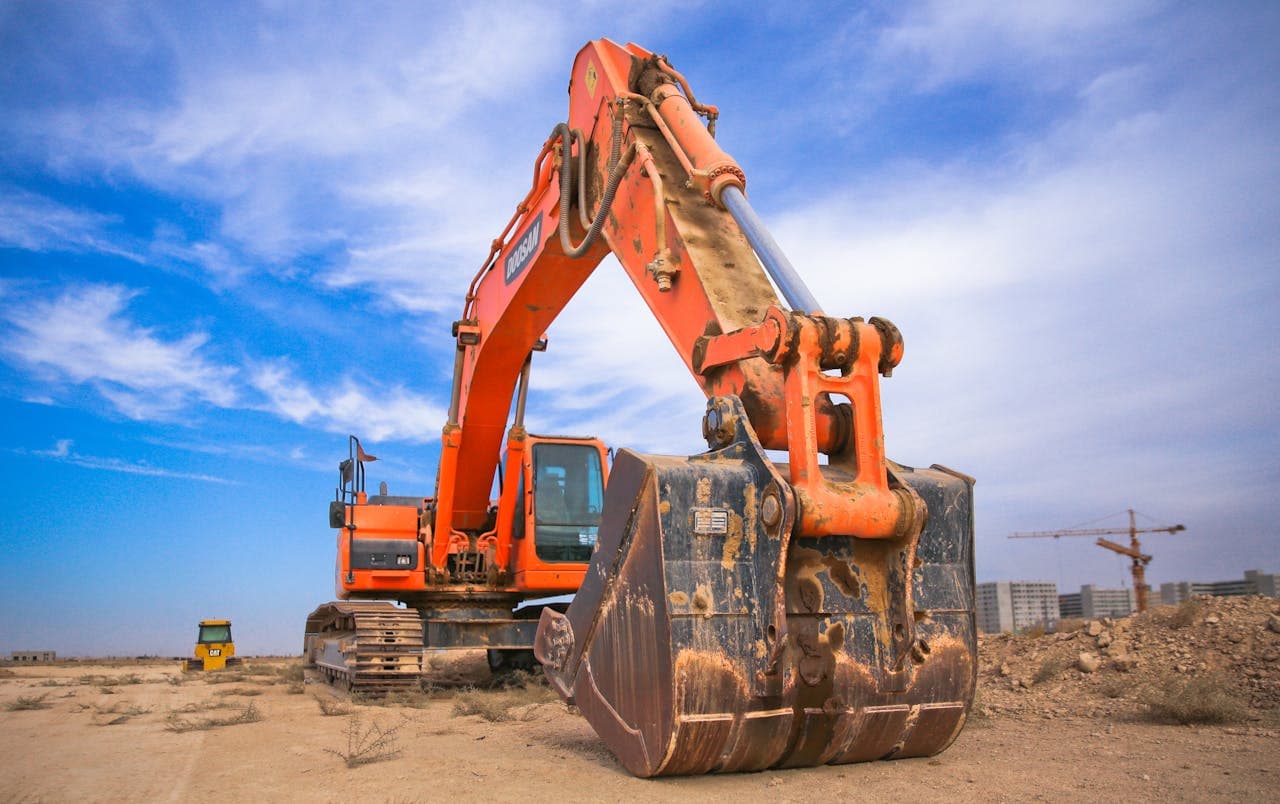
Heavy equipment auctions are one of the fastest ways to buy excavators, bulldozers, wheel loaders, and skid steers at below-retail prices — but only if you know what you're doing. Ritchie Bros alone sold over $250 million in equipment at their February 2025 Orlando event, attracting 19,000+ registered bidders from 75+ countries.
The opportunity is real: auction prices typically run 20-35% below dealer retail. But so is the risk. Buyer premiums, transport costs, deferred maintenance, and auction fever can turn a "deal" into a money pit. This guide covers the heavy equipment auction tips that separate experienced buyers from those who overpay.
TL;DR
Set your walk-away price before the auction using comparable market data. Factor in the buyer premium (10-15%), transport ($1.50-$4.50/mile), and potential repairs. Inspect every machine — or hire an inspector for $300-$800. Bid incrementally. Walk away when the number stops making sense. The cheapest machine at auction is worth nothing if it needs a $25,000 undercarriage rebuild you didn't budget for.
How Heavy Equipment Auctions Work
Equipment auctions come in three formats, each with different dynamics for buyers. Understanding the format shapes your entire bidding strategy.
Live (In-Person) Auctions
Traditional ramp sales where equipment rolls past bidders in real time. Ritchie Bros brought back their live Orlando ramp sale in 2026 after discontinuing it in 2019, signaling renewed demand for in-person buying. Live auctions move fast — lots sell in 30-90 seconds — and the energy of the room can push prices higher.
The advantage: you can physically inspect machines during the preview days before the sale. The disadvantage: you need to travel to the auction site, and bidding psychology works against buyers when the crowd is pushing.
Online Timed Auctions
Lots have a set closing time (often with automatic extensions if bids come in during the final minutes). Purple Wave, BigIron, and AuctionTime primarily use this format. Timed auctions give you more time to think, reducing the impulse overpay that live auctions encourage.
Simulcast (Live + Online)
Ritchie Bros and some regional auctioneers run simulcast events where in-person and online bidders compete simultaneously. You get the inspection benefits of a live sale with the option to bid remotely. Most major equipment auctions in 2026 use this hybrid format.
The 5-Step Auction Buying Process
Buying Equipment at Auction: Platform Comparison
Not all auction platforms charge the same fees or serve the same market. The platform you choose affects your total cost, inspection options, and the type of equipment available. Here's how the six major platforms compare, per data from their published fee schedules and listings:
| Platform | Type | Buyer Premium | Inspection | Reserve? | Best For |
|---|---|---|---|---|---|
| Ritchie Bros | Live + Online | 10-15% | In-person previews | Both | Large fleets, global reach |
| IronPlanet | Online only | 10-15% | IronClad Assurance | Both | Guaranteed condition |
| Purple Wave | Online only | ~10% | Photos + reports | No reserve | No-reserve transparency |
| BigIron | Online only | None | Photos + reports | No reserve | Ag & rural equipment |
| AuctionTime | Online (timed) | 10% | Dealer-provided | Varies | Dealer inventory, wide selection |
| GovPlanet | Online only | 10-15% | Reports + photos | Both | Government surplus |
Sources: Ritchie Bros buyer fees page, IronPlanet buyer fees, Purple Wave FAQ, BigIron terms of service, AuctionTime seller/buyer terms, GovPlanet fee schedule. Rates as of Q1 2026.
BigIron stands out with zero buyer premiums — the seller absorbs all fees, so your hammer price is your final price (plus tax and transport). For buyers of skid steers and compact track loaders in rural markets, that fee difference alone can save $3,000-$6,000.
IronPlanet's IronClad Assurance program is worth noting for remote buyers. Their inspectors document the machine condition before sale, and if the equipment doesn't match the inspection report, you have recourse — a rare guarantee in the "as-is" auction world.
Equipment Auction Buyer Premiums Explained
The buyer premium is the single most misunderstood cost at equipment auctions. It's an additional percentage charged on top of the hammer price that goes directly to the auction house. At 10-15%, it's a significant add-on that changes the math on every bid.
Here's the math that matters: if your market research tells you a used CAT 320 excavator is worth $90,000 in the private market, and the auction charges a 12% buyer premium, your maximum hammer price should be $80,357 — not $90,000. Bidding $90,000 at the hammer means you actually pay $100,800 after the premium, nearly $11,000 above market value.
How Buyer Premiums Scale With Hammer Price
Pro Tip
Calculate your walk-away price by working backward: start with the machine's fair market value, subtract the buyer premium percentage, subtract estimated transport cost, and subtract a 10% repair contingency. That's your maximum hammer bid. Write it on a card. Don't bid past it. A contractor in Texas recently shared that this simple formula saved him from overpaying by $14,000 on a D6 dozer — another bidder won it and later resold it at a loss.
Hidden Costs of Buying at Equipment Auctions
The hammer price is only the beginning. First-time auction buyers frequently underestimate the total cost by 15-30% because they focus on the hammer and ignore everything else. Here's the full picture:
| Cost Item | Typical Range | Example ($60K Machine) |
|---|---|---|
| Buyer premium | 10-15% of hammer price | $6,000-$9,000 on a $60K machine |
| Sales tax | 0-10% (varies by state) | $0-$6,000 on a $60K machine |
| Transport/shipping | $1.50-$4.50/mile | $750-$2,250 for 500 miles |
| Documentation fees | $70-$150 per titled item | $115 at Ritchie Bros |
| Immediate repairs | 5-20% of purchase price | $3,000-$12,000 on a $60K machine |
| Registration/title | $50-$500 (varies by state) | $200 average |
Based on typical auction purchases of mid-size equipment. Tax rates vary by state and local jurisdiction.
On a $60,000 hammer price, a buyer paying 12% premium, 7% sales tax, $1,500 transport, and $5,000 in deferred maintenance is actually spending $73,720 — 23% above the hammer. Factor that in before you decide whether the "auction deal" is actually a deal.
Where Your Money Goes on a $60K Auction Purchase
How to Inspect Equipment Before Bidding
Every machine sold at auction is "as-is, where-is." No warranty, no returns. The inspection window — typically 1-3 days before a live sale — is your only protection. Treat it like a full pre-purchase inspection.
What to Check on Preview Day
- Record the serial number. Call the OEM dealer to pull service history and verify the hour meter reading against dealer records. If the seller's claimed hours don't match the dealer's records, walk away or discount your bid by 25-40%.
- Cold-start the engine. Arrive early, before the auction crew warms up the machines. A cold start reveals hard-starting issues, excessive smoke, and idle instability that disappear once the engine is warm.
- Check hydraulic cycle times. Raise the boom from rest to full extension and time it. OEM spec is typically 5-7 seconds for a full boom raise. Slow cycles point to a worn pump or relief valve — a $5,000-$12,000 repair.
- Measure the undercarriage. On tracked machines, undercarriage wear is the highest-cost item. A rebuild on a mid-size excavator runs $15,000-$25,000. Measure track pad depth, check roller condition, and look for sprocket hooking.
- Look for structural repairs. Walk the boom, stick, and frame joints. Factory welds are uniform and clean. Field weld repairs — uneven beads, different wire color, grind marks — indicate past damage. Structural repairs on the boom or frame are a deal-breaker for most experienced buyers.
- Pull the telematics data.On machines built after 2014, request telematics access (Cat Product Link, Komatsu KOMTRAX, John Deere JDLink). Telematics independently log hours and fault codes — the data can't be reset by the seller.
If you cannot attend the preview in person, hire a third-party inspector. Services like AllState Appraisals and independent mechanics near the auction site will inspect a machine for $300-$800 and provide a written report. That cost is trivial compared to buying a $60,000 machine with a $20,000 hidden problem.
Want to skip the auction risk entirely?
We buy heavy equipment directly — no auction fees, no buyer premiums, no surprises. Cash offers within 24 hours, based on live market data. If you're on the selling side, it's the fastest way to move iron.
Get a Cash OfferEquipment Auction Bidding Strategy: 8 Rules
The auction floor (or screen) is where most mistakes happen. These eight rules, drawn from contractors and dealers who buy dozens of machines per year at auction, will keep you from overpaying:
- Set your walk-away price in writing before the auction. Use our equipment pricing guide to pull comps, then subtract the premium, transport, and a repair buffer. Write that number down. Do not change it mid-auction.
- Bid incrementally from the start. Jumping in with a high opening bid signals willingness to pay top dollar and encourages competing bidders to stick around longer.
- Watch the first few lots without bidding.At live sales, observing 15-20 lots before you bid gives you a feel for the room's energy, the auctioneer's pace, and where prices are landing relative to market value.
- Bid on multiple machines, not just one. If you need a wheel loader, identify 3-5 comparable lots and set walk-away prices for each. If you lose the first one to a higher bidder, you still have options — reducing the pressure to overpay.
- Ignore the competition.Focus on your ceiling, not the other bidder. Getting into a "bidding war" means you're no longer buying based on value — you're buying based on ego.
- Time your bid placement on timed auctions. On platforms with automatic time extensions (most online auctions), bid late in the window to limit the number of reactive counter-bids. Bidding early on timed auctions broadcasts your interest and invites competition.
- Account for seasonal pricing patterns. Equipment prices at auction tend to peak in March-May (pre-construction season) and dip in November-January (off-season). Buying a backhoe in December can save 10-15% compared to the same machine in April.
- Check the reserve status.No-reserve auctions (Purple Wave, BigIron) guarantee the item sells to the highest bidder. Reserve auctions mean the seller can reject your winning bid if it's below their floor. Knowing this before you invest time inspecting and bidding prevents wasted effort.
Typical Equipment Prices by Purchase Channel
The chart above shows why auctions attract buyers: live auction prices average roughly 68% of dealer retail, and online auctions around 72%. But those numbers only tell part of the story — after adding premiums, transport, and repairs, the real discount narrows to 10-20% below retail on average.
Financing Equipment Bought at Auction
Many buyers assume they need cash to buy at auction. Not true. Several paths exist for financing auction purchases, though the timeline is tighter than a standard dealer purchase.
- Pre-approved equipment loans: Get pre-approved before the auction for a specific dollar amount. Most lenders require the equipment serial number and age to finalize, so pre-approval gives you a budget range rather than a committed loan. Funding typically follows within 3-7 business days of submitting the winning lot details.
- Auction house financing: Ritchie Bros partners with lenders to offer on-site financing at their larger events. Rates are typically 1-3% higher than bank loans, but the speed and convenience can be worth it when payment is due within 5 days.
- Equipment line of credit: If you buy at auction regularly, an equipment line of credit lets you draw funds on demand without per-purchase applications. Most business lines for equipment are $100,000-$500,000 with draw-down capability.
The critical timing issue: most auctions require full payment within 2-5 business days. If your financing falls through after you win, you forfeit your deposit (typically 10-25% of the hammer price) and may owe additional damages. Always confirm your financing timeline before bidding.
Pro Tip
Lenders financing auction equipment care about the machine's age and condition more than the purchase price. A 2018 excavator with 4,000 hours is easy to finance. A 2008 machine with 12,000 hours may not qualify for conventional financing at all — lenders don't want to hold collateral they can't resell. If you're targeting older equipment, line up financing with a specialty lender before auction day.
When Auctions Make Sense (And When They Don't)
Auctions are not the right buying channel for every situation. Here's when to use them — and when to explore alternatives:
Auctions Make Sense When:
- You're buying with cash or pre-approved financing and can meet the 2-5 day payment window.
- You can inspect the equipment in person or hire a qualified inspector.
- You're flexible on make/model and can bid on multiple comparable machines.
- You're buying common equipment — excavators, dozers, loaders, and skid steers trade at the highest volumes with the most price transparency.
- You know the market value well enough to spot a deal versus an overpay.
Consider Alternatives When:
- You need a specific machine ASAP. Auctions run on their schedule, not yours. If you need a wheel loader next week, a dealer or marketplace listing gets it faster.
- You can't inspect before buying. Buying unispected auction equipment is gambling, not purchasing.
- You need warranty or support. Dealers offer warranty packages and service agreements. Auctions sell as-is.
- The auction market is hot. When construction spending surges and equipment supply tightens, auction prices can meet or exceed dealer retail — eliminating the entire point of buying at auction.
7 Equipment Auction Mistakes That Cost Buyers Thousands
These mistakes show up repeatedly in auction buyer forums and post-sale regret posts. Every one of them is preventable.
- Forgetting the buyer premium exists. Bidding $80,000 when you meant to spend $80,000 total — but the premium pushes you to $89,600 at 12%. Calculate the all-in cost before bidding, not after.
- Skipping the inspection. A $500 inspection can save $25,000 in hidden repairs. A 320 excavator with a worn-out undercarriage looks the same from 20 feet away as one with 80% remaining life. You have to measure to know.
- Trusting the hour meter. Hour meters can be replaced, reset, or broken. Cross-reference against telematics data and dealer records before relying on the displayed hours for your valuation.
- Ignoring transport costs. A $60,000 hammer price on a dozer 800 miles away becomes $63,600 just for shipping. Heavy equipment transport runs $1.50-$4.50 per loaded mile depending on machine weight and oversized permitting requirements.
- Bidding on one machine only.If you're set on a single lot, you have no fallback — which creates psychological pressure to bid higher than you should.
- Not checking the title. Machines with liens, missing titles, or salvage titles create legal headaches. Verify title status before bidding, and factor in any title transfer complications.
- Getting caught in auction fever. The adrenaline of competitive bidding is real. The best defense is a pre-written walk-away price and the discipline to close your bidder card when you hit it.
Frequently Asked Questions About Equipment Auctions
How do you buy heavy equipment at auction?
Register with the auction house (Ritchie Bros, IronPlanet, Purple Wave, or a regional auctioneer), research the lots you want using serial numbers and inspection reports, set a maximum bid based on comparable market data, attend the preview or inspection period, and bid either live or online. After winning, you pay the hammer price plus the buyer premium (typically 10-15%), applicable taxes, and any documentation fees. Most auctions require payment within 2-5 business days.
How do you avoid overpaying at equipment auctions?
Set your walk-away price before the auction starts by researching recent sold prices for the same make, model, and hour range on platforms like Ritchie Bros and Machinery Trader. Factor in the buyer premium (10-15%), transport costs ($1.50-$4.50 per mile), and any anticipated repairs when calculating your ceiling. Bid incrementally rather than jumping to high amounts, and walk away when the price exceeds your number. Auction fever — bidding past your budget because you have already invested time — is the number one reason buyers overpay.
What is a buyer premium at equipment auctions?
A buyer premium is an additional fee charged to the winning bidder on top of the hammer price. It typically ranges from 10% to 15% at major auction houses. For example, if you win a dozer at a $60,000 hammer price with a 12% buyer premium, your total before tax is $67,200. Some platforms like BigIron charge no buyer premium — the seller pays all fees instead. Always confirm the buyer premium before bidding so you can factor it into your maximum price.
Are online equipment auctions safe to buy from?
Yes, major online platforms like Ritchie Bros, IronPlanet, Purple Wave, and AuctionTime are reputable and process billions of dollars in equipment transactions annually. IronPlanet offers an IronClad Assurance inspection program that guarantees machine condition matches the listing. The risk increases when buying from smaller or unknown auction sites. Always verify the platform reputation, read the terms of sale, and understand the dispute resolution process before bidding.
Should I inspect equipment before bidding at auction?
Always. Most auction houses offer preview days where you can physically inspect equipment before the sale. If you cannot attend in person, hire a third-party inspector ($300-$800 depending on machine type and location). At minimum, review the auction house inspection report, check the serial number against telematics records, and verify the hour meter reading against physical wear patterns. Machines sold as-is at auction have no warranty — what you miss during inspection becomes your problem after the gavel drops.
What are the best auction platforms for heavy equipment?
Ritchie Bros is the largest global heavy equipment auctioneer, selling over $250 million at their February 2025 Orlando event alone. IronPlanet (owned by Ritchie Bros) specializes in online auctions with guaranteed inspections. Purple Wave runs no-reserve online auctions with transparent fees. BigIron offers weekly online auctions with no buyer premiums and strong ag/rural equipment inventory. AuctionTime powers timed online auctions for dealers across the country. The best platform depends on what you are buying and where you are located.
Buy Smarter — Or Sell Directly
Equipment auctions reward preparation: know the market value, factor in every cost, inspect thoroughly, and set a hard walk-away price. Follow those four rules and you'll walk away with equipment at 10-25% below retail without the regret.
If you're on the selling side and want to skip the auction consignment process, we provide direct cash offers within 24 hours. No fees, no buyer premiums — just a straightforward purchase based on current market data.