
Pricing Data
Used Wheel Loader Prices in 2026: What Every Model Is Worth
Model-by-model pricing data for CAT, Komatsu, Volvo, Deere, and Case. Updated for Q1 2026 market conditions.
Last updated: March 2026
Used wheel loader prices have dipped roughly 1-3% from their 2024 highs, according to market data from Equipment Watch. The average used wheel loader sold for approximately $150,600 in mid-2025 — down from $152,700 a year earlier. That gradual softening creates better entry points for buyers, but sellers still hold solid ground on low-hour machines from premium brands.
We pulled pricing from Ritchie Bros auction results, Purple Wave transaction data, and dealer listings to build the most complete picture of used wheel loader prices in the current market. Whether you're pricing a CAT 950, evaluating a Komatsu WA320, or trying to figure out what your aging Volvo L150 is worth, the tables below give you real numbers.
This guide breaks pricing down by size class, brand, and operating hours — the three variables that drive used wheel loader values more than anything else.
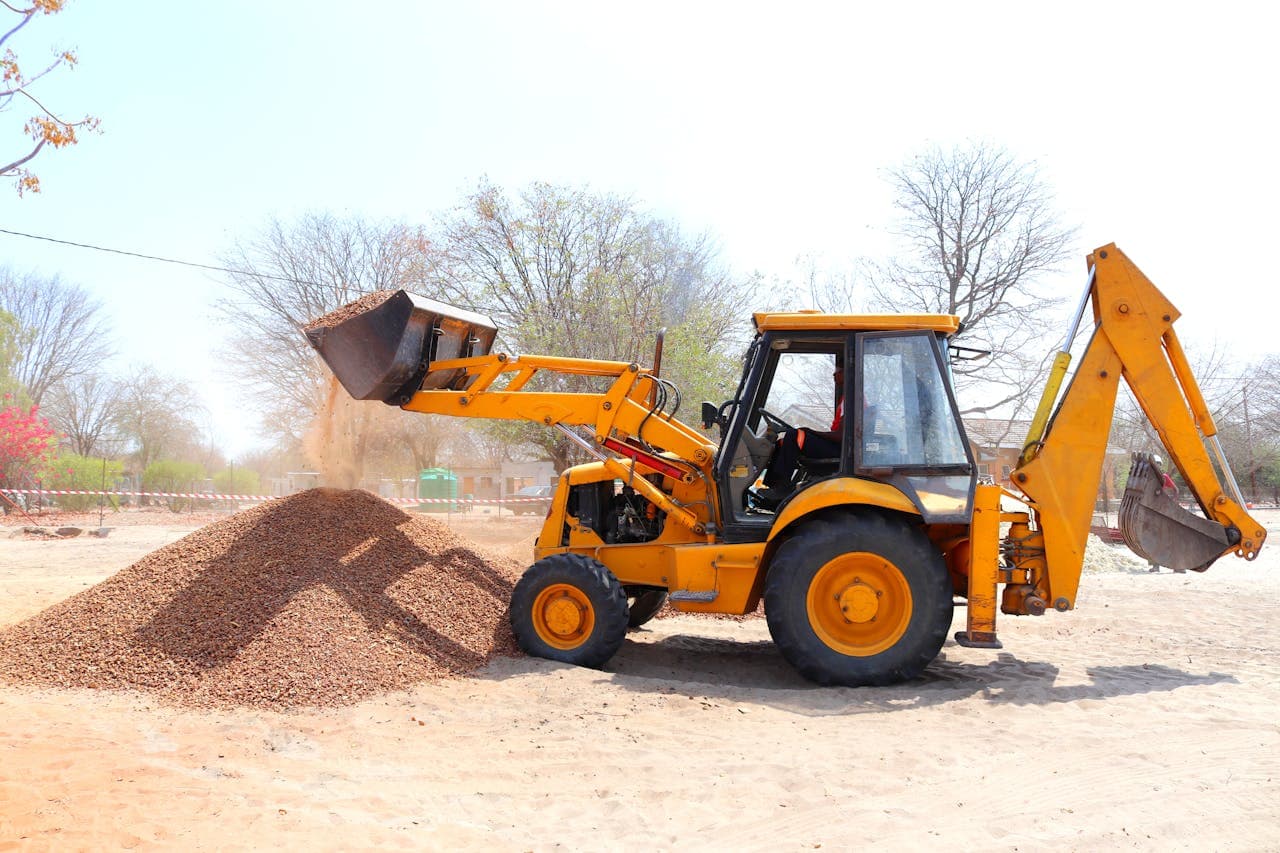
Photo: Pexels (free license)
TL;DR
Used mid-size wheel loaders (100-200 HP) trade between $32,000 and $215,000 depending on brand, hours, and year. CAT commands the highest resale premiums in the US market, holding roughly 58% of value at 5,000 hours. Volvo leads retention in the large class at 71% per Equipment Watch data. The biggest single price driver is hours, followed by brand and then condition.
What Do Used Wheel Loaders Cost in 2026?
Used wheel loader prices currently range from about $16,000 for a high-hour compact to over $380,000 for a low-hour large machine, based on Q1 2026 Ritchie Bros auction results and Equipment Watch valuations. That wide spread reflects how much size, hours, and brand affect loader pricing.
The most commonly traded wheel loaders — mid-size machines in the 2.5 to 5 cubic yard bucket class — sit in the $55,000 to $195,000 range for 2019-2024 models with 2,000-7,000 hours. That covers workhorses like the CAT 950, Komatsu WA320, and Volvo L90H. Compact loaders under 100 HP cluster between $18,000 and $78,000.
A paving contractor in Texas recently picked up a 2020 Komatsu WA320-8 with 3,200 hours at auction for $108,000 — right in the middle of our expected range. A comparable CAT 950M with similar hours would have traded $20,000-$30,000 higher. Brand premiums in wheel loaders are real and consistent.
Used Wheel Loader Price Range by Size Class
How Much Do Used Compact Wheel Loaders Cost?
Compact wheel loaders under 100 HP trade between $16,000 and $90,000, with the average transaction landing around $48,000 based on Purple Wave and Equipment Watch data. These machines have gained serious traction in the used market as more landscapers, municipalities, and small contractors discover their versatility.
The CAT 906 and Deere 244 P are the volume leaders in this segment. Both offer tool-carrier front linkage options that accept forks, brooms, and snow blades — making them year-round machines instead of single-purpose loaders. That versatility supports resale.
One thing to watch: compact loader pricing is more sensitive to attachment packages than larger classes. A machine with a quick-coupler, third-function hydraulics, and a ride-control option will bring $5,000-$10,000 more than an identical machine without them.
Compact Wheel Loader Pricing Table
| Model | Weight | HP | Bucket | 0–2K hrs | 2K–5K hrs | 5K+ hrs |
|---|---|---|---|---|---|---|
| CAT 906 | 12,628 lbs | 74 HP | 1.0-1.3 yd³ | $52,000-$72,000 | $35,000-$52,000 | $22,000-$35,000 |
| CAT 910 | 14,991 lbs | 92 HP | 1.3-1.8 yd³ | $58,000-$78,000 | $40,000-$58,000 | $25,000-$40,000 |
| Deere 244 P | 12,258 lbs | 74 HP | 1.0-1.4 yd³ | $48,000-$65,000 | $32,000-$48,000 | $18,000-$32,000 |
| Deere 344 P | 17,900 lbs | 99 HP | 1.5-2.0 yd³ | $55,000-$72,000 | $38,000-$55,000 | $22,000-$38,000 |
| Kubota R630 | 12,081 lbs | 64 HP | 0.9-1.1 yd³ | $42,000-$58,000 | $28,000-$42,000 | $18,000-$28,000 |
| Case 321F | 12,566 lbs | 74 HP | 1.0-1.3 yd³ | $40,000-$55,000 | $26,000-$40,000 | $16,000-$26,000 |
Prices reflect 2019–2024 model years in fair to good condition. Sources: Ritchie Bros, Purple Wave, Equipment Watch, Q1 2026.
The Kubota R630 sits at the bottom of the price range, but that's primarily a size issue — it's the smallest and lightest machine on this table. For its class, Kubota holds steady resale value backed by strong dealer support in the landscaping and ag sectors.
What Are Used Mid-Size Wheel Loader Prices by Model?
Mid-size wheel loaders (100-200 HP) are the core of the used loader market. Average sale prices for this class range from $32,000 to $215,000, with the CAT 950M and Komatsu WA320 generating the most transaction volume based on Ritchie Bros (2025-2026 auction data). These machines handle everything from aggregate loading and road building to snow removal and stockpile management.
Brand premiums are visible at every hour bracket. A CAT 950M with 4,000 hours regularly outsells a comparable Case 621G by $25,000-$40,000 — same hours, same year, same general condition. That gap comes down to dealer network, parts availability, and buyer confidence. Before purchasing any used loader, run it through a thorough inspection checklist to verify the price matches the machine's actual condition.
Mid-Size Wheel Loader Pricing Table (100–200 HP)
| Model | Weight | HP | Bucket | 0–3K hrs | 3K–7K hrs | 7K+ hrs |
|---|---|---|---|---|---|---|
| CAT 930M | 22,700 lbs | 130 HP | 2.3-3.0 yd³ | $105,000-$145,000 | $72,000-$105,000 | $45,000-$72,000 |
| CAT 950M | 40,700 lbs | 202 HP | 3.5-5.0 yd³ | $155,000-$215,000 | $105,000-$155,000 | $65,000-$105,000 |
| Komatsu WA270 | 23,500 lbs | 127 HP | 2.2-2.8 yd³ | $88,000-$120,000 | $58,000-$88,000 | $35,000-$58,000 |
| Komatsu WA320 | 29,100 lbs | 164 HP | 2.7-3.5 yd³ | $110,000-$155,000 | $75,000-$110,000 | $48,000-$78,000 |
| Volvo L90H | 28,880 lbs | 158 HP | 2.6-3.3 yd³ | $100,000-$140,000 | $68,000-$100,000 | $42,000-$68,000 |
| Deere 544 P | 28,300 lbs | 166 HP | 2.5-3.5 yd³ | $98,000-$138,000 | $65,000-$98,000 | $40,000-$65,000 |
| Case 621G | 24,530 lbs | 148 HP | 2.3-3.0 yd³ | $82,000-$115,000 | $55,000-$82,000 | $32,000-$55,000 |
Prices reflect 2019–2024 model years. Sources: Ritchie Bros auction results, Purple Wave transactions, Equipment Watch residual values, Q1 2026.
The Komatsu WA320 represents the sweet spot for value buyers. It consistently trades 15-20% below a comparable CAT 950M at every hour bracket — not because it's a lesser machine, but because CAT's dealer density and name recognition inflate the premium. For contractors who do their own maintenance or have a Komatsu dealer nearby, the WA320 is one of the best values in the mid-size loader market.
Average Used Mid-Size Wheel Loader Price by Brand
Pro Tip: Check the Transmission First
Wheel loader transmissions take more abuse than any other component. Unlike excavators that sit and swing, loaders shuttle forward and reverse hundreds of times per shift. A transmission rebuild on a mid-size loader runs $18,000-$35,000. Before you commit to any used wheel loader, get the transmission oil sampled and analyzed. High copper and iron counts signal internal wear that could cost you the price gap between a cheap machine and a good one. Read our inspection guide for the full checklist.
Used Large Wheel Loader Prices (200+ HP)
Large wheel loaders — the CAT 966/972/980 class and their competitors — trade between $82,000 and $380,000+ depending on model, hours, and condition. These are production machines built for quarries, mining, large-scale earthmoving, and high-volume aggregate operations. The buyer pool is narrower than mid-size, but demand from quarry operators and heavy civil contractors keeps the floor solid.
At this size, Volvo has built a reputation for fuel efficiency and operator comfort that shows up in resale. The Volvo L150H and L220H retain value at rates that match or beat CAT in the large class, per Equipment Watch's Highest Retained Value awards. Volvo's L250H posted a 71% five-year residual — nearly 15 percentage points above the category average of 39%.
Large Wheel Loader Pricing Table (200+ HP)
| Model | Weight | HP | Bucket | 0–3K hrs | 3K–7K hrs | 7K+ hrs |
|---|---|---|---|---|---|---|
| CAT 966M | 53,800 lbs | 260 HP | 5.0-6.5 yd³ | $215,000-$295,000 | $150,000-$215,000 | $90,000-$155,000 |
| CAT 972M | 58,200 lbs | 282 HP | 5.5-7.0 yd³ | $245,000-$335,000 | $175,000-$245,000 | $108,000-$178,000 |
| CAT 980M | 68,300 lbs | 317 HP | 6.0-8.5 yd³ | $285,000-$380,000 | $200,000-$285,000 | $125,000-$205,000 |
| Komatsu WA470 | 54,500 lbs | 268 HP | 5.2-6.5 yd³ | $195,000-$268,000 | $135,000-$195,000 | $82,000-$138,000 |
| Volvo L150H | 52,600 lbs | 265 HP | 5.0-6.3 yd³ | $200,000-$275,000 | $140,000-$200,000 | $88,000-$145,000 |
| Volvo L220H | 63,200 lbs | 320 HP | 6.0-8.0 yd³ | $255,000-$350,000 | $180,000-$255,000 | $110,000-$185,000 |
| Deere 744 P | 51,500 lbs | 258 HP | 5.0-6.5 yd³ | $195,000-$270,000 | $138,000-$198,000 | $85,000-$140,000 |
Prices reflect 2019–2024 model years. Sources: Ritchie Bros auction results, Equipment Watch residual values, dealer comps, Q1 2026.
Large loader pricing separates sharply above 7,000 hours. A CAT 966M with 3,000 hours might bring $230,000, but the same machine at 8,000 hours drops to $130,000-$150,000. That's because buyers at this level know exactly what's coming: transmission overhauls, axle rebuilds, and loader arm wear that add up fast at production hours. For a detailed look at how hours affect pricing across all equipment types, see our heavy equipment pricing guide.
Looking to Sell Your Wheel Loader?
Skip the listing fees and auction wait times. HeavyDutyYard provides cash offers within 24 hours based on live market data. Find out where your loader sits in the current market.
Get a Cash OfferWhich Wheel Loader Brand Holds Its Value Best?
Brand retention in wheel loaders tells a slightly different story than excavators or bulldozers. CAT still dominates the overall used market — accounting for approximately 31% of all used wheel loader transactions in the US, per Equipment World data. But Volvo has carved out a premium position in the large class that rivals or exceeds CAT retention.
Brand Value Retention at 5,000 Hours (Mid-Size Class)
| Brand | 5-Yr Retention | Price Premium | Notes |
|---|---|---|---|
| Caterpillar | 58% | +10-14% | Deepest US dealer network, 31% of all used loader transactions |
| Volvo | 54% | +6-10% | Highest large-class retention (71% at 5 yrs per Equipment Watch) |
| Komatsu | 52% | +4-8% | Strong mid-size value, reliable Tier 4 powertrains |
| John Deere | 50% | +3-6% | Ag-crossover demand, strong in utility applications |
| Case | 44% | Baseline | Competitive new pricing, smaller secondary market |
Retention percentages represent approximate residual value at 5,000 hours for mid-size loaders. Sources: Equipment Watch Highest Retained Value data, Ritchie Bros auction analysis.
The gap between CAT and Case represents real money. On a $200,000 mid-size loader, the difference between 58% and 44% retention is $28,000 at the 5,000-hour mark. That's not hypothetical — it's what shows up in auction results. Buyers choosing between brands should factor this into their total cost of ownership calculation.
Used Wheel Loader Market Share by Brand
How Do Operating Hours Affect Wheel Loader Prices?
Hours matter more than any other single variable in used wheel loader pricing. Our analysis of Ritchie Bros and Equipment Watch data shows a consistent depreciation curve: loaders lose roughly 7-8% of their remaining value per 1,000 hours in the first 5,000 hours, then depreciation accelerates as buyers price in major component replacements.
The steepest price drops happen between 7,000 and 10,000 hours. That's the zone where transmissions, axle assemblies, and hydraulic pumps approach their service limits. Buyers know this, and they discount aggressively.
Understanding how hour meters work — and why they sometimes lie — is critical before evaluating any used loader purchase. A machine claiming 4,000 hours that actually has 7,000 could represent a $30,000+ overpayment.
Wheel Loader Depreciation Curve by Operating Hours
Here's what the major component costs look like at each threshold:
- 0-3,000 hours: Premium pricing, minimal wear expected. Most machines need only routine maintenance.
- 3,000-5,000 hours: Tires may need replacement ($8,000-$20,000 for a full set of four). Hydraulic hoses and seals start needing attention.
- 5,000-7,000 hours: Transmission service interval approaches. Axle oil analysis becomes critical. Loader arm pins and bushings may need replacement ($3,000-$8,000).
- 7,000-10,000 hours: Transmission rebuild likely ($18,000-$35,000). Differential overhaul possible ($12,000-$25,000). Engine top-end work may be needed ($8,000-$15,000).
- 10,000+ hours: Full engine overhaul ($20,000-$45,000), complete drivetrain rebuild, and hydraulic system overhaul all become probable. Total rebuild costs can approach $60,000-$100,000 on large loaders.
What Else Drives Used Wheel Loader Prices?
Beyond hours and brand, several other factors move the needle on used wheel loader values. Understanding these helps you avoid overpaying as a buyer or leaving money on the table as a seller.
Tire Condition
Tires are the most expensive wear item on a wheel loader and one of the first things buyers inspect. A full set of new L5 radials for a CAT 950-class machine runs $16,000-$22,000. If a machine has 50%+ tread remaining, it adds $5,000-$10,000 to the asking price compared to a loader running on worn-out rubber.
Coupler and Attachment Setup
Machines equipped with quick-couplers, third-function hydraulics, and ride control command premiums because they're more versatile. A loader that can swap between a bucket, forks, and a snow blade in two minutes is worth more than a dedicated bucket machine — especially in the compact and mid-size classes where versatility drives the buying decision.
Application History
A wheel loader that spent its life moving mulch at a landscape yard has lived a very different life than one loading shot rock at a quarry. Quarry and mining machines take harder impacts, see more abrasive material, and accumulate wear faster. Smart buyers ask about application history because two machines with identical hours can be in wildly different condition.
Geographic Demand
Wheel loader prices vary by region. Snow-belt states (Minnesota, Wisconsin, Michigan, the Northeast) support higher loader prices because of municipal and commercial snow removal demand. Sun-belt markets tend to price slightly lower for the same machine. If you're selling, listing in a snow-belt market during late summer can add 5-10% to your sale price as buyers prep for winter.
What Are Used CAT Wheel Loader Prices?
Caterpillar dominates the used wheel loader market with roughly 31% of all US transactions, per Equipment World data. The CAT 950 series is the single most traded mid-size wheel loader in North America, and the 966/972 class leads the large segment.
Recent Purple Wave auction results show CAT 950M loaders trading between $69,000 and $215,000 depending on year and hours. A 2015 CAT 950M recently brought $101,200 at auction; a 2019 model with fewer hours sold for $69,300 — illustrating how condition and bidding dynamics create variance even within the same model line.
The CAT premium is real but predictable. Across our data set, CAT mid-size loaders consistently trade 10-14% above the next-closest brand at equivalent hours. That premium narrows on high-hour machines (above 8,000 hours) as buyers become more focused on remaining component life than brand prestige. Explore CAT wheel loader models and specs for detailed model comparisons.
What Are Used Komatsu Wheel Loader Prices?
Komatsu occupies a strong value position in the used wheel loader market. The WA320 series — Komatsu's mid-size workhorse — regularly trades 15-20% below CAT 950M pricing at equivalent hours. Recent Purple Wave data shows WA320-8 models listing between $60,000 and $275,600, with a recent low-hour unit (1,068 hours) asking $180,000-$185,000.
Komatsu's Tier 4 Final powertrains have earned a reputation for straightforward maintenance compared to some competitors. The KDPF system requires less aftertreatment intervention, which translates to lower lifecycle costs. For operations that handle their own service work, Komatsu delivers more bucket capacity per dollar than the premium brands.
Explore Komatsu wheel loader models and specs for detailed pricing by model.
When Is the Best Time to Buy a Used Wheel Loader?
Wheel loader pricing follows seasonal patterns more than most equipment types because of the snow removal connection. Prices tend to peak in September through November as buyers stock up for winter work. The best buying window is typically February through April — right after snow season ends and before spring construction ramps up.
Auction calendars also matter. Ritchie Bros and IronPlanet run their largest equipment auctions in Q1 and Q3, which increases supply and tends to moderate pricing. Watching Ritchie Bros' upcoming auction schedule for events with multiple loaders consigned is one of the simplest ways to find competitive pricing.
For more strategies on where to find the best deals and how different selling platforms compare, see our complete platform guide.
Frequently Asked Questions About Used Wheel Loader Prices
How much does a used wheel loader cost?
A used wheel loader typically costs between $18,000 and $350,000 depending on size class, brand, hours, and condition. Compact loaders (under 100 HP) range from $18,000 to $90,000. Mid-size loaders (100-200 HP) trade between $55,000 and $195,000. Large loaders (200+ HP) range from $90,000 to $350,000+. The average transaction price across all sizes was approximately $150,600 in mid-2025, according to Equipment Watch residual data.
Which wheel loader brand has the best resale value?
Volvo leads wheel loader resale value in the large class, retaining 71% of original value after five years per Equipment Watch Highest Retained Value data. Caterpillar dominates mid-size resale with the strongest US dealer network and largest buyer pool. Komatsu holds solid mid-range retention. CAT accounts for roughly 31% of all used wheel loader transactions in the US, which creates a deep, liquid secondary market that supports pricing.
How many hours is too many on a used wheel loader?
The market applies steep discounts above 10,000 hours on wheel loaders. Machines under 5,000 hours are considered low-hour and command premium pricing. The 5,000-8,000 hour range is where most transactions happen — broken in but still productive. Above 10,000 hours, buyers budget for transmission rebuilds ($18,000-$35,000), axle work ($12,000-$25,000), and loader arm cylinder rebuilds ($5,000-$12,000). Well-maintained CAT and Komatsu loaders can push 15,000+ hours, but major component costs are nearly certain.
Is it cheaper to buy a wheel loader or an excavator?
Wheel loaders and excavators serve different functions, so the comparison depends on your work. A mid-size wheel loader (3-4 yard bucket) typically costs $70,000-$170,000 used, while a comparable-weight excavator runs $85,000-$195,000. Wheel loaders cost less per ton of operating weight and move material faster in load-and-carry applications. Excavators win on digging precision, reach, and versatility with attachments. Many operations own both.
Should I buy a used wheel loader at auction or from a dealer?
Auctions typically deliver 15-25% savings over dealer pricing for wheel loaders, based on Ritchie Bros and Purple Wave transaction data. The trade-off is familiar: auction machines sell as-is with no warranty. Wheel loaders are particularly worth inspecting before auction because drivetrain issues (transmission, axles, differentials) are expensive and hard to detect visually. If you can bring a mechanic or arrange a third-party inspection, auctions deliver strong value. Otherwise, the dealer premium buys real risk reduction.
Get Your Wheel Loader's Value
The tables and charts above give you a solid baseline for used wheel loader pricing. But every machine is different — year, hours, tires, attachments, application history, and location all affect the final number. If you're looking to sell, we provide cash offers within 24 hours based on live market data. No listing fees, no auctions, no waiting.
If you're buying, start with our wheel loader spec pages to compare models side by side, then check the value guide for broader pricing context across all equipment types.