
Pricing Data
Used Bulldozer Prices in 2026: What Every Dozer Is Worth
Model-by-model pricing data for CAT, Komatsu, John Deere, and Case dozers. Updated for Q1 2026 market conditions.
Last updated: March 2026
Used crawler tractor values have cooled roughly 6–10% from their 2023 peaks, according to Ritchie Bros auction data. That correction means one thing for buyers: better deals. For sellers? The window to capture top dollar is narrowing fast.
We pulled transaction data from auction results, dealer listings, and residual-value tools like Equipment Watch to build a complete picture of where used track-type tractor values sit right now. Whether you're shopping for a Cat D6, evaluating a Komatsu D65, or figuring out what your aging D8 will bring at sale — the tables below give you real figures, not guesswork.
Specifically, this guide covers every major manufacturer and size class. It breaks market values down by operating hours, brand, and condition — plus the one cost factor that separates tracked machines from every other equipment type: undercarriage.
TL;DR
Used mid-size track-type tractors (100–200 HP) trade between $35,000 and $200,000 depending on manufacturer, hours, and undercarriage condition. Caterpillar holds the strongest resale at roughly 60% retention after 5,000 hours, per Equipment Watch residual data. A full undercarriage overhaul runs $8,000–$20,000+ and accounts for 35% of lifetime upkeep — more than engine, hydraulics, or any other system.
What Do Used Bulldozers Cost in 2026?
Current asking prices for used crawler tractors range from about $16,000 for a high-hour compact unit to over $480,000 for a low-hour production machine, based on Q1 2026 Ritchie Bros auction results and Equipment Watch residual valuations. That's a wide spread. Size, hours, and manufacturer explain most of it.
In practice, the most commonly traded model — the mid-size Cat D6 — sits in the $95,000 to $145,000 range for units with 2,000–5,000 hours. That's where most commercial earthmoving contractors shop. Meanwhile, smaller utility machines built for finish grading and residential lot work cluster between $28,000 and $72,000.
Here's a real example. A site-work contractor in east Texas picked up a 2021 Cat D6 with 3,400 hours at a Ritchie Bros sale in early 2026 for $128,000. The same unit had listed for $155,000 on a dealer lot six weeks earlier. That 17% auction discount fell right in line with the 15–25% gap we typically see between auction hammer prices and dealer asking figures.
Used Bulldozer Price Range by Size Class
How Much Do Used Small Dozers Cost?
Small tracked machines under 100 HP trade between $16,000 and $105,000, with the average transaction around $48,000 according to IronPlanet listing data. These units handle finish grading, residential lot clearing, and light land management — tasks that don't require a 47,000-pound mid-frame machine.
As a result, demand stays strong among hobby farmers, small landowners, and residential contractors. However, don't undersize. As one TractorByNet forum user warned: an old D3-size crawler "will struggle with trees of any size" and leave you wanting more if you've got real dirt to move. That frustration is common among first-time buyers.
Small Bulldozer Pricing Table (Under 100 HP)
| Model | Weight | HP | 0–2K hrs | 2K–5K hrs | 5K+ hrs |
|---|---|---|---|---|---|
| CAT D3K2 | 21,000 lbs | 75 HP | $55,000–$80,000 | $35,000–$55,000 | $20,000–$35,000 |
| CAT D4K2 | 28,200 lbs | 95 HP | $72,000–$105,000 | $48,000–$72,000 | $28,000–$48,000 |
| Komatsu D37 | 22,000 lbs | 93 HP | $50,000–$72,000 | $33,000–$50,000 | $18,000–$33,000 |
| Deere 450K | 18,900 lbs | 80 HP | $48,000–$70,000 | $32,000–$48,000 | $18,000–$32,000 |
| Case 850M | 20,000 lbs | 74 HP | $42,000–$62,000 | $28,000–$42,000 | $16,000–$28,000 |
Prices reflect 2019–2024 model years in fair to good condition. Sources: Ritchie Bros, IronPlanet, Equipment Watch, Q1 2026.
Notice the Case 850M sits 20–25% below the Cat D4K2 across every hour bracket. That gap isn't about machine quality — it's about resale demand. Fewer fleet managers spec Case dozers, fewer dealers stock used Case inventory, and fewer buyers go looking for them. That translates directly to a lower floor price, which makes Case an interesting value play for buyers who service their own machines.
What Are Used Mid-Size Dozer Prices by Model?
Mid-size units in the 100–200 HP range are the workhorses of commercial earthmoving, and they make up the deepest secondary market segment. Sale values range from $35,000 to $200,000, with the Cat D6 and Komatsu D65 generating the highest transaction volume per Ritchie Bros (2025–2026 auction data).
Manufacturer premiums show up clearly in this segment. For example, a Cat D6 with 4,000 hours regularly outsells a comparable Komatsu D65 by $15,000–$25,000. Same hours, same year, same condition — the badge alone accounts for the gap. For buyers looking at the broader equipment market, that pattern holds across virtually every machine category.
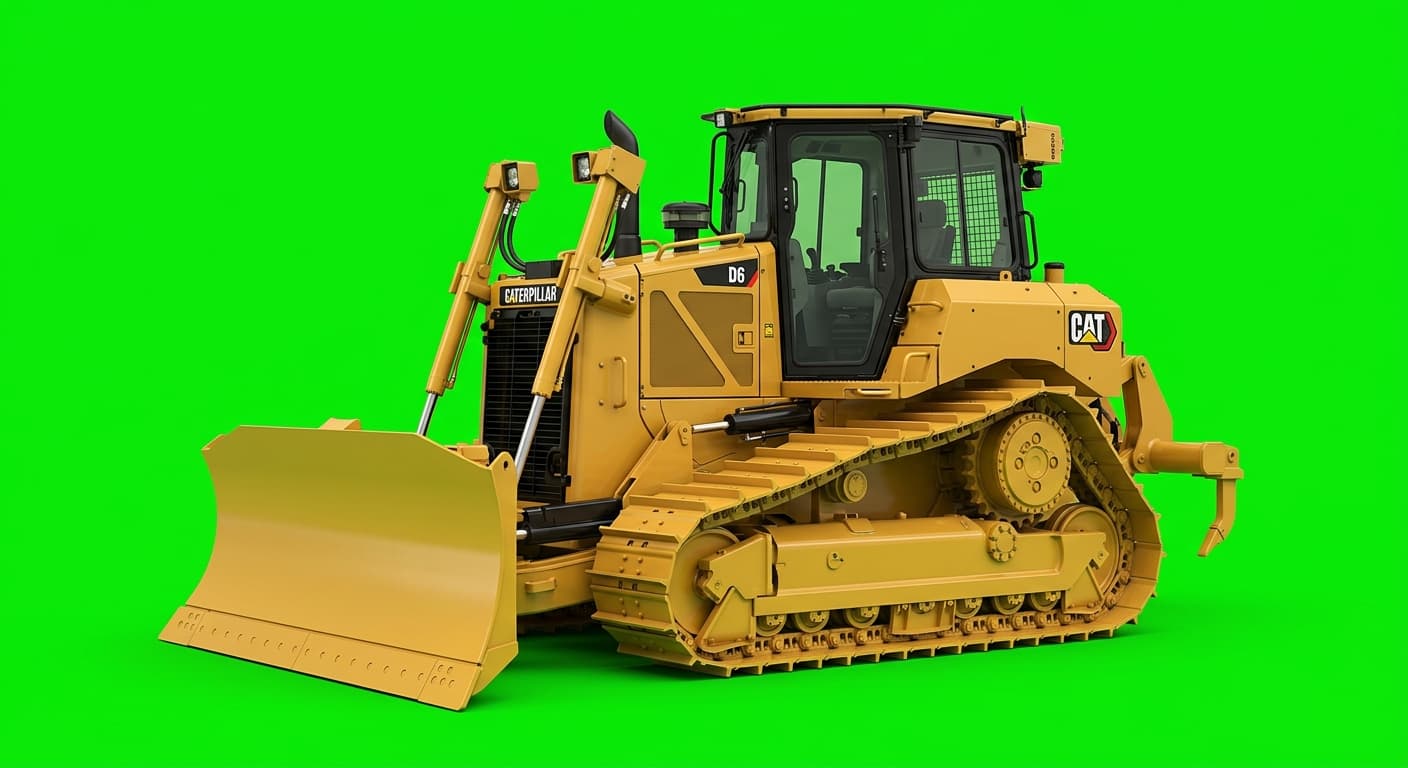
Mid-Size Bulldozer Pricing Table (100–200 HP)
| Model | Weight | HP | 0–2K hrs | 2K–5K hrs | 5K–8K+ hrs |
|---|---|---|---|---|---|
| CAT D5 | 37,000 lbs | 130 HP | $100,000–$145,000 | $68,000–$100,000 | $40,000–$68,000 |
| CAT D6 | 47,000 lbs | 185 HP | $145,000–$200,000 | $95,000–$145,000 | $55,000–$95,000 |
| Komatsu D51 | 36,000 lbs | 130 HP | $88,000–$128,000 | $58,000–$88,000 | $35,000–$58,000 |
| Komatsu D65 | 46,000 lbs | 190 HP | $125,000–$175,000 | $82,000–$125,000 | $48,000–$82,000 |
| Deere 700K | 42,000 lbs | 165 HP | $118,000–$168,000 | $78,000–$118,000 | $45,000–$78,000 |
Prices reflect 2019–2024 model years. Sources: Ritchie Bros auction results, IronPlanet listings, Equipment Watch residual values, Q1 2026.
A grading contractor in Georgia told us he bought a 2020 Komatsu D65 with 2,800 hours for $135,000 at auction in late 2025. The dealer asking price had been $162,000. He ran the numbers against renting: at his utilization rate of roughly 900 hours per year, buying paid for itself within 14 months versus a monthly rental. For anyone doing the depreciation math, that's the kind of calculation that tips the buy/rent decision.
What About Used Large Bulldozer Prices?
Large bulldozers in the 200+ HP class represent the biggest dollar values in the used dozer market, with prices spanning $78,000 to $480,000+ based on Equipment Watch residual data. These machines see fewer transactions than mid-size units, so individual sale prices can swing more widely.
The Cat D8 dominates this segment. It's the default spec for large-scale earthmoving, mining support, and road construction. Buyers in this class tend to be established contractors and mining operations who know exactly what they need. Price sensitivity takes a back seat to machine condition and documented maintenance history.
Large Bulldozer Pricing Table (200+ HP)
| Model | Weight | HP | 0–2K hrs | 2K–5K hrs | 5K–8K+ hrs |
|---|---|---|---|---|---|
| CAT D7 | 61,000 lbs | 235 HP | $210,000–$295,000 | $148,000–$210,000 | $88,000–$148,000 |
| CAT D8 | 77,000 lbs | 310 HP | $280,000–$380,000 | $195,000–$280,000 | $115,000–$195,000 |
| CAT D9 | 110,000 lbs | 436 HP | $380,000–$480,000+ | $265,000–$380,000 | $162,000–$265,000 |
| Komatsu D85 | 60,000 lbs | 240 HP | $185,000–$260,000 | $130,000–$185,000 | $78,000–$130,000 |
| Komatsu D155 | 106,000 lbs | 410 HP | $320,000–$430,000 | $225,000–$320,000 | $135,000–$225,000 |
| Deere 850K | 74,000 lbs | 310 HP | $260,000–$360,000 | $182,000–$260,000 | $108,000–$182,000 |
Prices reflect 2019–2024 model years. Sources: Ritchie Bros, Equipment Watch, dealer survey data, Q1 2026.
Why does the Komatsu D85 trail the Cat D7 by $25,000–$35,000 at comparable hours? It's not build quality. Komatsu builds a solid machine at this size. The gap comes down to dealer density and brand inertia: when a D7 or D8 goes down on a mass-grading project and you need a transmission part by morning, Cat's North American parts network (1,600+ locations) is still unmatched.
Which Bulldozer Brand Holds Its Value Best?
Caterpillar leads all crawler tractor manufacturers in resale retention, holding approximately 60% of original value at 5,000 hours according to Equipment Watch Residual Value Awards data. Komatsu follows at 56%, Deere at 54%, Case at 47%, and smaller brands trail below 40%.
Those retention numbers directly affect total cost of ownership. Consider: a unit that retains 60% versus 47% on a $200,000 acquisition means $26,000 more in your pocket at resale. Run a five-machine fleet, and that gap adds up to $130,000 in retained equity. For context, check our equipment value guide for broader context on how retention plays out across machine types.
Average Used Bulldozer Price by Brand (Mid-Size Class)
Brand Retention Comparison
| Brand | Value Retention @ 5K hrs | Price Premium | Why |
|---|---|---|---|
| Caterpillar | 60% | +12–15% | Deepest dealer network, strongest parts availability in North America |
| Komatsu | 56% | +7–10% | Tier 4 reliability, strong in D51–D85 range, growing dealer presence |
| John Deere | 54% | +5–8% | Ag crossover buyers, strong loyalty among owner-operators |
| Case | 47% | Baseline | Competitive pricing new, thinner resale market than top three |
| Dressta/Other | 38% | –10–15% | Limited dealer support, smallest buyer pool, parts sourcing challenges |
Retention percentages based on Equipment Watch Residual Value data, Ritchie Bros auction results, and dealer market reports, 2025–2026.
One pattern we see across hundreds of transactions: the manufacturer premium actually widens on older, higher-hour units. A 2017 Cat D6 at 7,000 hours doesn't just cost more than a 2017 Case at 7,000 hours — it costs proportionally more. Why? Buyers of aging equipment are more risk-averse, and they'll pay extra for the make they trust.
The factors that drive resale retention, in order of impact:
- Parts availability — Cat's 1,600+ North American dealer locations set the standard
- Fleet manager brand loyalty — many operations spec a single make for standardization
- Service record continuity — dealer-serviced machines with documented history sell faster
- Aftertreatment reputation — Tier 4 Final engine reliability varies by manufacturer
- Buyer pool depth — more prospective buyers means more competitive bidding at auction
How Do Operating Hours Affect Used Dozer Prices?
Operating hours are the single biggest factor determining resale value in the used crawler tractor market. A mid-size unit loses roughly 8–10% of its worth for every 1,000 hours logged in the first 5,000, based on depreciation curves from Equipment Watch (2025 fleet data). After 5,000 hours the rate slows — but it never stops.
In other words, the market is pricing in distance to the next major repair event. For tracked machines, that means undercarriage ($8,000–$20,000+), final drives ($8,000–$15,000 per side), and engine overhauls ($18,000–$35,000). Buyers subtract those anticipated costs directly from their offers. So verify hours before signing — our hour meter guide covers how to spot tampered readings and cross-reference with ECM data.
How Hours Affect Bulldozer Value
Curve represents average across mid-size class, all major brands. Individual machines vary. Sources: Equipment Watch, Ritchie Bros post-sale results.

Price Impact by Hour Bracket
| Hour Bracket | Value Retained | Market Perception |
|---|---|---|
| 0–2,000 hrs | 81–100% | Low hours — premium pricing, strong buyer demand |
| 2,000–5,000 hrs | 57–81% | Working range — bulk of transactions happen here |
| 5,000–8,000 hrs | 42–57% | Approaching major service — buyers negotiate hard |
| 8,000–10,000 hrs | 35–42% | High hours — repair costs priced into every offer |
| 10,000+ hrs | <35% | End of economic life — rebuild or part-out territory |
Why Is Undercarriage the Biggest Cost Factor for Dozers?
Undercarriage accounts for up to 35% of a bulldozer's total lifetime maintenance cost — more than engine, hydraulics, or any other system, according to Equipment Watch lifecycle data. A full undercarriage replacement on a mid-size dozer runs $8,000–$20,000+ depending on the model and whether you use OEM or aftermarket components. On a D8 or D9, that number can climb past $40,000.
This is the single biggest blind spot for first-time dozer buyers. The machine might run perfectly, the engine might sound fine, and the blade might look clean — but 70% worn tracks, rollers, and idlers on a Cat D6 mean a $12,000–$16,000 bill is coming within 500 hours. That's why experienced buyers check undercarriage before anything else.
Bulldozer Lifetime Maintenance Cost Breakdown
Undercarriage Replacement Costs by Size
| Size Class | Full UC Replacement | Tracks Only | Expected Life |
|---|---|---|---|
| Small (D3–D4) | $5,000–$10,000 | $2,000–$4,500 | 2,000–3,000 hrs |
| Mid (D5–D6) | $10,000–$20,000 | $4,000–$8,000 | 2,500–4,000 hrs |
| Large (D7–D9) | $20,000–$45,000 | $8,000–$16,000 | 3,000–5,000 hrs |
Costs include parts and labor. OEM parts on the high end, aftermarket on the low end. Sources: Equipment World, dealer service departments, equipment forum data.
Here's the counterintuitive angle experienced buyers know: a 4,000-hour dozer with a recently replaced undercarriage can be a better buy than a 1,800-hour machine with original tracks and rollers. The higher-hour machine already has the most expensive wear item renewed. As one Heavy Equipment Forums user put it: "UC is the money pit — if somebody just replaced it, that's actually a reason to buy, not a reason to walk."
Buyer Warning: UC Red Flags
Before signing anything, inspect these telltale signs of worn or hidden undercarriage damage:
- Fresh paint on the underside — often masks cracks, welds, or structural repairs
- Mismatched track shoes — signals patchwork fixes rather than a proper rebuild
- Deep scalloping on sprocket teeth — the whole assembly is near end of life
- Metal plating welded over frame cracks — a major structural red flag per Equipment World
- Track sag exceeding manufacturer specs — indicates worn-out links and pins
That last one — scalloped sprockets — means you're looking at a five-figure overhaul. Walk away, or negotiate accordingly.
When Is the Best Time to Buy or Sell a Used Dozer?
Resale values for tracked earthmoving equipment follow a seasonal pattern that informed buyers and sellers can exploit. According to Ritchie Bros auction data, machines sell for 10–18% less during November through January compared to peak season. Then demand surges from February through May as contractors gear up for building season.
Translation: if you're buying, winter is your window. A $130,000 mid-size unit in March might go for $110,000–$117,000 in December. That's $13,000–$20,000 saved on a single acquisition.
The Sweet Spot for Sellers
Sell before the machine hits 5,000–6,000 hours and before it needs undercarriage or engine work. That's the window where you've absorbed the steepest early depreciation but haven't yet reached the point where buyers subtract major repair estimates from their offers.
Wondering what your dozer is worth right now? Our equipment value guide provides free pricing data by model, or you can request a cash offer on your bulldozer with a 24-hour turnaround.
How Much Are Used CAT Bulldozer Prices?
Cat bulldozers consistently command the highest prices in the used dozer market. A 2020–2022 Cat D6 with 3,000–4,000 hours currently trades between $120,000 and $155,000 based on Ritchie Bros post-sale results. The D5 in the same condition bracket runs $85,000–$110,000. Large-frame D8s start at $195,000 and climb above $380,000 for low-hour units.
Cat's value advantage in dozers comes down to three factors: the deepest dealer network in North America with over 1,600 parts locations, a buyer pool that includes fleet managers who spec Cat by default, and consistent resale demand that creates a price floor other brands can't match. Whether the premium is worth it depends on your situation — but the data says the market thinks so.
For model-level specs, comparisons, and current pricing, check our Cat bulldozer pages.
What Are Used Komatsu Bulldozer Prices?
Komatsu sits in the second-place position for dozer resale values, and the D65 series represents strong value for buyers who don't want to pay the Cat tax. A 2020 D65 with 3,500 hours typically trades around $105,000–$130,000 — roughly 10–15% below a comparable Cat D6, per Ritchie Bros auction data.
Komatsu's Tier 4 Final engines have earned a reputation for lower maintenance costs than some competitors' aftertreatment systems. The brand has been gaining US market share steadily, which should continue supporting resale values. For excavator buyers already familiar with Komatsu, the dozer line follows the same reliability pattern.
Explore Komatsu bulldozer models and specs for detailed pricing by model.
Frequently Asked Questions About Used Bulldozer Prices
How much does a used Cat D6 bulldozer cost?
A used Cat D6 typically sells between $95,000 and $200,000 depending on year, hours, and condition. Low-hour machines (under 2,000 hours) trade at the top of that range, while D6s above 5,000 hours fall below $100,000. The Cat D6 is the most commonly traded mid-size dozer in the US, so pricing data is deep and reliable.
What is the cheapest bulldozer you can buy used?
High-hour small dozers in the Cat D3 or Komatsu D37 class can be found for $16,000–$22,000, but expect significant undercarriage wear at those prices. A more realistic floor for a work-ready machine is $28,000–$35,000. Below that threshold, most machines need $10,000–$20,000 in repairs before they're dependable on a job site.
How many hours is too many on a used bulldozer?
Most dozers are built for 10,000–15,000 hours of total life. The market applies steep discounts above 8,000 hours because buyers start pricing in undercarriage replacement ($8,000–$20,000), final drive rebuilds ($8,000–$15,000), and engine work ($18,000–$35,000). Well-maintained Cat and Komatsu machines can push past 12,000 hours, but major expenses are nearly certain at that point.
Is it better to buy a used bulldozer at auction or from a dealer?
Auctions typically run 15–25% below dealer lot prices, but machines sell as-is with no warranty or recourse. Dealers inspect, service, and often include 30–90 day coverage. If you can bring a mechanic or hire a third-party inspector beforehand, auctions deliver better value per dollar. If you need a production-ready machine by next Monday, pay the dealer premium.
Which bulldozer brand has the best resale value?
Caterpillar leads all dozer brands in resale retention, holding roughly 60% of original value at 5,000 hours per Equipment Watch residual data. Komatsu follows at 56%, with John Deere at 54%. Case trails at 47%. The premium widens on older machines — buyers of aging dozers pay more for brands they trust to keep running.
Get Your Bulldozer's Value
The tables and charts above give you a solid baseline for used bulldozer pricing. But every machine is different — year, hours, undercarriage condition, blade type, and location all affect the final number. If you're selling, we provide cash offers within 24 hours based on live market data. No listing fees, no auctions, no waiting.
If you're buying, start with our bulldozer spec pages to compare models side by side, then check the value guide for broader pricing context across all equipment types.