
Market Intelligence
The 2026 Ag Equipment Tariff Cut: How Lower Import Duties Change What Buyers Pay for Tractors and Implements
Section 232 duties on imported farm equipment dropped from 25% to 15% on June 8, 2026. Sticker prices did not follow. Here is where the savings actually land, what the OEMs are doing with them, and how the used market is reacting.
Last updated: September 2026
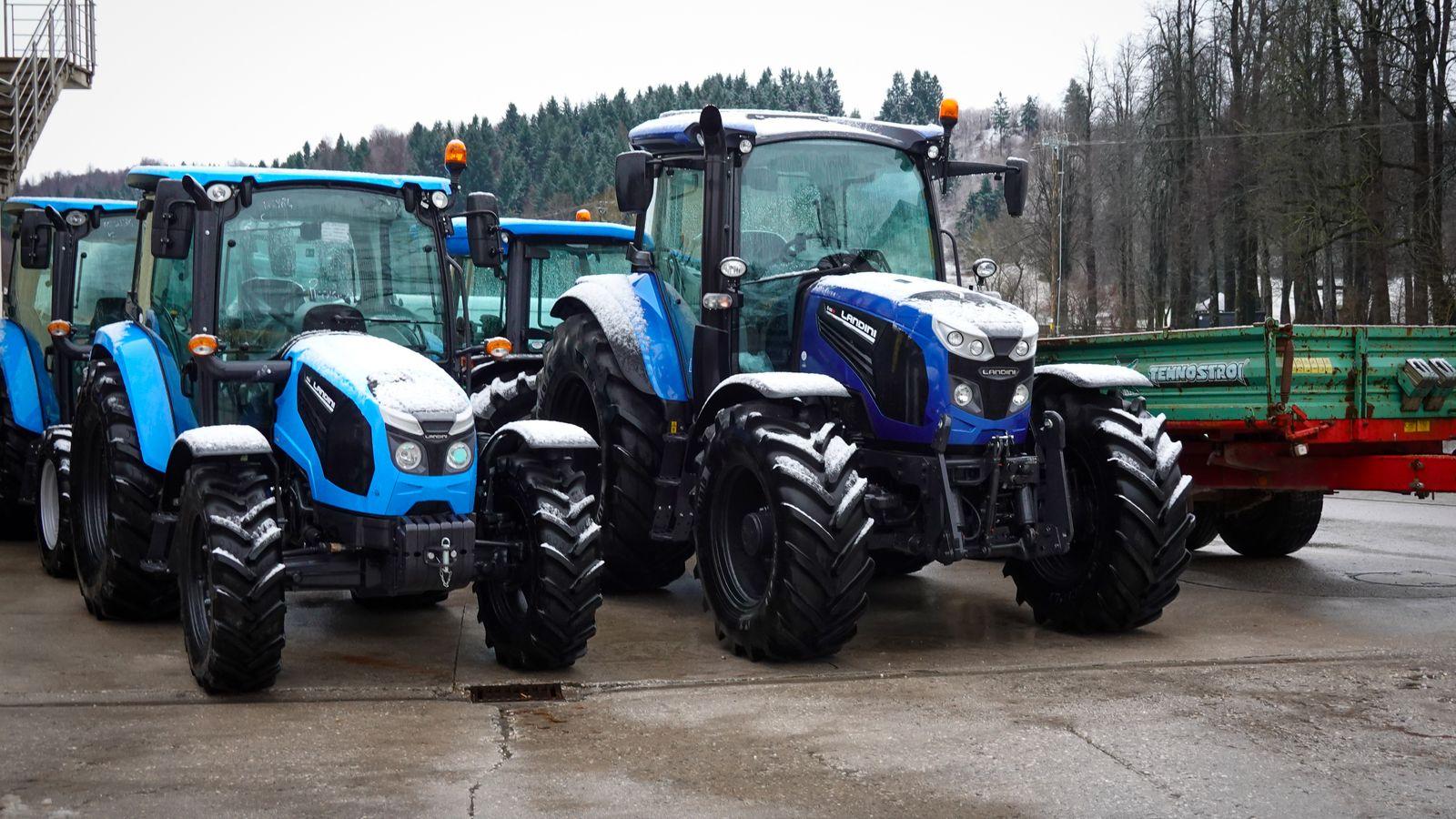
The ag equipment tariff cut of 2026 is real, it is already in force, and it has not lowered a single tractor sticker price yet. On June 1, 2026 the White House signed a proclamation that dropped the Section 232 derivative duty on imported agricultural equipment — tractors, combines, harvesting machinery, plows, mowers, tractor parts, and farm wagons — from 25% to 15%, effective 12:01 a.m. ET on June 8 and running through December 31, 2027. Construction and material-handling equipment got the same 15% rate, but only when it ships from the EU, UK, Japan, South Korea, Taiwan, Switzerland, or a short list of other partner economies.
What the cut does for buyers is more specific than "prices go down." It caps the federal duty on an imported tractor at one 15% line item instead of the 25% whole-machine rate that ran from April 6 to June 7. It shrinks the model-year 2027 price increase the OEMs were planning. It gives dealers room to run cash incentives on imported inventory. And it takes some of the upward pressure off the used market, which had been feeding on tariff-driven new-price inflation since 2025. This guide walks through the actual rules, the duty math on a real customs value, what Deere, CNH, Kubota, and AGCO said about pass-through on their summer 2026 earnings calls, and what the August 2026 Sandhills used-market data says about where values are heading.
TL;DR — What the 2026 Ag Equipment Tariff Cut Means for Buyers
- What changed: Section 232 duty on listed ag equipment fell from 25% to 15% on June 8, 2026, for all countries of origin. Runs through Dec 31, 2027.
- Construction equipment: 15% only for EU, UK, Japan, Korea, Taiwan, Switzerland and a few others. China, India, Brazil stay at 25%.
- The 85% rule: Machines with 85%+ US-melted-and-poured metal by weight qualify for 10%. The old threshold was 95%.
- New prices: Not dropping. Deere and CNH are guiding +1% to +3% for 2026 and calling tariffs a net cost even after the cut.
- Used prices: Firm. Sandhills shows used tractor inventory down 15-22% year over year in August 2026, with auction values up 1.7% to 6%.
- Buy or wait: Buy imported ag iron before the Dec 31, 2027 sunset. Time new purchases to model-year 2027 pricing announcements this fall.
Did Equipment Tariffs Go Down in 2026? What Actually Changed on June 8
Yes, but you have to separate three different tariff programs to understand what you now pay. Agricultural equipment import duty in 2026 has been reshaped by a Supreme Court decision, two presidential proclamations under Section 232, a stopgap Section 122 tariff, and a set of Section 301 duties that replaced it. The proclamation of June 1, 2026 — formally titled "Further Adjusting the Tariff Regimes for Imports of Aluminum, Steel, and Copper into the United States" — is the one that matters most for farm equipment. The full sequence is below.
| Date | Action | Effect on Equipment Buyers |
|---|---|---|
| Feb 20, 2026 | Supreme Court strikes down IEEPA tariffs (6-3) | Reciprocal and other IEEPA-based tariffs void; roughly $165B in refunds ordered through CBP's CAPE system |
| Feb 24, 2026 | Section 122 global tariff takes effect | Flat 10% on all imports for 150 days as a stopgap |
| Apr 6, 2026 | Proclamation 11021 restructures Section 232 | Ag and construction machinery placed at 25% on full customs value (previously duty only on declared metal content) |
| May 7, 2026 | Court of International Trade rules against Section 122 | 2-1 decision; administration appeals, tariff stays in place pending appeal |
| Jun 8, 2026 | Section 232 cut takes effect | Annex III ag equipment 25% to 15% all origins; Annex I-C mobile industrial equipment 15% for partner economies; 10% for 85%+ US metal |
| Jul 24, 2026 | Section 122 expires; new Section 301 duties begin | 10% to 12.5% on products of about 60 economies, but articles subject to Section 232 are exempt |
| Dec 31, 2027 | Temporary 15% and 10% rates sunset | Absent new action, covered equipment reverts to 25% under Proclamation 11021 |
Annex III: agricultural equipment goes to 15% regardless of origin
The June proclamation created a new Annex III covering 39 tariff codes for agricultural equipment and residential air-conditioning systems. Global Trade Alert's June 3, 2026 analysis describes this group as moving "to a 15% floor across all origins," which is the single most important line for tractor buyers: a Mahindra built in India, a Kubota built in Japan, and a Fendt built in Germany all now pay the same 15% Section 232 rate. Customs broker summaries of CBP's implementing guidance (CSMS #68855869, issued June 5, 2026) list the covered categories as agricultural tractors, combine harvester-threshers and other harvesting machinery, plows, mowers, tractor parts, and farm wagons, falling primarily under HTS headings 8701, 8432, and 8433.
Two things make this a bigger deal than the headline 10-point cut suggests. First, most agricultural tractors and implements carry a 0% normal (Column 1) duty rate in the Harmonized Tariff Schedule, so the Section 232 rate is effectively the entire federal import duty on them. Second, the Section 301 duties that replaced the Section 122 stopgap on July 24, 2026 explicitly exempt "all articles and parts of articles subject to section 232 tariffs." An imported tractor today pays 15%, full stop, rather than 15% plus a global surcharge. The one exception is China-origin equipment, which still carries the separate 2018-era Section 301 China duties on top; the June action did not touch those.
Annex I-C: construction and material-handling equipment depends on where it was built
Mobile industrial equipment — forklifts, earth-moving machinery, non-agricultural tractors, and mobile cranes across 28 HTS codes in Chapters 84 and 87 — landed in a separate Annex I-C with origin-dependent rates. Imports from Argentina, Ecuador, El Salvador, Guatemala, Japan, South Korea, Liechtenstein, Switzerland, Taiwan, the United Kingdom, and EU member states pay a maximum 15% combined Section 232 and MFN duty. USMCA-qualifying Canadian and Mexican machines pay 25% on their non-US content with a 15% floor on full value. Everything else, including China, India, and Brazil, stays at the 25% rate set by Proclamation 11021 in April.
That split is why the cut helps a Japanese-built Takeuchi or Kubota mini excavator and a Korean-built Develon (formerly Doosan) wheel loader but does nothing for a China-assembled compact machine. If you are shopping construction iron, the country-of-origin line on the serial plate now has a 10-point price implication. Our earlier guide on how tariffs were reshaping used heavy equipment prices covered the brand-by-brand exposure before the June cut; the origin table below updates it.
The 85 percent US steel rule and the 10% rate
Proclamation 11021 had set a 95% threshold for a product to be treated as "composed entirely" of US metal, which almost no finished machine could meet. The June proclamation lowered it to 85%: if at least 85% of the combined weight of the steel, aluminum, and copper in a covered product was melted and poured (steel) or smelted and cast (aluminum, copper) in the United States, the product qualifies for a 10% Section 232 rate. AEM's June 4, 2026 member guidance notes the proclamation pairs this with "heightened importance on accurate certification of U.S. content, with clear enforcement and penalties for misrepresentation." The 10% tier is where OEMs with domestic mill relationships will try to land their partially imported models, and it is one reason a US-assembled tractor with imported sub-assemblies should hold a price advantage over a fully imported equivalent through 2027.
Agricultural Equipment Import Duty 2026: What the Math Looks Like on a Real Tractor
Section 232 duty is assessed on the declared customs value of the machine at the port — the transaction value between the foreign manufacturer and the US importer — not on the dealer's MSRP. Customs value typically sits well below retail, because it excludes the importer's margin, inland freight, dealer margin, setup, and warranty reserve. That distinction matters when you estimate what the cut is worth on the lot. A 10-point reduction on customs value works out to something like 5 to 7 points of retail price on a typical imported tractor, depending on how much margin sits between the port and the showroom.
Take an imported 55 HP utility tractor with a $45,000 customs value. Between April 6 and June 7, 2026 the Section 232 line was $11,250. From June 8 it is $6,750. That $4,500 difference is real money that is no longer leaving the importer's bank account, and it is the pool from which dealer incentives, smaller 2027 increases, and margin recovery all get funded. On a $120,000 row-crop tractor the same math is $30,000 down to $18,000. If the machine qualifies for the 85% US-metal tier, it drops again to $12,000. Multiply that across a container ship of tractors and you see why Global Trade Alert estimated the June action reduces annual duties by about $3.4 billion on roughly $58 billion of affected imports.
| Country of Origin | Ag Equipment (Annex III) | Construction / Material Handling (Annex I-C) | Typical Brands |
|---|---|---|---|
| Japan, South Korea, EU, UK, Taiwan, Switzerland | 15% | 15% (capped, combined with MFN) | Kubota and Yanmar (Japan), LS, TYM, Kioti (Korea), Fendt, Claas, Landini (EU), Takeuchi (Japan) |
| Canada / Mexico (USMCA-qualifying) | 15% | 25% on non-US content, 15% floor on full value | Deere and Cat models assembled in Mexico, Canadian-built implements |
| US-built with 85%+ US-origin metal | 10% | 10% | Certification required; applies to imported sub-assemblies and machines meeting the metal-weight test |
| China, India, Brazil, Thailand, Turkey, others | 15% | 25% | Mahindra (India) tractors get 15%; China-built mini excavators and skid steers stay at 25% |
Brand origin is a starting point, not a guarantee. Kubota builds some compact and turf models in Gainesville, Georgia and imports its L and M series from Japan; Deere builds compacts in Augusta, Georgia and sources some utility models from overseas plants; CNH and AGCO both run a mix of US, European, Indian, and Brazilian production. The serial plate's country of origin, not the badge, determines which annex applies. Dealers have this information on the import paperwork and will share it if you ask — and after June 8 you should ask, because it tells you whether the unit on the lot was landed at 25% or 15%.
Will Tractor Prices Drop After the Tariff Cut? What the OEMs Said
No. The honest answer to tractor prices after the tariff cut is that the manufacturers are keeping the difference for now, and they have said so in plain language. Baird analyst Mig Dobre told Farm Equipment on June 5, 2026 that the cut "will have little impact on lowering the cost of equipment" in 2026, because model-year pricing is already set and the near-term benefit lands on OEM margins. The summer earnings calls confirmed it. Every major manufacturer is still guiding positive price realization for 2026, and every one of them still describes tariffs as a net cost even at the new 15% rate.
| Manufacturer | Disclosed Tariff Position | 2026 Pricing Stance | Source |
|---|---|---|---|
| Deere | FY2026 direct tariff expense $1.1B; $382M IEEPA refunds year to date; ~$1B net expected FY2027 | +1 pt large ag, +1.5 pts small ag & turf, +3 pts construction (FY2026 guide) | Q3 FY2026 call, Aug 20, 2026 |
| CNH (Case IH, New Holland) | Ag tariff drag ~170 bps (was 210-220 bps); construction ~470 bps (was 600 bps) after Section 232 cut | +1.5% to +2% agriculture, +1% construction (2026 guide) | Q2 2026 call, Aug 3, 2026 |
| Kubota | Additional $150M US tariff costs in H1 2026; expects ~$220M in tariff refunds for full year | Cites "price revisions" plus higher North American volume as profit drivers | H1 2026 results, Aug 4, 2026 |
| AGCO (Fendt, Massey Ferguson) | Net tariff impact ~$95M for 2026 ($115M gross less $22M IEEPA refunds) | "Solid pricing realization" partially offsetting lower volume | Q2 2026 results, Aug 2026 |
Deere's numbers show the shape of it. On the August 20, 2026 call, investor relations director Christopher Seibert put fiscal 2026 direct tariff expense at $1.1 billion, offset by $382 million in IEEPA refunds recognized so far. CFO Brent Norwood said fiscal 2027 net tariffs should run around $1 billion, a step up from this year's net once the refunds stop. That is with the 15% rate baked in. Deere described its model-year 2027 pricing as a "measured approach" to covering inflation — not a rollback. CNH CFO James Nickolas was blunter on August 3: "Even with this temporary relief of Section 232 rates, it is still a net drag on our margins," adding that the company has "not passed all the tariff impacts on to our customers." Read that second clause carefully. It means the OEMs absorbed part of the 25% period, and they view the 15% period as a chance to stop absorbing rather than a reason to cut.
Kubota is the clearest example of the refund dynamic. Its first-half 2026 results (August 4, 2026) showed revenue up 16.2% to $10.7 billion and operating profit up 64.7% to $1.5 billion, driven by "price revisions" and higher North American volume, favorable exchange rates, and US tariff refunds — even after an additional $150 million in tariff costs. The company expects about $220 million in refunds for the full year. Those refunds come from the IEEPA tariffs the Supreme Court voided in February, and they are flowing to manufacturers, not to buyers who paid tariff-inflated prices in 2025. AGCO reported a similar structure: $115 million in gross 2026 tariff cost less $22 million in IEEPA refunds for a $95 million net.
Where the savings actually show up for buyers
- Smaller model-year 2027 increases. The 2025 and early-2026 increases on imported lines ran 4% to 8%. With Section 232 at 15% and no global surcharge stacking on top, the 2027 increases on imported ag equipment should land in the low single digits. This is the main benefit and it shows up as an increase you did not get, which is why it feels invisible.
- Dealer incentives on landed inventory. Units imported before June 8 were landed at 25%; units arriving after were landed at 15%. Dealers holding pre-June inventory need to move it, and the OEM programs to help them do that are where cash-back and sub-market financing offers come from through the fall.
- Parts pricing relief. Tractor parts are in Annex III. Wear parts and service components on imported tractors were among the most tariff-sensitive items in 2025 because they have thin margins to absorb duty. Expect parts price lists to flatten before whole-goods prices do.
- Financing over sticker. With retail prices sticky, the negotiating room is in rate buy-downs. The heavy equipment financing guide covers how captive finance arms structure these programs and what a 0% offer actually costs you in forgone cash discount.
Used Equipment Prices and Tariffs in 2026: Why the Cut Has Not Loosened the Market
Tariffs move used equipment prices through one mechanism: they change the gap between new and used. When the 25% regime pushed new sticker prices up in 2025 and early 2026, buyers who could not stomach the new price bid up late-model used units, and the gap widened until used values caught up. The June cut removes the force that was widening the gap. It does not create a force that shrinks it. For used values to fall you need loose inventory, and the August 2026 Sandhills Global data shows the opposite.
| Used Category (US, Aug 2026) | Inventory Y/Y | Asking Value Y/Y | Auction Value Y/Y |
|---|---|---|---|
| Compact & utility tractors (under 100 HP) | -22.0% | +1.6% | +1.7% |
| Tractors 100+ HP | -15.5% | -0.1% | +4.5% |
| Tractors 175-299 HP | n/a | n/a | +6.0% |
| Combines | -10.2% | +1.5% | +4.7% |
| Planters | -16.0% | +6.4% | +15.4% |
| Sprayers | -16.7% | -4.4% | -4.2% |
| Heavy-duty construction (dozers, excavators, wheel loaders) | -10.5% | -1.6% | -1.3% |
| Medium-duty construction (mini ex, skid steers, backhoes) | -11.4% | -0.2% | +0.1% |
| Telehandlers | -6.6% | -7.0% | -5.3% |
Source: Sandhills Global US market reports published September 4, 2026 (August 2026 data). Sandhills tracks listings on TractorHouse, MachineryTrader, and affiliated marketplaces.
The used compact and utility tractor segment is the one most directly tied to import tariffs, since the majority of sub-100 HP units sold in the US are built in Japan, Korea, or India. In August 2026 Sandhills reported inventory in that segment down 22% year over year and trending down for 10 straight months, with under-40 HP units down 23.5%. Asking values were up 1.6% and auction values up 1.7%. That is a market where the tariff cut has taken the top off the price curve but supply is too thin for values to actually retreat. If you are pricing a used unit in this class, the used utility tractor price guide has model-level ranges to check against.
Larger ag iron is firmer still. Used 100-plus HP tractor inventory was down 15.5% year over year with auction values up 4.45%, and the 175-299 HP class posted auction values up 5.97%. Used combines were down 10.2% on inventory with auction values up 4.66%. Deere said on its August call that model-year 2023 and 2024 high-horsepower used tractor inventory is down nearly 40% year over year and that new-to-used value spreads have "largely normalized." CNH said the gap "has begun to converge." Both statements point the same direction: the tariff-inflated spread of 2025 has closed from the used side, by used values rising, rather than from the new side.
Construction is the segment where the tariff cut is starting to show in used values, and only where origin qualifies. Heavy-duty used construction asking values were down 1.55% year over year in August and auction values down 1.29%, with crawler excavators down 3.58% on asking. Sandhills attributed the softness to "slower sales activity and more cautious buyers" rather than to tariffs directly, but a 15% landed cost on new Japanese and Korean excavators takes pressure off the used side in a way the 25% rate did not. The used excavator price guide tracks that class by size and hours.
A real buyer's math: 2022 used vs. 2026 new after the cut
Here is the pattern we are seeing play out on dealer lots this summer, using round numbers. A cattle operation is deciding between a clean 2022 Japanese-built 70 HP utility tractor with 900 hours and a new 2026 unit of the same model. In March the new unit was quoted roughly $19,000 above the used one. By July, after the June 8 cut, the new quote has not moved, but the dealer adds a $2,500 cash allowance and a 0.9% rate on 60 months against the previous 3.9%. On a $58,000 note the rate cut alone is worth about $4,600 in interest over the term. Meanwhile the used unit's asking price has crept up $800 because the seller watched the same tight auction numbers everyone else did. The gap between the two closes by about $7,900 in four months, and none of it comes from a lower sticker. That is what the tariff cut looks like on the ground.
Farm Equipment Tariff Impact by Brand: Who Benefits Most From the Cut
The brands that benefit most are the ones that import the highest share of finished units into the US, because they were paying the full 25% on full customs value from April 6 and now pay 15% on the same base. That means Japanese and Korean compact and utility tractor brands, EU-built high-horsepower and specialty tractors, and Indian-built value brands all see the largest absolute change in landed cost. US-assembled lines with imported components benefit less, and lines built primarily in the US with domestic steel benefit least — they were never paying the whole-machine derivative rate to begin with.
- Kubota, Yanmar (Japan). Highest exposure among volume brands. L and M series and most implements are Japan-built and were landed at 25% for two months. Kubota's dealer network was one of only two groups forecasting 2026 sales growth (+2%) in the June Farm Equipment dealer survey, which suggests the brand held share through the 25% window and now has room to defend price. Compare positioning in the Kubota vs John Deere vs Mahindra compact tractor comparison.
- LS, TYM, Kioti (South Korea). Fully imported finished units, so the same 10-point relief on customs value. Korea is also on the Annex I-C partner list, so Korean-built compact construction equipment gets the 15% rate too. See the Kioti vs Yanmar vs LS value comparison for where these brands were priced before the cut.
- Mahindra (India). Benefits on ag tractors because Annex III applies to all origins. Does not benefit on any construction-classified equipment, since India is not on the Annex I-C partner list.
- Fendt, Claas, Landini, and other EU builds. Full 15% on ag equipment and 15% on any construction or telehandler product. EU-built round balers, forage harvesters, and hay tools are in Annex III; the used round baler price guide covers the used side of that market.
- Deere, Case IH, New Holland (mixed US / Mexico / overseas). Moderate exposure. US-built models were paying Section 232 on imported steel and components rather than on the whole machine, so the June action changed less for them. Mexican-assembled units get the USMCA formula. Imported utility and specialty models from India, Italy, or Brazil get the full Annex III relief.
For a general sense of where each class sits on value, the used heavy equipment pricing guide has 2026 ranges across tractors, construction, and material handling, and the depreciation guide explains why imported brands with a tariff-inflated new price in 2025 may depreciate faster than their historical curves through 2027.
Is Now a Good Time to Buy Heavy Equipment? A Decision Framework for the 15% Window
The 15% rate is locked by proclamation through December 31, 2027, which makes the next 15 months the most predictable pricing environment imported equipment buyers have had since 2024. The IEEPA and Section 122 stacks are gone. The OEMs are guiding low single-digit increases. Used inventory is thin but the tariff tailwind on used values has ended. Here is how that translates by buyer situation.
- You need imported ag equipment for the 2027 season. Buy this fall. Dealers are still clearing pre-June inventory landed at 25% with allowances and rate programs, and model-year 2027 pricing on post-June inventory will carry a smaller increase than 2026 did. Waiting into spring 2027 means paying the 2027 increase without the clearance incentive.
- You can wait for model-year 2027 announcements.Most OEMs publish 2027 pricing between October and December. If your dealer's 2026 quote does not reflect any tariff relief, the 2027 list is where the smaller increase will show. Ask for a written comparison of the 2026 and 2027 price on the same configuration before you sign.
- You are buying used compact or utility tractors. Buy when you find the right unit, not when you think the market will drop. Inventory is down 22% year over year and values are still edging up. The used equipment inspection guide covers what to verify before you pay a firm-market price.
- You are buying construction equipment. Check origin first. A Japan-, Korea-, or EU-built machine landed after June 8 has a 10-point cost advantage over the same machine landed in May, and dealers know it. A China- or India-built machine has no such advantage and dealers holding those units at 25% landed cost will be slower to discount.
- You have a large purchase planned for 2028 or later. Pull it forward. The 15% and 10% tiers sunset on December 31, 2027 and revert to 25% under Proclamation 11021 absent further action. Combined with the Section 179 deduction on equipment placed in service before year end, a late-2027 purchase of imported iron is worth modeling now.
One caution on demand. The June 2026 Farm Equipment dealer survey put the overall 2026 sales forecast at down 4%, with Deere dealers at down 7% and Case IH dealers at down 6%. Purdue's Farm Capital Investment Index fell to 41 in May, its lowest reading since September 2024, and 51% of surveyed farmers named high input costs as their top concern. Deere is guiding US and Canada large ag industry sales down 15% to 20% for fiscal 2026. A tariff cut does not fix farm income, and in a down-cycle dealers with aging inventory are more negotiable than the sticker suggests. The cut gives them margin to work with; farm economics give you the reason to ask.
What to Watch Through 2027
- The December 31, 2027 sunset.Whether the 15% and 10% tiers get extended, made permanent, or allowed to lapse will be the single biggest driver of 2028 imported equipment pricing. AEM Senior Vice President Kip Eidberg called the June action "an important step," not a finish line, and the association is on record pushing for durable relief.
- The USMCA joint review.The agreement's six-year review is underway in 2026. Changes to rules of origin or regional value content would alter the Annex I-C formula for Mexican- and Canadian-assembled equipment.
- Section 122 appeals and refunds. The Court of International Trade ruled against Section 122 on May 7, 2026; the administration appealed. If the ruling holds, importers who paid the 10% between February 24 and July 24 may see a second refund cycle, and the OEM refund windfall of 2026 could repeat in 2027.
- IEEPA refund flow-through.CBP's CAPE refund system is processing roughly $165 billion. Deere, Kubota, and AGCO have all booked refunds. Watch whether any of it reaches dealer programs or whether it stays on OEM balance sheets.
- Steel prices and the 85% tier. The 10% rate rewards US-melted metal. If domestic steel pricing stays elevated relative to imported, OEMs may not find the 85% tier worth chasing, and the practical benefit for buyers narrows to the 15% tier.
We will update this guide as CBP guidance, OEM model-year 2027 pricing, and the Sandhills fall data come in. If you are selling into this market rather than buying, the trade-in vs private sale vs auction comparison covers how to capture a firm used market before the tariff tailwind fully fades.
Frequently Asked Questions
Did equipment tariffs go down in 2026?
Yes, on agricultural equipment specifically. A presidential proclamation signed June 1, 2026 cut the Section 232 derivative tariff on listed agricultural equipment (tractors, combines, harvesting machinery, plows, mowers, tractor parts, farm wagons) from 25% to 15%, effective 12:01 a.m. ET on June 8, 2026 and running through December 31, 2027. The same action created a 15% rate for mobile industrial equipment such as forklifts and earth-moving machinery, but only for imports from the EU, UK, Japan, South Korea, Taiwan, Switzerland, and a handful of other partner economies; equipment from China, India, and Brazil stays at 25%. Separately, the Supreme Court struck down the IEEPA reciprocal tariffs on February 20, 2026, and the replacement Section 301 duties that took effect July 24, 2026 exempt all articles already subject to Section 232. So an imported tractor today faces one 15% Section 232 duty rather than a stack of overlapping ones.
Will tractor prices drop after the tariff cut?
Not in 2026, and probably not as an outright cut in 2027 either. Baird analyst Mig Dobre said in June 2026 that the cut "will have little impact on lowering the cost of equipment" this year because model-year pricing was already set and the near-term benefit lands on manufacturer margins. Deere guided fiscal 2026 price realization of roughly +1 point in large ag, +1.5 points in small ag and turf, and +3 points in construction on its August 20, 2026 earnings call; CNH guided +1.5% to +2% in agriculture on August 3, 2026. Both companies still describe tariffs as a net cost. What the cut actually does is shrink the size of the model-year 2027 increase, give dealers room for cash incentives and low-rate financing on imported inventory, and take some upward pressure off parts pricing. Buyers should expect flatter prices, not lower ones.
How do tariffs affect used equipment prices?
Tariffs raise used prices indirectly and with a lag. When a tariff pushes new sticker prices up, more buyers move to the used market and the gap between new and used widens, which pulls late-model used values up. When a tariff is cut, the reverse happens slowly: the ceiling on used stops rising, but used values only fall if inventory is loose. In August 2026 it was not. Sandhills Global reported used compact and utility tractor inventory down 22% year over year with auction values up 1.7%, 100-plus-HP tractor inventory down 15.5% with auction values up 4.45%, and used combine auction values up 4.66%. Both Deere and CNH said on their summer 2026 calls that the new-to-used price gap has largely normalized. Net effect for buyers: the tariff cut removes a tailwind for used prices, but tight supply is holding values firm through at least the fall 2026 auction season.
Is now a good time to buy heavy equipment?
For imported farm equipment, the window between now and December 31, 2027 is the most predictable pricing environment buyers have had since 2024: the 15% rate is locked by proclamation, the IEEPA and Section 122 stacks are gone, and OEMs are guiding low single-digit price increases rather than the 4% to 8% jumps of 2025. Buy new imported ag equipment now if you need it for the 2027 season and your dealer is offering tariff-relief incentives; wait for model-year 2027 pricing announcements in late 2026 if you can, since that is where the smaller increase will show up. Used compact and utility tractors are a buy-when-you-find-the-right-unit market because inventory is thin. Construction equipment is the exception: Annex I-C rates depend on country of origin, so a Japanese or EU-built excavator benefits while a China- or India-built machine does not. Check the serial plate before assuming the tariff cut applies.
What is the 85 percent US steel rule for equipment tariffs?
The 85 percent rule is the new threshold for a product to count as "composed entirely" of US metal under Section 232. If at least 85% of the combined weight of the steel, aluminum, and copper in a covered machine was melted and poured (steel), smelted and cast (aluminum and copper) in the United States, the machine qualifies for a 10% Section 232 rate instead of 25% or 15%. The prior threshold, set by Proclamation 11021 on April 2, 2026, was 95%, which almost no finished machine could meet. Importers have to certify metal origin, and the June 2026 proclamation flagged heightened enforcement and penalties for misrepresentation. For buyers, the practical effect is that OEMs with US mills in their supply chain can bring a partially imported machine in at 10%, which is one more reason domestic-content models will be priced more competitively than fully imported ones through 2027.
Does the tariff cut apply to construction equipment like excavators and skid steers?
Partly. Construction and material-handling equipment (forklifts, bulldozers, excavators, loaders, cranes, non-agricultural tractors) sits in Annex I-C of the June 2026 proclamation, which covers 28 tariff codes under Chapters 84 and 87 of the Harmonized Tariff Schedule. Those machines get the 15% rate only when they are products of Argentina, Ecuador, El Salvador, Guatemala, Japan, South Korea, Liechtenstein, Switzerland, Taiwan, the United Kingdom, or an EU member state. USMCA-qualifying Canadian and Mexican machines pay 25% on their non-US content with a 15% floor on full value. Machines from all other origins, including China, India, and Brazil, remain at 25%. Agricultural equipment in Annex III, by contrast, moves to 15% regardless of origin. That is why a Japan-built Kubota or Takeuchi mini excavator got relief on June 8 while many China-assembled compact machines did not.
Sources
- White House proclamation, "Further Adjusting the Tariff Regimes for Imports of Aluminum, Steel, and Copper into the United States," June 1, 2026; CBP CSMS #68855869, June 5, 2026.
- Proclamation 11021, April 2, 2026 (effective April 6, 2026).
- Global Trade Alert, "The June 2026 Section 232 metals update: origin matters now," Johannes Fritz, June 3, 2026.
- Holland & Knight, "Annexed Opportunity: Proclamation Provides a Targeted Reduction of Section 232 Tariffs," June 4, 2026.
- AEM, "Section 232 Tariff Changes: What Manufacturers Need to Know," June 4, 2026; Farm Equipment, "Ag Equipment Tariff Cut to 15%," June 5, 2026.
- NDSU Agricultural Risk Policy Center, "Temporary Tariff Relief for Agricultural Machinery," Kim and Steinbach, July 14, 2026.
- Deere & Company Q3 FY2026 earnings call, August 20, 2026; CNH Industrial Q2 2026 earnings call, August 3, 2026; Kubota FY2026 second quarter results, August 4, 2026; AGCO Q2 2026 results, August 2026.
- Sandhills Global, "Economic Uncertainty Extending Sales Cycles in Used Heavy Equipment Market," September 4, 2026.
- Supreme Court IEEPA decision, February 20, 2026; Court of International Trade Section 122 ruling, May 7, 2026; Section 301 forced-labor tariff action, July 24, 2026.
Used tractor and combine inventory is down 10-22% year over year and auction values are still rising. HeavyDutyYard buys clean used tractors, implements, and construction equipment nationwide at 75-85% of retail with a 1-3 day close, free pickup, and no fees. Get a firm cash offer before the tariff tailwind on used values fades.
Get a Cash Offer