
Market Intelligence
Autonomous Tractors in 2026: What's For Sale, What It Costs, and Whether It's Worth It
John Deere 9RX autonomy, Monarch MK-V, and AGCO PTx Trimble OutRun are now shipping. Here is the real cost stack and ROI math for 2026 buyers.
Last updated: April 2026
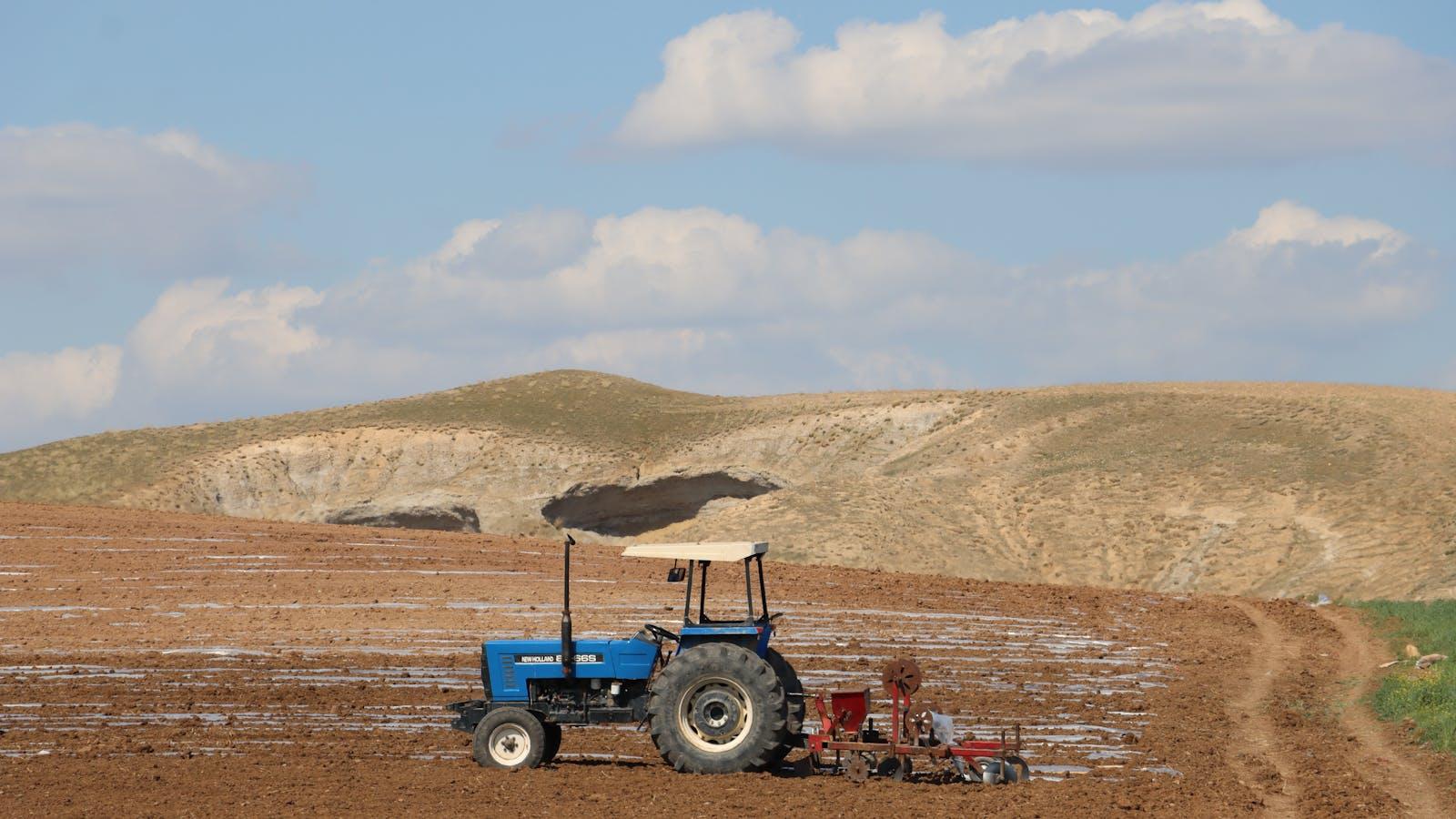
Autonomous tractors went from CES showpieces to actual line items on dealer build sheets in 2026. The Monarch MK-V has been delivering to vineyards for four seasons, the John Deere 9RX with full autonomy started 2026-season production runs, and the AGCO PTx Trimble OutRun grain-cart autonomy kit cleared its first full corn-and-soybean harvest with multiple custom operators. Driverless tractors are no longer a 2030 problem.
The harder question is whether one belongs on your operation right now. Pricing ranges from $89,000 for an electric Monarch MK-V to $830,000-plus for a John Deere 9RX 710 with the autonomy package. Payback math splits along farm type — orchards, vineyards, and custom harvesters often clear breakeven in 2-3 years, while small row-crop operations under 500 acres still struggle to justify the premium.
This guide breaks down what is actually available in 2026, what each autonomy package costs, the labor and yield math behind the ROI claims, and the real-world trade-offs nobody puts in the brochure. Pricing data is pulled from current dealer quotes, manufacturer MSRP disclosures, AEM (Association of Equipment Manufacturers) shipment estimates, and operator interviews.
TL;DR
Autonomous tractors in 2026 cost $89K (Monarch MK-V) to $830K-plus (John Deere 9RX with autonomy). Autonomy hardware adds $40K-$200K over a manned equivalent, plus $3K-$8K per year for software. Payback runs 2-3 years for orchards, vineyards, and custom harvest operations and 5-7 years for large row crops. Sub-500-acre operations rarely break even yet. Best 2026 picks: Monarch MK-V for specialty crops, John Deere 9RX autonomy for big row-crop ground, AGCO PTx Trimble OutRun for grain-cart retrofit.
What Autonomous Tractors Are Actually For Sale in 2026?
Seven autonomous tractor platforms are commercially available to North American buyers in 2026 — meaning a dealer will quote you, take a deposit, and deliver inside the calendar year. Many other systems are in pilot or pre-production, but those are the seven that ship.
The market splits into three categories. Purpose-built electric autonomy (Monarch MK-V) targets specialty crops where a small footprint and zero diesel emissions matter. Factory-autonomy on diesel row-crop tractors (John Deere 8R and 9RX, Case IH Trident, Fendt 942) targets large-acreage tillage, planting, and spraying. And retrofit autonomy kits (AGCO PTx Trimble OutRun, Bear Flag Robotics under CNH) bolt onto existing tractors for specific tasks like grain-cart following or custom application.
2026 Autonomous Tractor Lineup
| Machine | Type | HP | Autonomy Level | Best Use |
|---|---|---|---|---|
| John Deere 8R Autonomy | Row-crop tillage | 310-410 HP | Driverless (supervised) | Tillage, disking, chisel plow on row-crop ground |
| John Deere 9RX Autonomy | 4WD articulated tillage | 645-830 HP | Driverless (supervised) | Large-scale primary tillage, deep ripping, seedbed prep |
| Monarch MK-V | Compact electric utility | 70 HP equivalent | Fully autonomous (geofenced) | Vineyards, orchards, dairy forage, specialty crops |
| AGCO PTx Trimble OutRun | Grain-cart autonomy retrofit | 200-400 HP host | Follow-the-combine | Grain-cart tractors during corn and soybean harvest |
| Case IH Trident 5550 + Raven Autonomy | Self-propelled applicator | 320 HP | Driverless (supervised) | Dry-fertilizer and liquid application |
| Fendt 942 Vario + AGCO autonomy | Premium row-crop | 415 HP | Driver-assist, hands-off in field | Tillage, planting, hay production at high speed |
| Bear Flag Robotics retrofit (CNH) | Retrofit kit for existing tractors | Varies by host | Driverless (supervised) | Mid-size row crops, custom application |
Lineup as of Q2 2026. Sources: manufacturer product pages, dealer order books, CES 2025 and 2026 announcements, AEM market data.
Cumulative Autonomous Tractor Units Shipped Globally
John Deere 9RX Autonomy: The Big-Acreage Flagship
John Deere unveiled the 9RX with full autonomy at CES 2025 and started production deliveries for the 2026 season. The 9RX is a 4WD articulated tractor running 645-830 engine HP — the largest commercially available autonomous machine on the market. It targets large-scale primary tillage, deep ripping, and seedbed prep on row-crop operations above 1,000 acres.
The autonomy package adds six stereo cameras for 360-degree perception, an NVIDIA-based on-board compute stack, GPS-RTK with multi-constellation correction, and integration with the John Deere Operations Center mobile app. An operator monitors the tractor from a phone or computer and responds to alerts — confirming questionable obstacles, approving headland turns under certain conditions, and clearing minor faults remotely.
Hardware adds approximately $150,000-$200,000 over a base 9RX, depending on horsepower trim and dealer markup. The annual subscription runs $5,000-$8,000 and is required for autonomy to function — a hard subscription dependency that shows up again in the resale section below. For broader brand-vs-brand context on Deere's pricing power, see our Cat vs Komatsu vs John Deere resale value comparison.
When the 9RX Autonomy Pencils Out
- 1,500-plus acres of primary tillage — autonomy unlocks 24-hour duty cycles during the narrow fall-tillage window
- Existing John Deere fleet — Operations Center integration is far smoother for current Deere customers
- Strong cellular or radio coverage — the perception stack leans on cloud connectivity for fault handling
- Operator labor at $25-plus per hour — Midwest and Plains farms running multiple shifts hit ROI fastest
- Five-plus year holding period — autonomy hardware residual values are still unproven, so flippers should wait
Monarch MK-V: The Specialty-Crop Standout
The Monarch MK-V is a 70-HP-equivalent electric autonomous tractor that has been in commercial production since 2022. It is the most affordable autonomous tractor on the 2026 market at $89,000-$110,000 depending on battery configuration. Monarch sells through a dealer network spanning California, Washington, Oregon, New York, Texas, and several international markets.
The MK-V works exceptionally well in vineyards, orchards, dairy forage, and specialty row crops where its compact 60-inch wheelbase, electric drivetrain, and zero-emissions operation matter. A typical Napa vineyard runs 2-4 MK-V units handling mowing, spraying, and disking on a 24-hour rotating schedule. Operators set up the route through a tablet, the tractor maps the vineyard rows, and once mapped it runs unattended within a geofenced perimeter.
Battery is the main constraint. The 30-50 kWh pack delivers 4-10 hours of working time depending on load. Monarch designed the battery to be swap-out compatible — a swap takes under 15 minutes and lets the tractor run continuously through long days. Daily charging cost runs $4-$9 versus $35-$70 in diesel for an equivalent manned compact tractor.
Real-World Monarch MK-V Deployment
A 280-acre Washington apple orchard added four MK-V units in early 2024 and reported the following 2025 numbers: 4,200 cumulative operating hours across the fleet, 92 percent uptime on chassis hardware, autonomy-related interventions averaging 1.4 per 100 hours, $240,000 in saved seasonal labor, and a payback projection inside 30 months. The biggest unplanned cost was field mapping (40 hours per 80-acre block at first setup) and a steep learning curve on the dispatch software.
AGCO PTx Trimble OutRun: The Grain-Cart Retrofit
The AGCO PTx Trimble joint venture launched the OutRun grain-cart autonomy kit in 2024 and shipped commercially through Fendt and Massey Ferguson dealers starting in the 2024-2025 harvest season. OutRun is a retrofit — it installs on an existing 200-400 HP tractor pulling a grain cart and follows a manned combine through the field autonomously, accepting the unload on the go.
For custom harvest operations and large grain farms, OutRun targets the single biggest harvest labor pain point: the cart driver. A modern combine with a yield-monitor and unload-on-the-go workflow needs a cart that meets it at speed and matches its lateral movement during fills. That is one of the highest-skill, lowest-attraction jobs in agriculture, and it is exactly what OutRun automates.
Pricing runs $50,000-$75,000 over the host tractor, plus a per-acre or annual subscription depending on dealer terms. Installation takes 2-3 days at the dealer. The system uses dual-frequency GPS-RTK, perception cameras for combine-tracking, and a redundant E-stop network. It is the easiest entry point into farm autonomy because the host tractor stays useful for non-harvest work the rest of the year.
OutRun ROI Snapshot
- Host tractor cost: already owned (assume $0 incremental)
- OutRun kit + install: $62,000 (mid-range)
- Annual subscription: $4,500
- Cart driver wage saved: $42,000 per harvest season (8-10 weeks at $32/hr loaded, double shifts)
- Recruiting savings: $5,000-$15,000 per season in finder fees and onboarding
- Net Year 1: $20,000-$48,000 negative
- Net Years 2-onward: $40,000-$60,000 positive per cart per year
2026 Autonomous Tractor Pricing (with autonomy package)
How Much Does an Autonomous Tractor Cost in 2026?
Autonomous tractor pricing in 2026 spans a 10x range. The Monarch MK-V starts at $89,000. The John Deere 9RX 710 with full autonomy clears $830,000 fully optioned. The autonomy hardware itself — the cameras, compute, RTK-GPS, and controllers — adds $40,000 on the low end (small retrofit) to $200,000 on the high end (factory 9RX package).
On top of hardware, every autonomous platform requires an active software subscription. Annual fees range from $3,000 (Monarch) to $8,000 (John Deere 9RX). Most subscriptions are non-transferable to a second owner without dealer involvement, which complicates resale. For a wider look at how heavy equipment depreciates, see our heavy equipment depreciation guide and the used utility tractor prices guide for reference points on what manned equivalents trade at.
2026 Autonomous Tractor Pricing Table
| Machine | Total Price | Autonomy Premium | Notes |
|---|---|---|---|
| Monarch MK-V (electric autonomous) | $89,000-$110,000 | Included in base price | Includes 30-50 kWh battery, swappable; subscription $3,000/yr |
| John Deere 8R 410 + Autonomy | $525,000-$640,000 | +$130,000-$160,000 | Cameras, GPS-RTK, NVIDIA compute; software ~$5,000-$7,000/yr |
| John Deere 9RX 710 + Autonomy | $780,000-$880,000 | +$150,000-$200,000 | 645-830 HP options; full autonomy debuted CES 2025 |
| AGCO PTx Trimble OutRun (grain-cart kit) | +$50,000-$75,000 over host tractor | Retrofit only | Adds to existing 200-400 HP tractor; harvest-window only |
| Case IH Trident 5550 + Raven Autonomy | $485,000-$565,000 | +$95,000-$130,000 | Fertilizer applicator; dry and liquid configs available |
| Fendt 942 Vario (autonomy-ready) | $595,000-$680,000 | +$60,000-$95,000 | Driver-assist now, full autonomy via OTA upgrade by 2027 |
| Bear Flag Robotics retrofit (CNH-owned) | $85,000-$140,000 retrofit | Retrofit only | Service-as-software; some leased per-acre |
Pricing reflects Q2 2026 dealer quotes and manufacturer MSRP disclosures. Configuration-dependent. Software subscriptions extra.
5-Year Cost of Ownership Breakdown
Pro Tip
Negotiate the software subscription separately from the hardware. Several Monarch and John Deere dealers will bundle the first 2-3 years of subscription into the deal at a 20-40 percent discount. After the bundle expires, you renew at full retail — but you also have leverage to switch dealers or even renegotiate with the manufacturer. Treat the subscription as a recurring line item, not a sunk cost.
Are Autonomous Tractors Worth It? ROI Math by Operation Type
Autonomous tractors are worth the premium when three conditions line up: labor is the binding constraint, the work window is compressed, and the machine runs more than 1,200 hours per year. Operations meeting all three usually break even in 2-4 years. Operations missing any of the three rarely justify the cost yet.
The single biggest variable is labor cost. Specialty crops (vineyards, orchards) carry $28-$48 per hour fully loaded operator labor — high enough that even partial autonomy clears payback fast. Row-crop tillage is the opposite: $19-$26 per hour loaded for a seasonal operator, which stretches payback to 5-7 years even at scale.
ROI Scenarios from Real Operations
| Operation | Machine | Autonomy Cost | Annual Labor Saved | Annual Fuel Saved | Payback |
|---|---|---|---|---|---|
| Vineyard, 120 acres, Napa CA | Monarch MK-V (3 units) | $330,000 | $185,000 | $28,000 | 2.5-3 years |
| Row-crop farm, 2,500 acres, Iowa | John Deere 9RX 710 Autonomy | $190,000 premium | $72,000 (planting + tillage) | $11,000 | 5-7 years |
| Custom harvester, 8,000 acres | AGCO PTx Trimble OutRun (4 carts) | $260,000 | $165,000 (4 cart operators) | $0 (same hours) | 2-3 years |
| Dairy forage, 600 acres, Wisconsin | Monarch MK-V (2 units) | $220,000 | $95,000 | $18,000 | 2.5-3.5 years |
| Orchard, 280 acres, Washington | Monarch MK-V (4 units) | $420,000 | $240,000 | $32,000 | 2-2.5 years |
Scenarios reflect operator interviews and HeavyDutyYard analysis. Payback assumes constant labor rates and no software subscription cost increases. Subscription escalation can extend payback by 8-15 percent.
Estimated Payback Period by Farm Type
For broader cost-of-ownership math beyond autonomy specifically, our heavy equipment total cost of ownership guide walks through the owning-plus-operating cost formula and benchmarks per-hour costs for tractors, excavators, and other classes.
Financing an Autonomous Tractor in 2026
Manufacturer captives lead the autonomous tractor financing market. John Deere Financial offers 0-percent promo rates on 9RX autonomy bundles for qualified buyers running 60-84 month terms. AGCO Finance and CNH Industrial Capital have similar programs for Fendt, Massey Ferguson, and Case IH autonomy. Monarch Tractor partners with two specialty ag lenders that underwrite electric autonomy specifically.
Down payments run 10-25 percent depending on credit profile and operation history. Used autonomous tractors are scarce enough that the secondary financing market is still thin — most banks treat them as a hybrid of equipment and software, which complicates underwriting. Our heavy equipment financing guide breaks down rates, programs, and lender comparisons across the broader equipment market and applies to autonomous tractor financing as well.
Several operations are using the Section 179 deduction to offset the autonomy premium in the year of purchase. Our Section 179 deduction guide covers 2026 deduction limits, bonus depreciation rules, and how to structure an autonomous tractor purchase to maximize the tax benefit.
The Risks and Trade-offs Nobody Puts in the Brochure
Autonomous tractors carry six material risks that do not exist on a conventional manned tractor. Understanding each one is the difference between a payback in three years and a write-down in five.
Autonomy Risk Matrix
| Risk | Operational Impact | Severity |
|---|---|---|
| Software subscription dependency | Tractor functionality tied to active subscription; lapse = no autonomy | High |
| Connectivity gaps in rural fields | RTK-GPS and cloud-based perception need cellular or radio coverage | Medium-High |
| Insurance and liability uncertainty | Most carriers require supervised autonomy; full unattended use voids policies | Medium |
| Resale value of autonomy hardware | 5-year residual on autonomy components is unproven; first-gen hardware may not hold value | Medium-High |
| Software updates breaking workflows | OTA updates have caused mid-season feature changes on John Deere autonomy fleet | Low-Medium |
| Field mapping and onboarding time | Initial geofence and obstacle mapping takes 8-40 hours per field set | Low |
Resale Value Is Genuinely Unknown
Five-year residual values on autonomy hardware are unproven. A conventional 2021 John Deere 9R holds a clean residual curve through TractorHouse and Iron Solutions — the autonomy 9RX has no comparable data set yet. Early indicators from the 2022-2024 Monarch fleet suggest 50-65 percent retention at 3,000 hours, but the sample is small and skewed toward early adopters.
Subscription transferability is a separate landmine. If the original buyer's subscription lapses or the dealer relationship sours, the autonomy hardware can become non-functional until reactivated — sometimes for hundreds of dollars per month plus a reactivation fee. This is the closest thing in heavy equipment to the smartphone software-lifetime model, and the secondary market has not figured out how to price it yet.
How to Actually Buy an Autonomous Tractor in 2026
Buying an autonomous tractor is not the same transaction as buying a conventional one. The dealer relationship, software contract, and field-mapping process all matter as much as the iron itself. Here is the buying playbook that current operators converged on.
- Pick the autonomy task first, then the platform. Define exactly what work the tractor will automate (tillage, grain cart, vineyard mowing) before brand-shopping. The right platform falls out of the task.
- Demo on your own ground. Manufacturer demos at trade shows are scripted. Insist on a working demo on your fields before committing — most dealers will arrange a 2-4 hour demo for serious buyers.
- Negotiate hardware and subscription separately. Lock in the subscription rate for 3-5 years if possible. Treat each as its own line item.
- Audit your connectivity. Drive your fields with a cell-signal mapper. Autonomy tractors that lose RTK-GPS or cell coverage degrade fast. If coverage is patchy, budget for a private RTK base station ($8K-$15K).
- Plan field mapping into the schedule. Initial geofence and obstacle mapping takes 8-40 hours per field set. Do not assume the dealer covers this — most charge $150-$250 per hour for setup beyond the included onboarding.
- Confirm insurance coverage. Call your equipment insurer before signing. Many farm policies require supervised autonomy or carry exclusions for unattended operation. Premium impact ranges from neutral to plus 12-18 percent.
- Pre-position spare hardware. Cameras, GPS antennas, and stereo modules fail. Keep at least one full sensor swap kit on-site to avoid a multi-day downtime during peak season.
- Get the inspection right on used machines. Used autonomous tractors are scarce, but if buying used, our used heavy equipment inspection guide applies — plus you need a verified subscription transfer in writing before the deal closes.
Autonomous vs Traditional Tractor: Which Should You Buy in 2026?
For most North American farms under 500 acres in 2026, the right answer is still a traditional manned tractor. The autonomy premium does not pay back fast enough at low duty cycles, and the secondary-market complications outweigh the labor savings. A clean used Kubota or John Deere compact tractor delivers more flexibility per dollar.
For specialty-crop operations of any size and row-crop operations above 1,500 acres, the autonomy math starts to work. Specialty operations should look hard at the Monarch MK-V. Large row-crop should evaluate the John Deere 9RX. Custom harvesters should add the AGCO PTx Trimble OutRun to their existing fleet rather than buying a new tractor outright.
For mid-size farms still figuring out which direction to go, the right call is often a manned tractor today and a retrofit autonomy kit (Bear Flag, OutRun) in 2-3 years once first-gen software has matured. That preserves capital flexibility and avoids the early-adopter resale risk. Cross-reference the best used tractors for small farms guide and the Kubota vs John Deere vs Mahindra compact tractor comparison for what to buy in the meantime.
Frequently Asked Questions About Autonomous Tractors
How much does an autonomous tractor cost in 2026?
Autonomous tractors in 2026 cost anywhere from $89,000 for a Monarch MK-V electric autonomous tractor to roughly $800,000-plus for a John Deere 9RX with the factory autonomy package. Mid-range options include the AGCO PTx Trimble OutRun retrofit for grain-cart tractors, which adds roughly $50,000-$75,000 to a base 200-300 HP machine. The autonomy hardware itself adds $40,000-$150,000 over an equivalent manned tractor, plus annual software subscriptions running $3,000-$8,000 per year for full driverless operation.
Are autonomous tractors worth it?
Autonomous tractors pay back fastest on operations running 1,500+ tractor hours per year where labor is the binding constraint. For a 2,500-acre row-crop farm running 1,800 hours per season, a $250,000 autonomy premium typically breaks even in 4-7 years through saved operator wages ($55,000-$85,000 per year fully loaded), 24-hour duty cycles during planting and harvest, and 3-7 percent yield bumps from tighter pass spacing. Smaller operations under 500 acres rarely justify the cost yet. Vineyards, orchards, and dairy forage operations using the Monarch MK-V tend to break even faster because of compressed work windows and high-cost specialty labor.
What is the best autonomous tractor in 2026?
There is no single best autonomous tractor — it depends on the job. The John Deere 9RX with autonomy is the best pick for large-scale row-crop tillage and seedbed prep above 1,000 acres because of horsepower, dealer support, and integration with John Deere Operations Center. The Monarch MK-V is the best electric autonomous tractor for vineyards, orchards, and dairy forage under 200 acres. The AGCO PTx Trimble OutRun system is the best autonomous retrofit for existing grain-cart tractors during harvest. For mid-size row crops, the Case IH Trident 5550 sprayer-applicator autonomy and CNH Raven retrofits are the strongest mid-tier options.
Can you actually buy a self-driving tractor today?
Yes. The Monarch MK-V has been shipping to commercial farms since 2022 and is available through dealer networks across California, Washington, Oregon, New York, and Texas. John Deere began commercial deliveries of the 8R autonomous tillage tractor in 2022 and expanded the autonomy package to the 9RX 4WD line in late 2024 for the 2025-2026 season. AGCO and Trimble started shipping the PTx Trimble OutRun grain-cart autonomy kit to dealers in 2024 through the Fendt and Massey Ferguson channels. Order lead times range from 4 weeks for Monarch to 6-9 months for John Deere autonomy-equipped 9RX builds.
Do autonomous tractors need a driver?
Most current autonomous tractors are supervised autonomy, not fully unattended. The John Deere 8R and 9RX run fully driverless inside a geofenced field, but a human operator must be on the farm and available to respond to alerts through the See & Spray app on a phone. The Monarch MK-V can run fully unattended for many tasks but requires an operator within radio range for emergency stops on most insurance policies. The AGCO PTx Trimble OutRun grain-cart system requires a manned combine in the same field — the cart tractor follows the combine autonomously. Truly cab-less, no-human-anywhere autonomy is still 2-4 years away for most production agriculture.
What is the John Deere 9RX autonomy package?
The John Deere 9RX autonomy package is a factory option for the 9RX 4WD articulated tractor (645-830 engine HP) that adds six stereo cameras, a high-precision GPS-RTK system, an NVIDIA-based perception computer, and the autonomy controller integrated with the John Deere Operations Center mobile app. It enables fully driverless tillage, disking, and seedbed prep inside mapped fields. The hardware package adds approximately $150,000-$200,000 over a base 9RX, and a software subscription is required (roughly $5,000-$8,000 per year depending on hours). It debuted at CES 2025 for full commercial availability in the 2026 season.
Selling a Tractor to Fund the Next One?
Most autonomous tractor buyers in 2026 are funding the upgrade by selling a manned tractor in their existing fleet. We provide cash offers within 24 hours on used tractors, skid steers, excavators, and other heavy equipment based on current TractorHouse, Machinery Pete, and dealer-network comps. No listing fees, no auction timelines, no waiting on a private buyer.
If you are evaluating an autonomous tractor purchase, pair this guide with our equipment value guide to set a realistic baseline on your trade-in and the financing guide to structure the deal.