
Pricing Data
Used Telehandler Prices in 2026: What Every Model Is Worth
Model-by-model pricing data for JCB, JLG, CAT, Genie, Manitou, and Pettibone. Updated for Q2 2026 market conditions.
Last updated: April 2026
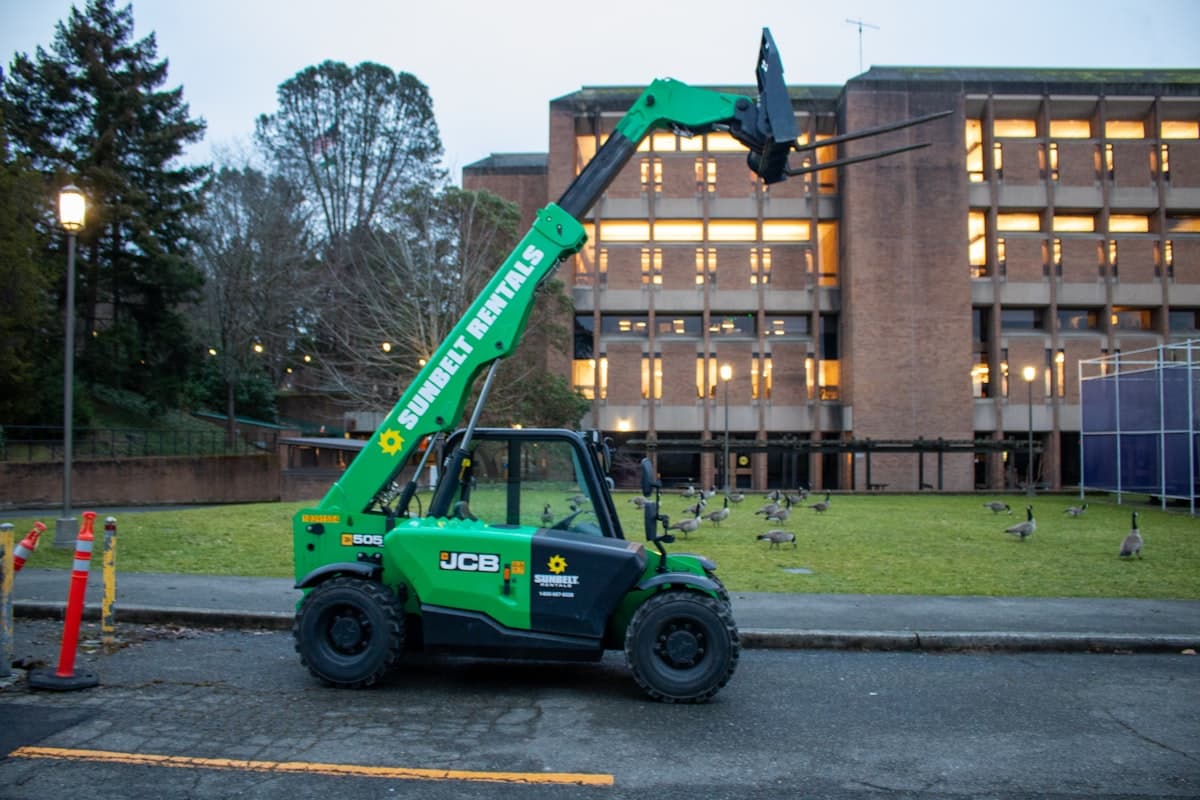
Used telehandler prices range from about $16,000 for a high-hour compact unit to over $175,000 for a low-hour heavy-capacity machine, based on Q1-Q2 2026 Ritchie Bros auction results and Equipment Watch valuations. The used telehandler market has softened roughly 6-10% since the 2023 peak, creating real buying opportunities across every capacity class.
We pulled pricing data from auction results, dealer listings, and industry valuation tools to build the most complete picture of where used telehandler prices sit right now. Whether you're pricing out a JCB 510-56 for framing work, comparing JLG and Genie models for your rental fleet, or figuring out what your aging CAT telehandler is worth at trade-in, the tables below give you real numbers by brand, capacity, and hours.
This guide covers every major telehandler manufacturer selling in North America. Pricing is broken down by operating hours, lift capacity class, and brand — the three factors that drive the biggest price swings in the used telehandler market.
TL;DR
Used mid-capacity telehandlers (8,000-10,000 lb) trade between $28,000 and $115,000 depending on brand, hours, and year. JCB holds the strongest resale value at roughly 62% retention after 4,000 hours, per Equipment Watch residual data. CAT follows closely. The biggest single price driver is the hour meter, with steep drop-offs above 6,000 hours.
What Do Used Telehandlers Cost in 2026?
Used telehandler prices currently range from about $16,000 for a high-hour compact model to over $175,000 for a low-hour heavy-lift machine, based on Q1 2026 Ritchie Bros auction results and Equipment Watch valuations. That spread reflects how much capacity, reach, and brand affect pricing.
The most commonly traded segment — mid-capacity telehandlers rated at 8,000-10,000 lbs with reach heights of 42-56 feet — clusters between $42,000 and $110,000 for machines with 2,000-5,000 hours. This is where general contractors, framers, and masonry crews shop most heavily. Compact models under 6,000-lb capacity, popular with ag operations and smaller job sites, trade between $16,000 and $65,000.
A framing contractor out of Phoenix shared this with us: he picked up a 2020 JLG 1055 with 3,200 hours at a Ritchie Bros sale in early 2026 for $68,000. A comparable unit had listed on a dealer lot for $82,000 three weeks earlier. The 17% auction discount tracks with the 15-25% spread we typically see between auction and dealer pricing on telehandlers.
Used Telehandler Price Range by Capacity Class
How Much Do Compact Used Telehandlers Cost?
Compact telehandlers under 6,000-lb lift capacity trade between $16,000 and $65,000, with the average transaction around $38,000 based on IronPlanet listing data. These machines serve a wide buyer pool: farmers moving hay bales, roofers stocking materials, landscapers handling pallets, and small GCs who need a versatile tool on tight sites.
The JCB 506-36 stands out in this class. With 6,000-lb capacity and 36 feet of reach, it bridges the gap between compact and mid-size. A 2021 model with under 2,000 hours still brings $48,000-$65,000. The Manitou MT 625, by contrast, offers similar capacity but trades 15-20% lower due to limited US dealer presence.
Compact Telehandler Pricing Table
| Model | Capacity | Max Reach | 0-2K hrs | 2K-5K hrs | 5K+ hrs |
|---|---|---|---|---|---|
| JCB 505-20TC | 5,000 lbs | 19 ft | $42,000-$55,000 | $30,000-$42,000 | $20,000-$30,000 |
| JCB 506-36 | 6,000 lbs | 36 ft | $48,000-$65,000 | $35,000-$48,000 | $22,000-$35,000 |
| CAT TH255C | 5,500 lbs | 18 ft | $45,000-$58,000 | $32,000-$45,000 | $21,000-$32,000 |
| Manitou MT 625 | 5,500 lbs | 20 ft | $35,000-$48,000 | $25,000-$35,000 | $16,000-$25,000 |
| Genie GTH-5519 | 5,500 lbs | 19 ft | $40,000-$52,000 | $28,000-$40,000 | $18,000-$28,000 |
Prices reflect 2019-2024 model years in fair to good condition. Sources: Ritchie Bros, IronPlanet, Equipment Watch, Q1 2026.
Pro Tip
Compact telehandlers from the agricultural sector often carry fewer hours per year than construction units. A farmer running 300-400 hours annually puts far less stress on a machine than a framing crew running 1,000+ hours. When shopping used, ag-origin machines in this class can be hidden gems — same calendar age, half the wear.
What Are Used Mid-Size Telehandler Prices by Model?
Mid-size telehandlers rated at 8,000-10,000 lbs with 42-56 feet of reach represent the highest-volume segment of the used telehandler market. Average sale prices for this class range from $28,000 to $115,000, with the JLG 1055 and JCB 510-56 generating the most transaction volume according to Ritchie Bros (2025-2026 auction data).
This is the workhorse class for residential and light commercial construction. Framers, masons, and roofers drive demand for machines that can place materials on a second or third story. The 55-foot reach machines (JLG 1055, JCB 510-56, CAT TL1055D) dominate this segment because they cover most two- and three-story building projects with margin to spare.
Mid-Size Telehandler Pricing Table (8,000-10,000 lb)
| Model | Capacity | Max Reach | 0-2K hrs | 2K-5K hrs | 5K-8K+ hrs |
|---|---|---|---|---|---|
| JCB 510-56 | 10,000 lbs | 56 ft | $85,000-$115,000 | $60,000-$85,000 | $40,000-$62,000 |
| JLG 1055 | 10,000 lbs | 55 ft | $78,000-$105,000 | $55,000-$78,000 | $35,000-$58,000 |
| CAT TL1055D | 10,000 lbs | 55 ft | $82,000-$110,000 | $58,000-$82,000 | $38,000-$60,000 |
| JLG 943 | 9,000 lbs | 43 ft | $65,000-$88,000 | $45,000-$65,000 | $30,000-$48,000 |
| Genie GTH-844 | 8,000 lbs | 44 ft | $62,000-$82,000 | $42,000-$62,000 | $28,000-$45,000 |
| Manitou MHT 10130 | 10,000 lbs | 42 ft | $68,000-$92,000 | $48,000-$68,000 | $32,000-$50,000 |
Prices reflect 2019-2024 model years. Sources: Ritchie Bros auction results, IronPlanet listings, Equipment Watch residual values, Q1 2026.
Notice the Genie GTH-844 sits 10-15% below the JCB 510-56 at every hour bracket despite similar performance specs. That gap comes from two places: Genie telehandlers flood the used market when rental companies cycle fleet (Sunbelt, United Rentals, and BlueLine all run large Genie fleets), and JCB's stronger owner-operator following creates more retail demand. For buyers, that supply-demand imbalance makes Genie a value play with real upside.
Looking to finance a used telehandler?
Most lenders finance used telehandlers for 48-72 months with rates between 6-10% for qualified buyers. Our equipment financing guide breaks down rates, terms, and lender options for 2026.
What About Used Heavy-Capacity Telehandler Prices?
Heavy telehandlers rated at 12,000 lbs and above represent the top end of the market, with used prices ranging from $45,000 to $175,000 based on Equipment Watch residual data. These machines handle serious loads — precast concrete panels, steel bundles, and heavy mechanical equipment that would tip a mid-size unit.
The JCB 512-56 dominates this segment for commercial construction. Industrial and mining applications gravitate toward the Manitou MHT 10230 with its 22,000-lb capacity, though its 30-foot reach limits versatility on construction sites. Pettibone's traverse boom design — where the boom moves side to side without repositioning the machine — commands a niche following, but the smaller buyer pool means lower resale.
Heavy Telehandler Pricing Table (12,000+ lb)
| Model | Capacity | Max Reach | 0-2K hrs | 2K-5K hrs | 5K-8K+ hrs |
|---|---|---|---|---|---|
| JCB 512-56 | 12,000 lbs | 56 ft | $110,000-$148,000 | $78,000-$110,000 | $52,000-$80,000 |
| JLG 1255 | 12,000 lbs | 55 ft | $100,000-$138,000 | $72,000-$102,000 | $48,000-$75,000 |
| CAT TL1255D | 12,000 lbs | 55 ft | $105,000-$142,000 | $75,000-$108,000 | $50,000-$78,000 |
| Pettibone Traverse T1258X | 12,000 lbs | 58 ft | $95,000-$130,000 | $68,000-$95,000 | $45,000-$70,000 |
| Manitou MHT 10230 | 22,000 lbs | 30 ft | $125,000-$175,000 | $90,000-$125,000 | $60,000-$92,000 |
Prices reflect 2019-2024 model years. Sources: Ritchie Bros, Equipment Watch, dealer survey data, Q1 2026.
One thing worth noting: heavy telehandlers depreciate slower per hour than compact or mid-size models. The reason is simple economics — fewer units sell new each year, which constrains used supply. A 2019 JCB 512-56 with 5,000 hours still commands $78,000-$110,000, representing roughly 55-60% of its original MSRP. Compare that to a compact JCB 505-20TC at the same hours, which retains only 45-50%.
Which Telehandler Brand Holds Its Value Best?
JCB leads all telehandler brands in resale value retention, holding approximately 62% of original value at 4,000 hours according to Equipment Watch Residual Value Awards data. CAT follows at 60%, with JLG at 55%. Genie, Manitou, and Pettibone all fall in the 46-53% range.
JCB's dominance in the telehandler category isn't accidental — the company invented the modern telehandler and sells more of them globally than any other manufacturer. That market share translates directly to parts availability, dealer expertise, and buyer confidence. When a buyer walks onto a dealer lot or scrolls through auction results, they default to JCB the way excavator buyers default to CAT.
These retention numbers directly affect your total cost of ownership. On a $120,000 new telehandler, the difference between 62% and 48% retention at trade-in means $16,800 more in your pocket. That's real money, especially for operators tracking depreciation across a multi-unit fleet.
Average Used Telehandler Price by Brand (Mid-Size Class)
Brand Retention Comparison
| Brand | Value Retention @ 4K hrs | Price Premium | Why |
|---|---|---|---|
| JCB | 62% | +10-14% | Market leader in telehandlers, deepest parts network, ag and construction crossover |
| Caterpillar | 60% | +8-12% | Strongest dealer network overall, trusted brand name, fleet buyer preference |
| JLG | 55% | +3-6% | Strong in rental fleets, good parts availability, reliable Tier 4 engines |
| Genie (Terex) | 53% | Baseline | Solid machines, large rental fleet presence keeps used supply high |
| Manitou | 48% | -8-12% | European market leader, thinner US dealer network, fewer parts in stock domestically |
| Pettibone | 46% | -10-15% | Niche player, traverse boom design is unique but limits buyer pool |
Retention percentages are approximate based on Equipment Watch Residual Value data, Ritchie Bros auction results, and dealer market reports, 2025-2026.
How Do Operating Hours Affect Used Telehandler Prices?
Operating hours are the single biggest price driver in the used telehandler market. A mid-size telehandler loses roughly 10% of its value for every 1,000 hours in the first 4,000 hours, then the curve flattens slightly as the machine moves into the working-hours bracket. This pattern holds across brands, based on depreciation curves from Equipment Watch (2025-2026 residual data).
Telehandlers accumulate hours differently than excavators or dozers. A framing crew might run a telehandler 6-8 hours per day during the building phase, then park it for weeks between projects. A rental fleet unit, by contrast, may run 1,200-1,500 hours per year continuously. Same hour reading, very different wear profiles. That's why a thorough inspection matters more than the number on the hour meter alone.
How Hours Affect Telehandler Value
Curve represents average across mid-size class, all major brands. Individual machines vary. Sources: Equipment Watch, Ritchie Bros post-sale results.
Telehandler Depreciation by Hour Bracket
One counterintuitive pattern: telehandlers from rental fleets often sell at a discount despite lower-than-average hours per calendar year. Buyers assume rental units were abused by untrained operators. In reality, major rental companies (Sunbelt, United Rentals) maintain rigorous service schedules — these machines often have better maintenance records than owner-operator units. Savvy buyers use this perception gap to find well-serviced machines at below-market prices.
What Drives Used Telehandler Values Up or Down?
Beyond hours and brand, several factors can swing a telehandler's price by 10-25%. The top value drivers, based on our analysis of Ritchie Bros post-sale data and dealer interviews, are: tire condition, attachment package, boom condition, service records, and emissions compliance.
Factors That Increase Telehandler Value
- New or near-new tires. Telehandler tires cost $800-$2,500 each (four tires = $3,200-$10,000). A machine with fresh rubber adds 8-12% to resale because the buyer avoids an immediate, visible expense.
- Attachment package.Forks, bucket, and a truss boom add $5,000-$12,000 to the machine's value. A bare machine with forks only sells at the low end of the range. Buyers want versatility — the more attachments included, the higher the price.
- Complete service records. Documented maintenance adds 8-10% to resale value. This is especially true for telehandlers because boom cylinder and hydraulic system maintenance is expensive to diagnose after the fact.
- Enclosed cab with heat/AC. Open-station telehandlers trade at a 10-15% discount versus enclosed-cab units. In cold-weather markets (Midwest, Northeast), the cab premium widens further.
Factors That Decrease Telehandler Value
- Boom wear or damage. The telescoping boom is the most expensive component to repair. Scoring on the inner boom sections, cylinder leaks, or chain/cable wear on the extension mechanism signal major repair costs ($10,000-$25,000). Buyers discount these machines 15-25%.
- Transmission issues. Telehandler transmissions — especially powershift units — are expensive to rebuild ($8,000-$15,000). Any slipping, delayed engagement, or grinding triggers steep buyer discounts.
- Frame damage or weld repairs. Any sign of welding on the frame or boom indicates past overloading or tip-over recovery. Expect a 15-20% discount even if the repair looks clean.
- Missing or tampered hour meter. Just like with any heavy equipment, a suspicious hour meter kills buyer confidence. Expect a 20-30% haircut — or no offers at all.
Should You Rent or Buy a Telehandler?
Telehandlers are one of the most commonly rented equipment categories in the US. According to the American Rental Association (ARA) 2025 industry report, 35% of telehandler usage in North America comes through rental, compared to just 15-20% for excavators. The reason: many telehandler applications are project-based rather than continuous.
How Contractors Acquire Telehandlers
The break-even point depends on utilization. At current rental rates of $2,500-$4,500 per month for a mid-size telehandler, buying used makes financial sense once you're running the machine more than 6-8 months per year. Below that, renting is cheaper after accounting for insurance, maintenance, storage, and depreciation. Our rent vs. buy analysis walks through the full calculation.
For contractors who buy, there's a significant tax advantage worth factoring in. Section 179 allows full first-year deduction of the purchase price on qualifying equipment, including used telehandlers. On a $70,000 used JLG 1055, that's a $70,000 deduction against taxable income — effectively reducing the net cost by $15,000-$25,000 depending on your tax bracket.
How Much Are Used JCB Telehandler Prices?
JCB telehandlers consistently command the highest prices in the used market. A 2020-2022 JCB 510-56 with 3,000-4,000 hours currently trades between $70,000 and $95,000 based on Ritchie Bros post-sale results. The compact JCB 506-36 in the same condition bracket runs $38,000-$52,000.
JCB's value advantage comes down to category leadership. They manufacture more telehandler models than any competitor, their parts pipeline is deep, and the JCB Loadall name carries decades of brand equity. JCB also offers a Certified Used program through dealers, which provides inspected machines with limited warranty coverage — adding buyer confidence and supporting the price floor.
What Are Used JLG and CAT Telehandler Prices?
JLG and CAT represent the #2 and #3 brands in the used telehandler market by transaction volume. A 2020-2022 JLG 1055 with 3,000-4,000 hours trades between $62,000 and $85,000. The comparable CAT TL1055D runs $65,000-$90,000 — the CAT badge adds a consistent 5-8% premium over JLG at every hour bracket.
JLG's strength in the used market comes from rental fleet volume. When Sunbelt or United Rentals cycles out 3-4 year old JLG units, they hit the auction market in batches. That creates buying windows where well-maintained JLG machines trade below comparable JCB or CAT units by 10-15%.
CAT's telehandler pricing benefits from the broader CAT dealer network effect. A buyer running CAT excavators and skid steers often prefers a CAT telehandler for service simplicity — one dealer relationship for the whole fleet. That fleet loyalty supports CAT telehandler pricing even though JCB is the category specialist.
Where to Buy a Used Telehandler
Buyers have three main channels for used telehandlers, each with distinct pricing dynamics:
- Auctions (Ritchie Bros, IronPlanet, Purple Wave). Typically 15-25% below dealer pricing. Machines sold as-is with no warranty. Best for experienced buyers who can inspect equipment themselves or hire an inspector. Our auction guide covers bidding strategies and what to watch for.
- Dealers (JCB, CAT, JLG authorized). Premium pricing but machines are typically inspected, serviced, and may carry 30-90 day warranties. Best for buyers who need a production-ready machine immediately and want reduced risk.
- Private party (Equipment Trader, Machinery Trader, Facebook Marketplace). Prices vary widely. Some of the best deals happen here, but so do the worst. Thorough inspection and scam awareness are critical.
Pro Tip
Rental fleet sell-offs are the best-kept secret in the used telehandler market. Major rental companies cycle telehandlers at 3,000-5,000 hours — well within the machine's service life. These units come with complete maintenance records, consistent fluid changes, and documented inspection histories. Check Ritchie Bros and IronPlanet for "fleet disposal" sales from Sunbelt, United Rentals, and BlueLine.
Rough Terrain Forklift Prices vs. Telehandler Prices
Buyers often cross-shop telehandlers with rough terrain forklifts, and the pricing difference is significant. Used rough terrain forklifts in the 5,000-8,000 lb capacity range trade between $15,000 and $55,000 — roughly 20-30% below comparable telehandlers. The gap reflects the telehandler's greater versatility: the telescoping boom reaches higher and farther, articulates for placement precision, and accepts more attachment types.
For operations that primarily move pallets at ground level or stack materials one story high, a rough terrain forklift delivers the same result at lower cost. But for any application requiring reach above 20 feet or forward placement beyond the machine's footprint, the telehandler justifies its premium.
For a broader look at how these machines fit into the overall equipment market, check our complete heavy equipment pricing guide.
Frequently Asked Questions About Used Telehandler Prices
How much does a used telehandler cost?
A used telehandler typically costs between $25,000 and $175,000 depending on lift capacity, reach height, brand, and operating hours. Compact models under 6,000-lb capacity start around $25,000-$55,000 with mid-range hours, while full-size machines rated at 8,000-12,000 lbs trade between $55,000 and $175,000. JCB and CAT models command the strongest prices, with JLG and Genie close behind.
What is a fair price for a used telehandler?
A fair price depends on three variables: lift capacity class, operating hours, and brand. For the most popular category — 6,000 to 8,000-lb capacity with 2,000-4,000 hours — expect to pay $45,000-$85,000 for a JCB, JLG, or CAT unit in good condition. Machines priced 15-20% below this range at auction typically have higher hours, missing service records, or cosmetic issues that reduce buyer confidence.
Are telehandlers worth buying used?
Yes, telehandlers are one of the better used equipment values in the market. Unlike excavators or dozers that take heavy ground-engagement abuse, telehandlers primarily lift and place loads — which means less structural stress per operating hour. A well-maintained used telehandler with 3,000-4,000 hours still has 60-70% of its useful life remaining. The 30-45% discount off new pricing makes used telehandlers a strong ROI for contractors, farmers, and material handlers.
How many hours is too many on a telehandler?
The market applies steep discounts above 6,000 hours on telehandlers. At that point, buyers anticipate transmission rebuilds ($8,000-$15,000), boom cylinder reseals ($3,000-$6,000), and potential frame fatigue from repeated load cycles. Under 3,000 hours is considered low-hour territory and commands premium pricing. The 3,000-5,000 hour range is where most transactions happen — enough use to prove the machine works, not enough to suggest major repairs are imminent.
Which telehandler brand has the best resale value?
JCB leads telehandler resale values in North America, retaining approximately 60-65% of original value at 4,000 hours according to Equipment Watch residual data. CAT follows closely at 58-62%, benefiting from its massive dealer network. JLG and Genie hold 52-57%, while Manitou — despite strong European market share — trades at a 10-15% discount in the US due to thinner dealer coverage and parts availability.
Is a telehandler the same as a rough terrain forklift?
Not exactly, though the terms overlap. A telehandler (telescopic handler) has a telescoping boom that can extend forward and reach high — typically 30-55 feet. A rough terrain forklift has a fixed mast, like a standard forklift but with larger tires and four-wheel drive. Telehandlers are more versatile because the boom articulates, but rough terrain forklifts are simpler machines with lower purchase and maintenance costs. On the used market, rough terrain forklifts price 20-30% below comparable-capacity telehandlers.
Get Your Telehandler's Value
The tables and charts above give you a solid baseline for used telehandler pricing. But every machine is different — year, hours, condition, attachments, and boom wear all affect the final number. If you're looking to sell, we provide cash offers within 24 hours based on live market data. No listing fees, no auctions, no waiting.
If you're buying, start with our telehandler spec pages to compare models side by side, then check the pricing guide for broader context across all equipment types.